Showing posts with label Film review. Show all posts

Sunday, 29 April 2012

Geography related Books and Films

Teachers may disagree with this but I dont necessarily think that staring at a textbook all night every night is the only way to revise. Of course there is no substitute for hard work but sometimes (especially for development) I think that watching a relevant film can be quite good. Now for those of you who have kept up with your three hours extra reading each week since Septembet (haha!) then you may have watched/readed a few of these but seeing as a few have asked me for suggestions, I thought I would just qucikly write it all up on here! Follow the links for more detailed reviews, explanation of relevance to modules and trailers....
Development and Globalisation:
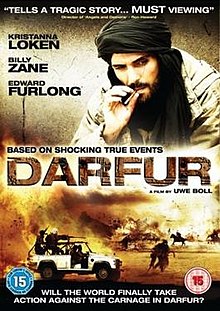
Darfur - a group of international journalists travel to a village in Darfur in search of evidence to persuade the UN that genocide has occured but are forced to live after the Janjaweed turn up and threaten to kill them. I am sure you are all aware of the Darfur Crisis and it is a case study you caould name-drop into an answer, also could be useful AS population module but be warned it is very graphic and definetly not one for the faint-hearted!

Invictus - after 27 years imprisionment, Mandela becomes South Africa's first elected president and this film follows his bid to unite the country via the rugby world cup, seeing unification as a prerequisite to development.

Goodbye Bafana - follows the unlikely friendship that forms between Mandela and his prision officer and illustrates some of the social and political impacts of colonialism in South Africa and how they continued to hinder development.

Blood Diamond - amid the explosive civil war overtaking 1999 Sierra Leone; it explores many issues including those surrounding the diamond trade, supply of arms to rebels and child soldiers. This includes links to globalisation, colonialism, the 'paradox of plenty' and simply how civil unrest prevents development.

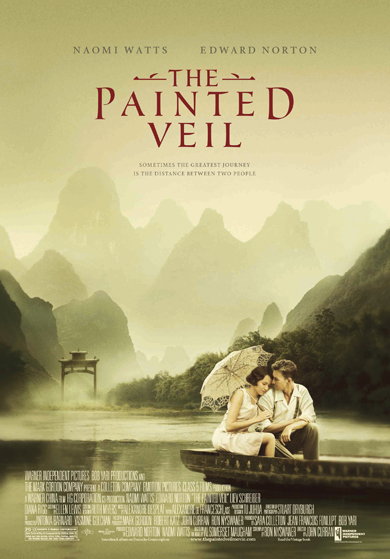
Painted Veil -  set in China, in the 1920's, and explores the impact of a cholera outbreak on a village, including references as to how religious beliefs make containing cholera even more challenging and the impacts of an earthquake. Focuses quite a bit on the importance of a water supply to development - the link to the module is slightly more tenuous than with some of the other films and books but it is still worth a watch!
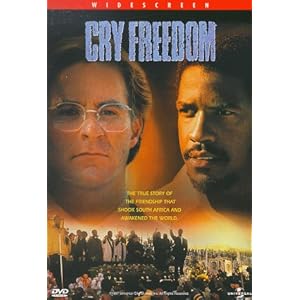
Cry Freedom - in South Africa and tells the true story of Biko and his friendship with a white liberal newspaper editor. Good film to watch for development as explores impact of apartheid on development and the importance of political stability for development to occur.

Gandhi -  a biopic about the life of Gandhi with particular reference to his prominent role in India's struggle for freedom from colonial rule.

Slumdog Millionaire - provides an insight into the life of children living in the Indian slums the problems associated here. Also illustrates how they are trying to improve education to enable development.

Erin Brockovich - a good film that presents the negative impacts of the natural gas industry and the extent to which large companies are prepared to go to, to cover this up. Not only would this be good for the AS Energy module but also globalisation with reference to the negative impact of TNCs.

The Constant Gardener - a rather sad story about how a drug company exploit the Kenyan population to allow them to test a new drug, despite the fact they know it has harmful side effects. Also explores the idea of corrupt governments and issues faced in LDCs.
The Cove - this film is very thought provoking and presented the issues surrounding the dolphin trade - before watching this I didn't know a lot about the issue, especially the scale of it in Japan, and it left me feeling very shocked that something like this still exists today in such a developed country. Issues of groupings, tied aid and trade are briefly explored also.

Blood River by Tim Butcher - tells the story of Tim Butchers quest to retrace the journey taken by H.M Stanley in the 1870s. from this you get an insight into the history of the Congo and the factors have effected its development - great book for the development and globalisation module as it provides an insight into the impact colonialism has had on Africa. Chasing the Devil: On Foot Through The Killing Fields of Africa is another Tim Butcher book, although this time based in Sierra Leona, that covers many issues intrinsic to low levels of development in Africa and the problems associated with this.

The Boy Who Harnessed The Power Of The Wind by William Kamkwamba and Bryan Mealer - tells the extraordinary true story of a Malawian teenager who overcame many obstacles to provide electricity and clean water for his village by capturing the energy in both the wind and the sun. Good for AS Energy as well as A2 development and illustrates the importance of energy supplies and appropraite technology to development. It also touches on the issues of living in areas of climatic extremes, the role of education and how corrupt governments influence aid distribution.
PeopleQuake: Mass migration, ageing nations and the coming population crash by Fred Pearce - a book about the population bomb and how demographics is driving politics. Explore how we got to this point and where we are currently heading and how it can be solved. Therefore it is a great book for AS Population (covers practically the entire module with some useful case studies and statistics!) and for A2 development and Globalisation. Human geographers will not doubt love this book but any geographer out there, like myself, who get carried away with the science and forget to mention people, this book is worth a read!
Globalization and Its Discontents by Joseph Stiglitz - as chief economist at the World Bank that author has a unique insider's view into the management of globalisation. In this book he speaks out against the IMF and WTO and the role of the West in driving global politics. This makes it a very good book for globalisation!

Plate Tectonics and Associated Hazards:
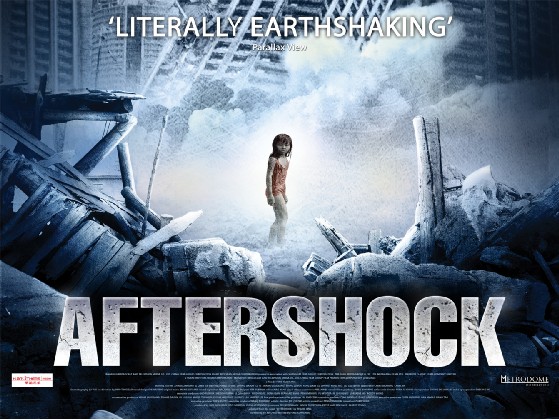
Aftershock - based around the Tangshan 1976 earthquake, which killed 242,000 people and coincided with huge political changes in China. This film cover issues including aid, politics and follows China as it changes over the time period covered. However, it is centred on one question; which 7 year twin will the mother chose to save? Bewarned it is a very said film, Millie was not overexaggerating when she said it was!

Dantes Peak - we watched this one in class, the worksheet we used in lessons is on Millie's blog so this could be a useful thing to watch and complete again as part of your revision. Covers preparation, evacuation and monitoring techniques as well as a few inaccuracies that you should be able to point out!
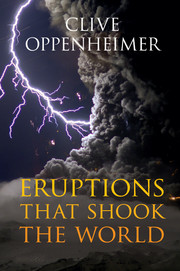
Eruptions That Shook The World by Clive Oppenheimer - I havent quite finished this book yet but I thought I should mention it as I am finding it quite useful for finding the odd statistic or two! Bascially this book covers everything we need to know about volcanoes and a bit more! Geologists, this is probably a really good book for you to read, but for Geographers it does link all the volcano stuff back to its impacts on people.

Weather, Climate and Associated Hazards:

The Day After Tomorrow - the Larsen B ice shelf collapses, the thermohaline circulation shutdowns, provoking glacial inception in the northern hemisphere, with other appending impacts - a good film to watch and then point out the geographical/scientific mistakes to test how much you have understood about the influence of ocean circulation on global climate and how a freshwater input could affect it!
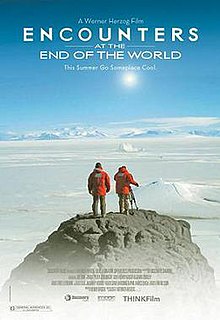
Encounters at the End of the World - a great documentary with some simply stunning footage and interesting interviews that collectively provide an insight into life in Antarctica and the important research that is taking place
The Age of Stupid - great film to watch for the energy module as it talks about climate change, energy consumption and production via some interesting case studies so also good for the A2 climate module
Gaia by James Lovelock - presents the Gaia hypothesis which is the idea that the Earth functions as a living organism and so self-regulates to adapt to changing conditions. This book puts forward some very interesting ideas, linked very closely to climate change both naturally and anthropogenically forced, making for an interesting read!

 The Revenge of Gaia by James Lovelock - applies the Gaia hypothesis to global climate change - again an intriguing read which presents some interesting ideas and solutions to problems we are likely to face with population expansion and coming global climate change
An Inconvenient Truth by Al Gore - I am guessing most will have heard of this one! It presents the issue of climate change and discusses how it has been caused and the impacts it is likely to have - well worth a read but if you prefer there is also a film version.

Our Choice by Al Gore - this book follows on from An Inconvenient Truth by offering the solutions Al Gore thinks are required to solve the issue of global climate change
Here on Earth by Tim Flannery - This is essentially a "revolutionary dual biography of the planet and our species." It covers the history of the earth from its earliest origins to the world we currently live in. it offers answers to a long list of questions - How did life first emerge? What forces have shaped it? Why did humans come to dominate? And when didiwe start to have an impact? How has this changed use as a species? It is probably wise to have a bit of knowledge of the Gaia hypothesis before reading this as it does mention this a bit. It is a very interesting book and one that leaves you questioning why on earth we did some of the things we have and continue to do - essentially a great book for all Earth Scientists!
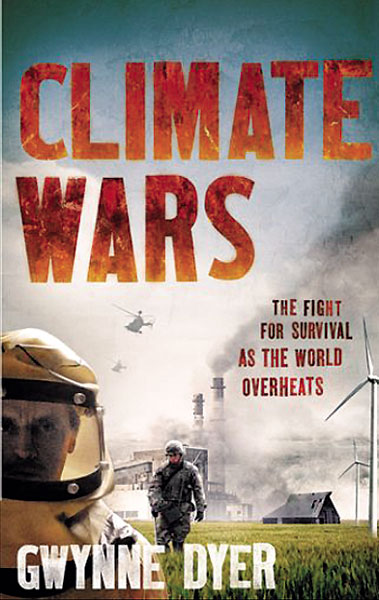
Climate Wars: The Fight For Survival As The World Overheats by Gwynne Dyer - "An increase of 2C in average lobal temperature - which is almost inevitable - will hear global politics to boiling point." Bringing together extensive interviews and latest research this book revela the realities of a planet facing scarce food, water and land. Can out technology save us, or is it too late? It is written in an interesting way as takes the science, makes it understandable before focusing on what excatly this means for society now and in the future. Any geographers out there, like myself, who get too carried away with the science of climate change, without consideration of what that means for people, this book is definently worth a read!!!
Storms of My Grandchildren: The truth about the coming climate change and our last chance to save humanity by James Hansen - covers global climate change, with both causes and consequences and the more contemporary role of politics, especially in the USA, in climate research - an interesting read but in places the level of science goes beyond the A-level syllabus.

Well, there are plenty more but this is probably enough to keep you busy for a while! There are also all the relevant documentaries, parts of which we have watched in lessons, like How Earth Made Us, for example, and I think quite a few of them are in the LRC. Unfortunately not many Geography related things are that happy so perhaps don't watch/read them all at the same time! I am still on the hunt for a 'happy' geography film or book! If you have any suggestions for others, or any comments on the above, let me know!


Saturday, 3 September 2011

Darfur - A student's film review

My Geography film of the week this week was Darfur - a film that was suggested we watched for the Development and Globalisation module. Before I write any more I have to emphasise that Millie's warning about this film is one to strongly consider before watching it as it is very graphic (really not one for the faint hearted) and is a film that I would suggest you watch with a cushion nearby to hide behind - trust me, it is more graphic and horrifically shocking than 'Shooting Dogs', that film Millie made us watch at Christmas!

This film tells the story of the journey taken by a group of international journalists in the Darfur region as they search for evidence that suggests genocide has/is happening. Unaware of what they might find, this group of international journalists visit a small village in Darfur under the protection of the African Union (AU). They manage to persuade their guide to take them to a village in Janjaweed territory and when they arrive, the journalists see how the Sudanese live daily in fear of rape, torture and murder by the government and rebel militia. Whilst interviewing the Sudanese men and women for accounts to take back home to convince the UN that genocide has occured, the Janjaweed militia turn up and threaten to kill the journalists if they do not live immediately.......


I am not quite sure how much you will know about what has happened in Sudan, before it split this year, and the events that this film is losely based on, so I will attempt to summarise some of the key points.  Civil conflict has occured on and off in Sudan for decades but in 2003, the Sudan Liberation Army (SLA) and Justice and Equality Movement (Jem) began attacking governments targets after accusing Khartoum of oppressing black Africans in favour of Arabs. Most of the tension built up in the Darfur region which had already experienced decades of violence and tension over land and grazing rights between the mostly nomadic Arabs and farmers from Massaleet and Zaghawa communities. Government response to this rebellion wasn't approved by the international community as they admitted to mobilising what they classed as ' self-defence militia'. However the President denied all accusations that they had links to the Arab Janjaweed militia who were accused of trying to drive out black Africans from large expanses of Sudan. Refugees from this conflict say that this is wrong as air raids by government aircraft were followed by Janjaweed attacks, who would ride into villages on horses and camels, slaughtering men, raping women, taking children and stealing whatever they could find.
There has been a lot of controversy over whether or not it should be classed as a genocide as firstly they are unsure excatly how many were killed and many of those that died, died due to starvation or disease. Many human rights groups and the US have said that genocide has infact taken place but, after an investigation in 2005, the UN concluded that war crimes had been committed but there had been no intent to commit genocide. The UN has estimated that since 2003 over 300,000 people have died (mainly believe that the actually figure is much higher) whilst 2.7 million have been displaced - mainly to refugee camps near the main towns or to neighbouring Chad where, as it has a similar ethnic make-up to Darfur, the violence has spilt over. The situation in Sudan has been incredibly unstable and unsecure for years and so many aid agencies have been unable to reach those that most need the help with some even being banned from northern Sudan following the arrest warrant for the President in 2009 for alleged war crimes.
I am guessing that most of you will know enough about what has happened most recently in Sudan, with reference to its split, but if you don't there is plently to read about it on the internet!

Is this a good geography film? Well, before I watched it my brother asked my what it was all about so I told him a bit about the background to the film and his first remark was to question what excatly genocide and the recent events in Darfur have got to do with Geography. Whats the answer.......well genocide effects both people and the environment and geography is all about people and the environment and how the interact. Going down the more human geography route first, genocide has impacts that can fill all the parts of S.P.E.E.D. Often the conflict can stem from social unrest, which can be generated via political unrest, and results in huge long-lasting societal and political changes. Geopolitics can become involved due to the view taken and role played by the international community. This can, in turn, lead to trade embargoes and cause fluctutations in the global market and thus effect the economies in countries across the world aswell as the country in which the conflict occurs.  Demographically, bites would become visible in population pyramids of that country whilst bulges in others due to forced migration. The mass migration away from the affected regions provokes the development of refugee camps which further increase issues with food and water availability, sanitation, spread of disease and all the other problems that are generated by the shear volume of people in such a small area being dependent on already previously limited resources. Migration to other countries only allows the violence and detrimental impacts of the conflict to spill over into neighbouring countries - an action in some cases that only sustains the violence. You can then link it to issues with aid getting to the people who need it and what types of aid are best in these situations etc. Honestly, this list could go on and on and I am sure you could think of a dozen more links to human geography straight away without too much thought; so what about physical geography? This is slightly harder but not impossible, especially if you look into what provoked the conflict. In a previous post I have already touched on the link between climatic changes and conflict and, with particular reference to the Darfur crisis, there is debate over the role played by regional climate changes in the initiation of the conflict with many arguing that drought and desertification played an influential role in stimulating civil unrest. You then have all the impacts that the conflict has on the environment so for example, if you can remember back to when we did that assignment for the energy module which included questions on the use of appropriate technology in Rwanda to help the coffee farmers as the conflict has destroyed much of the plantations and left the land unusable which then obvisouly have knock impacts on society. So, hopefully this proves the link between genocide and geography (I did manage to persuade my brother they were linked, although not to watch the film) so now I need to answer whether or not this is a good geography film.......

This film seems to have the sole purpose of shocking the watcher and it very successfully does this by presenting some truly horrific scenes. In terms of educational content, it definetly replicates what life in Darfur in the height of the conflict would have been like for people but it leaves a lot of questions unanswered - something which, to a certain extent, can be good as it should inspire you to go away and do your own research/reading into the topic. I think in relation to our geography course it is a film to watch and then link it to what you know about development, factors that affect it and the current situation in that part of the world etc. The current situation in Africa definetly sprung to mind: why didn't NATO and other international organisations get involved straight away to provide protection for the people when they rather rapidly got involved in Libya this year? For me, as a geography film from an educational perspective, I think it focuses too much on shocking the audience than necessarily educating them, although it does pick on a few key points like issues with aid agencies and the role of the international community, and I think most people will end up spending rather a lot of the time not actually watching the film but looking away (I certainly did!).  I have to admit though that although I recognise that in some cases people need to be shocked into realising/accepting/understanding/taking action etc., I am not a big fan of it and I personally feel that this film went a little bit to far down that route. Despite this, there are many things that you can learn from the film and it is, without a doubt, very thought provoking! If you have a strong stomach then watch it and read up on the details about the Darfur Crisis afterwards, the knowledge you will gain from doing so will really help with geography in general as it can be linked to some many different topics - I think you could possibly even link it right back to colonialsim in relation to how colonial powers literally chopped up Africa, with no consideration of how they were dividing cultural and ethnic groups and, certainly in Sudan, the north saw far greater development than the south. After watching this film you will certainly be able to understand why both North Sudan and South Sudan are at their currently levels of development.

So, if you think you can cope with the simply horrific and disturbingly graphic scenes which run throughout this film then watch it, as I have said you will learn things from it, but I just hope you heed mine and Millie's warnings beforehand - it really isn't one to watch if you haven't got a strong stomach, it is probably a good idea to watch it with some who has so they can tell you to look away at certain points and it will leave you feeling rather depressed, shocked and horrified afterwards that these sorts of things have actually occured - feelings only intensified by the realisation that similar events have occured on the same, and large scales, in other countries around the world.


Saturday, 20 August 2011

Invictus - a students film review

This is another film based in South Africa and on Nelson Mandela and if you are planning on trying to watch this and the last film, I would advise watching Goodbye Bafana first as it is set beforehand.


So, Invictus follows the story of Mandela after he is released from 27 years of imprisonment for fighting against apartheid. After being released from prision he became the first democraticly elected president of South Africa. Instead of looking to take revenge, he forgave his oppressors and  went in search of a way to unite the greatly divided country. He found the common ground he was searching for in an unlikely place: the rugby field, a place that for many had strong links to aparthied, and this is where the film's main theme lies. Through rugby, Mandela felt he could unite the broken South Africa and so he asked the national rugby team captain, and his underdog team, to win the world cup.

Is it a good geography film? Well, for much the same reasons as Goodbye Bafana, in relation to the Development and Globalisation module, it is pretty good. I think it quite nice to watch both of them as they are closely related to each other and Invictus kind of follows on from Goodbye Bafana. The film provides another look at aparthied, although more specifically some of the resulting problems in the country, and I think that to be able to understand the development of South Africa, you need to have some understand of aparthied and the impacts in had on development. Again, this film provides an insight into the levels of development in South Africa at that time and the problems that Mandela had to solve in order to allow the country to develop more sustainably. There is a bit of geopolitics throughout the film and just some other general geographical references that make it quite a good geography film to watch!

Goodbye Bafana - a student's film review

So, I have been trying further my knowledge of development and globalisation before we go back to college and as I have been doing a lot of reading for my EPQ, and I fancied a bit of a break, I thought I would watch a few films. The first one up is 'Goodbye Bafana'.

Based on an inspirational true story, Goodbye Bafana tracks the unlikely but profound relationship betwen James Gregory, a racist South African jailer, and his prisoner, Nelson Mandela. Gregory is ordered to spy on Mandela because he understands Mandela's native language. No one expected that a friendhsip would grow between these two very different men and through Mandela's influence, Gregory's world changes forever, along with that of every person living in South Africa.

So, is this a good geography film and what did I learn from watching it? Well, any film that is set in another country will instanly provide an insight into that country and this film very clearly depicts what life was like for everyone, not just prisioners, in South Africa at that time. The issue of apartheid is a key theme that runs throughout and is very important in relation to how it affected the development of South Africa. It is because of this that it is a good geography film as it presents some of the reasons for the development of South Africa and why it still experiences many issues today. Due to this, it is definetly a film to watch if you can find the time!

Friday, 12 August 2011

The Day After Tomorrow - A student's film review

I have spent rather a lot of time over the past month or so with my head in textbooks and papers etc. to help me try and get to grips with some of the basics of oceanography (trust me, it is literally like a whole new science) and so I fancied a bit of a break from the heavy reading. Therefore I thought I would watch the film The Day After Tomorrow......
This film is based on the events that follow, rather rapidily, the shut down of the Atlantic Meridional Overturning Circulation (AMOC) and a shift in the Gulf Stream as a result of global warming triggering the melt of ice shelves, with the collapse of the Larsen B ice shelf being the example in the film. In the film this leads to the onset of a new Ice Age where tornadoes flatten Los Angeles, tidal waves engulf New York and the entire Northern Hemisphere begins to freeze solid, forcing millions to migrate rather quickly as far south as possible. Stuck in the middle of all of this is a small band of survivors who have to ride out the 'superstorm' in the shelter offered by an old library whilst they wait for the father of one of the survivors, also a climatologist, to come and rescue them.

Now obvisouly this film was produced to be entertaining and so presents the extremes, and perhaps not quite reality and essentially it is this trait that makes it a good film to watch for geography as you can allow it to really test your knowledge. Its one of those films that, from an educational point of view, you have to watch and then point out the geographical mistakes made - quite an interesting challenge really (just do it when you're on your own though as, from experience, I have learnt that not everyone will appreciate an indepth explanation every 5 minutes as to why something would/could probably never happen in real life!). It is because of this that it really helped me consolidate some of the basics that I had learnt so far, in relation to my EPQ, and by doing this I could see the areas I had clearly understood well and others not so well - I might have to look out for films which would allow me to do this for topics on our syllabus as a different way of revising! For now though, I think I will write a little about the science behind the film and hopefully explain the basic priniciples that the film is based on.

At the beginning of the film, you see footage of the collapse of the Larsen B ice shelf. This actually happened in 2002. Larsen B was 200 metres thick, with a surface area of 3,250 square kilometres and all 500 billion tonnes of the ice sheet rapidly disintergrated ; thus making it the closest thing to a modern day Heinrich event we have ever witnessed. Not only did this result in a large freshwater water input as a direct result of the ice shelf collapse but it also resulted in a two-to-six-fold increase in the centreline speed of the four glaciers that flow into the now collapsed section of the Larsen B ice shelf - basically a lot of freshwater entered the sea as a result! It is this event that the film suggests caused the shutdown of the AMOC and although technically the large freshwater input would have had an impact on it, the freshwater from the disintergration of Larsen B didn't really affect the AMOC. This event, therefore, demonstrates the importance of the location of the freshwater input. The most sensitive areas of the THC are those where the sinking occurs, so in the Atlantic, up near Iceland etc.. The freshwater from Larsen B didn't reached this high latitude in the Northern Hemishpere due to the Antarctic circum-polar current which prevented it from spreading that far and therefore from having a large detrimental impact on the general oceanic circulation. Why could a freshwater influx effect the THC? Well, it is all to do with density and a freshwater input would upset the differing densities of the water and so prevent or weaken the formation of deep water and thereby effect the entire thermohaline circulation. In turn, this would alter surface currents, such as the Gulf Stream which dictates our climate, as it would reduce the movement of warmer waters to the higher latitudes in the Northern Hemisphere, allowing for greater sea ice formation and provoke the Gulf Stream to shift southwards. This would have a huge impact on the climate of the Northern Hemipshere and greatly reduce the temperatures experienced in the UK and countries of similar or higher latitiude. However, this change would not occur on the timescale portrayed in the film!!! This is, I suppose, the foundations of the science that the film tries to base itself on, although, as it is a film, scientific content is lacking but I will leave that for you to discover yourself!


So, is it a good geography film? Well, if you approach the film as one to watch with the aim to point out the geographical errors and try to add science to what you see, then yes. There are a few scientific mistakes to be found and the film does portray the extremes of what could happen if the AMOC was to weaken or shut down - a possibility in the future as it has happened in the past. You definitely get the idea that allowing a large volume of freshwater to enter the Atlantic is a dangerous thing! Like I said above, I found watching and then picking out the mistakes, quite a good way to consolidate what I have been trying to teach myself  and doing so was kind of like quite a good revision technique - something I might try again in the future!

Thursday, 14 July 2011

Blood Diamond - A student's film review

My Geography film of the week this week was Blood Diamond - a film I had never previously watched but a family member suggested it might be of interest to me in relation to the Development and Globalisation module..... and they were right!

Blood Diamond is set during the explosive 1999 civil war in Sierra Leone and follows the story of the unlikely friendship that develops between an ex-mercenary turned smuggler, a Mende fisherman and a journalist who is trying to make the Western world aware of the dire situation in Sierra Leone. These people are forced to join together as they try to complete seperate, but all desperately dangerous, missions : recovering a rare pink diamond of immense value, rescuing the fishermen's son who has been conscripted as a child soldier into the brutal rebel forces and telling the story, to the rest of the world, of the origins of the diamonds that the comsumers in the developed world desire at the lowest possible price.


I don't want to give to much away about what happens in the film as I think it is one of those films that is intended to shock you!
Is it a good Geography film to watch? Definetly!!! This film covers numerous issues that I am sure are going to be raised as we continue to move through the Development and Globalisation module. You get an immediate insight into life in Sierra Leone - a country that alternates between times of peace and beauty and times of bloodshed. The film forces the issue of the diamond trade upon the watcher and makes them see the impacts that the desire of the developed world for affordable diamonds has on the people of exploited coutnries, like Sierra Leone. Afterall, without a consumer there would be no market for the trade of such goods. This made me think about lots of things but one thought that stuck in my mind was, what would the countries of Africa be like today if they didn't have the raw materials that the Western world wants to exploit? Would we have still colonialised the countries? Would we still ensure some sort of control/influence in them today? And so, essentially, how has their abundance of resources, such as rare earth minerals, influenced their development? One of the other issues that features throughout is that of the civil war and the impacts it has had on the country and its people. Unfortunately, children in many countries are still conscripted as child soldiers by rebel forces. Much of the civil war experienced throughout Africa is, arguably, an unintended, detrimental, side-effect of colonialism (this is rather a big topic so I will leave this for a future blog post!) and so, in preparation for our first essay when we go back; this is quite a good film to watch as an introduction to the topic. So,overall, I would recommend that you watch this film as it makes you think about quite a few key issues surrounding African development, influences of the developed world and the impact of colonialism.

A Painted Veil - A student's review

I watched this film a while ago and whilst doing some research for the group work we had to do over the past few weeks (my group did Haiti) I realised that its link to Geography was not as tenuous as I first believed.
The film is based on the classic novel by W.Somerset Maugham and, set in 1920, follows the story of a young English couple, Walter, a middle-classed doctor, and Kitty, an upper-class woman. They get married for the wrong reasons and relocate to Shanghai, where she falls in love with someone else. Then, in an act of venegance when he uncovers her infidelity, he accepts a job in a remote village in China ravaged by a deadly epidemic, and insists that Kitty accompany him - and this is where the link to Geography can be found!

The deadly epidemic that is ravaging through the Chinese village is cholera; the same water-bourne disease that claimed so many lives in Haiti after the earthquake last year. The film provides an insight into the causes of cholera and why it is such a huge problem in underdeveloped countries. It claims so many lives and simple things like a safe, clean water supply and sufficient sewage systems prevent it from doing so. It also demonstrates the issues surrounding the prevention of the spread of this water-bourne disease, with particular reference to the impact of religious beliefs - especially burial traditions. Many people, like the villagers in the film, like to hold on to the bodies of the dead for a while before burying them, often near water sources. This often further fuels the epidemic and this issue is something that is common between the film and the aftermath of the 2010 Haiti earthquake. The film also presents the oppurtunity for the watcher to make comparisions between the level of development (bearing in mind it is set in 1920) in London, Shanghai and the Chinese village experiencing the cholera epidemic and also touches on the political instability present at the time in China.

So, is this a good Geography film? Well, its link to Geography is slightly more tenuous than some of the other films I have watched lately, but it is still definetly worth a watch! Throughout you get to see some spectacular footage of the Chinese countryside and you get an insight in what life was like in China at that time. The reflection, provided by the film, of the impacts of cholera on a region can easily be linked to our current module and helps you to gain an understanding of the issues that Haiti faced whilst trying to deal with the cholera outbreak, whilst also dealing with the aftermath of the devasting earthquake.


Sunday, 12 June 2011

Cry Freedom - a student's film review

Another film review (sorry- I watched these films a while ago and due to revision never got around to writing about them) of a film, that again, could be linked to development. This time though, it is not set in India but in South Africa.

Cry Freedom is a film about the friendship that develops between a black activist, Stephen Biko, and a liberal white newspaper editor  when, after the forceful and violent demolition of a slum in southeast South Africa, Donald Woods (the newspaper editior) goes in search of Biko who was banned, by the South African Government, from talking publicly and leave a stated area. When Woods meets with Biko, he is invited to visit a township where he can witness himself the impoverished conditions people were forced to live in and the impact on the people of the restrictions imposed by the South African Government's apartheid system. Biko later dies, under suspicious circumstances, whilst in police custody. In response, Woods tries to expose the police involvment in Biko's death, and in the process gets himself banned like Biko was, and then goes on, risking his life and that of his family, to bring Biko's message to the world.

I think that this a a really good film and it covers many topics such as discrimination, political corruption and repercussions of violence. The images at the beginning in the slum are horrific and the endless list of names of fellow activists who had died, accompanied by the 'offical' explanations for their deaths, really enforce the scale of this. In conclusion, the film provides a good, accurate historical account of the suffering caused by apartheid and makes it easier to understand why, despite the existance of equal human rights, that seperation in various guises still exists today. I would strongly suggest watching this film as it is a very moving and riveting and, like mentioned previosuly, could easily be linked to develpment.

Gandhi - a student's film review

Another one of my geography films of the week, from a while ago, is also set in India. Gandhi, a film made in 1982, is a film (as the title suggests) that depicts the life of Gandhi.

On the back of the DVD it says that "Gandhi was not a ruler of nations, nor did he have scientific gifts. Yet this small, modest man did what others before him could not. He led an entire country to freedom - he gave his people hope." and that is excatly what he did. He achieved so much for the people of India and, rightly so, is a greatly remembered and celebrated man. There are statues and pictures of him everywhere in India and he also features on their currency and this film tells the story of his life from when he arrived in South Africa in 1893 right up until he was assasinated in Delhi in 1948, with particular focus on India's struggle for freedom from colonial rule from 1915 onwards.

The first part of the film portrays Gandhi's struggle to force the South African Government to end the discrimination against the Asian community. From this struggle, the film provides you with an insight into life in South Africa at this time and this insight enables you to make contrasts to what India was like during a similar period. The majority of the film though is set in India from 1915 onwards, the year in which Gandhi returned to his home country after 20 years away and was driven around the streets of Bombay and deeply hurt and shocked by the poverty he saw.  The film, which I have to point out is 3 hours in length, from then on, focuses on the key events in the sturggle, led by Gandhi, for India's freedom from colonial rule. This includes scenes such as the horrific massacre at Amritsar, 1919,  in an enclosed courtyard, where the British opened fire on 15 000 unarmed men, women and children, killing 400 and severly injuring 1500 and this is just one of the examples of violenced used to try and dilute this movement. Another is the dramatic march to the sea where Gandhi led thousands of his fellow Indians to prove that sea salt belonged to all and was not just a British commodity. In the end India is granted freedom from British colonial rule but this was not gained without further bloodshed. The scenes of endless lines of refugees fleeing, in opposite directions, along the new border between India and Pakistan are very memorable and act as a reminder that peace was never truly achieved despite Gandhi's best efforts to peacefully gain freedom. The final scenes, which re-enact Gandhi's funeral, which was clearly a celebration of his life, just re-enforce the feeling of thanks and love felt by many people that is conveyed throughtout the biopic

So, do I feel it is a good Geography film? The film consists of many stunning images of the Indian landscape and, via the vivid images, it provides an insight into Indian life. Comparing it to Slumdog Millionaire, it is possible to see that many aspects of Indian life have, unfortunately, not changed that greatly. Something that this film does demonstrate, which is not included in Slumdog Millionaire, is an insight into rural life in India, thus allowing for comparisons to be made between rural and urban living. Although I don't feel confident enough to talk about how historically correct this film is, I still feel it is a good film to watch in relation to development and the impact that colonialism has on it. Overall, I would say don't be put off by the length as despite it sounding like a really long film, when watching it, it doesn't feel like you have been sat there for 3 hours. It is a very thought provoking film, partly due to the breathtaking images, but mainly due to the way in which the unforgettable events and messages that Gandhi wanted people to hear, are conveyed.

Saturday, 11 June 2011

Slumdog Millionaire

My Geography film of the week (from about a month ago!) was Slumdog Millionaire. The film is based on the life of Jamal  Malik, an 18 year-old orphan from the slums of Mumbai,  who is just one question away from winning a staggering 20 million rupees on India's 'Who Wants To Be A Millionaire?'. He is arrested on suspicion of cheating and he tells the police the incredible story of his life on the streets via the experiences that enabled him to answer the questions.


I first watched this film just before I visisted  India, as my teachers suggested it would help prepare me for what I would see when I went over there. Although, I don't really feel that anything prepared me for what I witnessed and the culture shock I experienced whilst  in India, this film does provide a very accurate image and description of the slums which, in large densely populated cities like Mumbai, can be found everywhere (there is a really good documentary on the Geogteacher youtube channel on this The Slumdog Children of Mumbai - it is well worth a watch). Through the life story of Jamal, you get to see how he grows up and confronts the many struggles faced by children living in slums. The glimpse you get of school is similar to what many Indian schools are like - kids literally do fight over textbooks (something that I don't think I have ever seen in an school in this country!) and classrooms are packed with as many children, of various ages, as possible. Other things that you see in the film, unfortunately, do happen in India. For example, the scenes involving the men who pick up children from the streets and then make them to go out on the streets to beg does happen. When I was in India, we spent some time just walking around the streets, perhaps one of the best ways to really get a feel for the daily life of many over there, we were very clearly instructed not to give money to the many that came asking for it because adults will actually rent children, from men like those in the film, for the day as you are more likely to be given money if you have a child - especially if they are disabled (hence why the men do what they did in the film).  If you watch carefully in the film you see Salim filling old water bottles with tap water and then superglueing the lid back on so they look like new bottles of water. Sourcing clean water is a huge issue in India, one that is only going to get worse (hopefully a topic for a new blog post soon!) and this, combined with peoples desperate need for money, means that this is known to happen quite a lot. From the film, you also get an insight into the ongoing development that is occuring in India, in the large cities. Office blocks and new businesses seem to just appear over night as companies are attracted to this developing country. Rapid urbanization is something currently being experienced - which isn't really shown in much detail in the film - and this is only furthering the problems accompanied with the swelling slums.

I personally think that this film is very cleverly made but is it a good Geography film? Well, overall, it does provide quite an accurate insight into life in a slum and life in India, in general. I feel it does fail to capture and convey the real rush and endless pace of Indian life along with the noises (and smells!), especially the beeping of car horns, which apparently all stand for something, although I found it impossible, due to the endless and chaotic beeping, to distinguish between them. Staying on the theme of roads, the footage of the Indian traffic was shockingly calm and orderly, compared to what I experienced, and when you hear people say that in India whole families travel on a moped, they literally do - often accompanied by the family goat or chickens. Films like this are often criticised for showing the extremes and, I have to point out that there are many amazing people in India, working incredibly hard, to fight against the poverty and help get children to safety, away from the streets and into schools, but in India, it seems that only the extremes exist, in terms of the rich and the poor, with no intermediate as the money does not filter down - this is why you often see slums sandwiched between high rise office blocks. In reflection, I would say that it is quite a nice film to watch in relation to development, poverty and population growth and is quite an easy watch as it combines some truly stunning scenery, thought provoking action and a bit of comedy and romance as well. It made me really think about the fact that India already struggles to cope with its population size and so cannot provide health care, education, housing, food, clean water and jobs to all and its population is continuing to grow - a prospect that worries me.

What will India be like in 2030 then, the year its population is predicted to exceed that of China?

Monday, 21 March 2011

Erin Brockovich

Erin Brockovich, which is based on a true story, was my Geography film this week as I thought I would watch a film that presents the environmental and social impacts of the natural gas industry as, when learning about the energy module, we didn't really concentrate that much on the negative impacts on both the environment and people that this industry can create.

The film re-enacts the life of Erin Brockovich, a single mother with no money, no job and no prospects. After her lawyer fails to win her personal injury lawsuit she manages to persuade him to give her a job as compensation for the loss. At first her colleagues fail to take her seriously but this soon changes as she discovers a suspicious cover-up involving contaminated water in a local community which is causing devastating illness amongst its residents.

The groundwater contamination was created when water polluted with hexavalent chromium was stored in ponds that lacked sufficient lining to prevent it from percolating into the groundwater. The Pacific Gas and Electric company was resonsibly for this. The company were transporting natural gas via pipelines that ran throughout the surrounding area. Natural gas has to be re-compressed several times during its transportation and, like many other forms of power plants, large cooling towers were used to cool the compressors. However, the components of the cooling towers are susceptible to corrosion and so hexavalent chromium was added to prevent this from occuring. The water used dissolved the hexavalent chromium and, during storage, it percolated into the groundwater and this not only affected the water supplies in the immediate area as the contamination plume, as it is known, spread.

By studying the medical records of the local people, Erin soon discovered a disturbing link between increased rates of chronic illnesses and the water contamination and after further investigation, including the discovery that the corporate headquarters of PG&E knew that the groundwater was being contaminated and advised Hinkley station to withhold this information for the local people, a judge declared that PG&E had pay large amounts of compensation to all those affected.

So, was this a good Geography film...? The film presents both the negative impacts, which mainly revolve around health, that this industry has had on the local people and the extent to which the large natural gas company are prepared to go to, to cut costs and to cover up the negative impacts of their industry in a very watchable format. Overall, I enjoyed this film and it did enable me to learn a bit more about the negative impacts specific to the natural gas industry. Although I felt that it lacked a bit of depth into the specifics, in terms of the geography related aspects of the films, I would still recommend it as a good film to watch.

Sunday, 13 March 2011

The Constant Gardener

I fancied a bit of a change from the energy stuff that I have been reading and watching lately and so I decided that, this week, my Geography film would be the Constant Gardener as it presents a totally different branch of Geography from the ones I have been learning about recently.

This film is set in Kenya and follows the lives of Justin, a British diplomat and Tessa, his outspoken activist wife. Tessa spends a lot of her time with a doctor who works in the shanty towns of Kenya and after witnessing people having to be tested for TB whilst wanting to be tested for HIV, she soon starts to discover a secret that many are prepared to kill for to ensure that it remains so. However, despite many trying to control her and prevent her from publicising the fact that a drug corporation are exploiting the Kenyan population for the fraudulent testing of a TB drug that has known harmful side effects and disregards the well-being of its test subjects, she manages to start to gather evidence and write a report which she later sends back to the UK. This report threatens to expose the drug company and the corruption of the government, who knowingly allowed this to happen, and to cost them both millions of pounds and in an attempt to eliminate this threat Tessa ends up getting murdered. Whilst on the hunt for his wife's murderer, Justin too uncovers this conspiracy that, unless he can uncover and publicise its sinister roots, will destroy the lives of millions of innocent people..........
I had previously watched this film but it is an easy one to watch again and, like the first time, I really enjoyed it and it manages to keep your attention through out. It presents some very interesting issues including the fact that, even though drugs are sent to Kenya, they are not fairly and efficiently distributed to the people that are so desperately in need of them. It also touches on the corruption of the many government officials in some developing countries and how some TNC and MNC are, due to the fact that much of the world is dictated by money, prepared to exploit them. The film also portrays the different apsects of life in Kenya from life in the shanty towns to conditions in hospitals and allows for comparisons to be made between rural and urban lives and the difficulties faced by both. Overall, I would highly recommend this film and, even though it does not really link to any of the AS modules, it is definetly well worth watching!

Tuesday, 22 February 2011

Encounters At The End Of The World - A students review

Just over a week ago now Millie watched this film and when she wrote her review she stated that it was one of her favourite films behind Harry Potter. Anyone who has been in a classroom when Harry Potter has been mentioned when Millie was around probably got the impression that she likes it rather a lot! So, as soon as she made this comparison I thought she must really really rate this film and so I thought I would watch it to see if it is any good......

The documentary consists of surreal footage of both above and below the ice and interviews with some interesting (and rather unique) people that work in Antarctica who are clearly very passionate and enthusiastic about the work they do. The footage of the scenery and the wildlife is unbelievable and the noises of the seals, the ice and just pure silence are literally out of this world. The documentary provides an insight into the research that is being conducted in Antarctica which ranges from studying the nutritional content of Waddell seal milk and neutrino detection to the study of the ice caps. All of this research is vital, especially the studies on ice caps as they hold the potential for us to gain a better understanding of both past and future changes within the climate.

I am a bit of an animal lover and so the bits involving seals and penguins really interested me but the bit that grabbed the most of my attention was the volcano stuff - especially the images of inside the fumaroles. Before watching this documentary I had never even heard of fumaroles before and to be honest I don't really know a lot about volcanoes. I still can't get over the sheer size of the fumaroles that are dotted around the sides of Mount Erebus. The documentary didn't really explain how they formed the massive ice towers or the caves but, as I couldn't get the images of the vast caves and towering chimneys out of my head, I just had to try and gain some understanding of how they are formed (sorry - I get a little enthusiastic about many things and my hunger for knowledge means I hate the feeling of not knowing!). Fumaroles are openings in the Earth's crust that emit steam and gas. The steam is created when superheated water turns to steam because the pressure of the water drops as it emerges from the ground. However if a lot of groundwater is present the fumaroles can turn into hot springs which provide a source of water that is heated by the escaping gases. The gases released are not always toxic and this is why scientists are able to enter some of the fumaroles on Mount Erebus. Fumaroles can occur individually or as part of a fumarole field. A fumarole field is an area that consists of both hot springs and gas vents that are created because the shallow location of magma and hot igneous rocks means they interact with the groundwater and release gases. In Antarctica the gas and steam that seeps through the openings in the Earth's crust cause the snow above to melt and this carves out huge caves within the snow. As the steam rises it freezes and chimney like features are created. Over time these get bigger and bigger and some of the fumaroles on Erebus are estimated to be two stories high (I think this is kind of the basics).


Anyway back to the review.......
I have to admit that I totally agree with what Millie said in her review about how she didn't like how developed McMurdo was. I understand the importance of the research that is being conducted in Antarctica and that some infrastructure is required for this to happen but, to me, it just seemed wrong to see a construction site accompanied by lots of heavy machinery in the backdrop of Antarctica - an area that I previously (and maybe naïvely) believed to be almost like a different world that was free from human influences and the encroachment of civilisation.

Overall I think this film is definitely worth watching as it provides an insight into the work that is being conducted in Antarctica, what it is like to live there and what Antarctica is like in general. Apart from a few links to climate change it is not necessarily relevant to our current module but it did make me think about the fact that if global temperatures rise, in say 30-50 years’ time (or maybe even less, who knows) the landscape, that is portrayed in this documentary through some simply stunning footage, is going to look very different to what it does today.


Wednesday, 26 January 2011

Student review of 'The Age of Stupid and links to a few articles related to renewable energy resources

Last week my Geography teacher watched the film The Age of Stupid and suggested that we all watched it as we would have only a limited amount of time to talk about climate change in lessons. She thought it was interesting and so I thought I would watch it and write a short review on the film from a student’s perspective.

The film is set in 2055 with a man who is living alone in a world that has been devastated by climate change. He looks back at the archives of documentaries and news reports (all of which are real) of how environmental changes have altered our lives so far and how our lifestyles have ultimately altered the environment. From the information the archives provide, he asks why didn’t we do something when we had the chance instead of ignoring the glaring signs. The film makes very clear the differences in energy uses across the world by frequently comparing the USA, UK, China, India and Africa and how our desire for resources had led to conflict and, in some regions, poverty. In terms of its relevance to what we are doing at present, the film includes two interesting case studies surrounding different energy resources. One is about the oil industry and its negative impact on the developing world with specific reference to Nigeria. The other explains the problems faced by wind farm developers who try to set up wind farms in the UK and highlights the NIMBY attitude shared by many in this country. The other case studies are also quite interesting as they delve into the reasons behind why people are reluctant to change their ways and how the changes in the environment are impacting on our daily lives. It also explains how climate change is a global issue and so attempts to reduce its impact have to be globally united ones if they are to have any significant effect. Personally I think it is well worth watching and is an easy way to spend 90 minutes if you need to learn more about this issue as the film does not really touch on any new scientific ideas but instead ties in all the basics in a watchable, but still educational, format.
I believe that most AS students have now started working on the energy presentations. Last night I was trying to do some research on my energy resource but was finding it rather tricky to do so and instead kept finding lots of useful articles on some of the other energy resources. I thought that I might include some of them on this blog encase they will be of any use to any other group. Even if they are not, they are still quite an interesting read as they provide an insight into what is happening, in terms of energy, around the world. When I was looking for articles on energy resources the first place I looked was on the National Geographic website and this is the link to their special energy section http://environment.nationalgeographic.com/environment/energy/great-energy-challenge It contains some very up to date information and is particularly good if you are looking for case studies (the majority of them are based in other countries but they still  might be useful).
 I found this article (http://www.greatenergychallengeblog.com/blog/2011/01/17/kenya-steps-into-solar-future/ ) which explains how the use of solar energy is becoming very popular in Kenya as it is cheap and means that villages don’t have to be connected to a national grid. Solar energy is the biggest form of renewable energy that is being explored in Kenya as not only is it cheap and better for the environment but there are also a lot of health risks associated with the traditionally used kerosene lamps.

Last week, India announced that they were planning to build Asia’s first commercial scale tidal power plant which is to be situated in the Gulf of Kutch and has the potential to generate many economic and environmental benefits for the region. http://www.bbc.co.uk/news/science-environment-12215065 Also, October last year, a proposal to build a tidal power plant at Pentland Firth was given the go ahead. This project will involve 400 submersed turbines which have the potential to supply the electricity needs to 400,000 homes. http://www.bbc.co.uk/news/uk-scotland-highlands-islands-11636959 After the scrapping of the Severn barrage; both of these projects provide a huge boost to the world development of tidal energy.

Geothermal energy is another type of renewable energy that is being used across the world. http://news.nationalgeographic.com/news/news/energy/2010/12/101228-geothermal-energy-pick-up-real-steam-  This form of energy currently provides Iceland with 25% of the electricity it consumes. However this source of energy is only most productive in areas which have strong volcanic activity and so cannot be utilised worldwide.

These are just a few of the articles I found (I hope they are of some use) and there are plenty more on the National Geographic website and in other places on the internet. One related article that did catch my eye was this one (http://news.nationalgeographic.com/news/energy/2011/01/110117-100-percent-renewable-energy/ ). This article discusses whether or not we can actually survive on purely ‘green’ energy in the future and the fact that to build enough power stations to enable us to do so would require the use of lots of finite resources. For example, millions of wind turbines would have to be built to allow us to become more reliant on this energy resource. To build these turbines we would need to use a lot of neodymium (used in magnets) and it is estimated that the worldwide production of this mineral would have to quintuple to supply us with the quantity that this project would require.