Sunday, 24 April 2011

Migration Case Studies

As I worked through the population module yesterday afternoon, I soon realised that I didn't have any notes on any of the migration case studies and so I have spent this morning reading up about each of them and I thought, due to the fact that I know I am not the only one lacking notes on this, that I would type them up on here instead of writing them all out by hand.

Bosnia Herzegovinia

Origin of the Area
After years of unstable governments, economic problems and conflict; the central European country of Yugoslavia spilt up into various countries. The process started in 1991, when the country spilt into four, and has continued for years up until the present day. Bosnia Herzegovina, one of the largest countries to come out of the division and it gained its independence in 1992. The areas population structure of Serbs, Albanians and Croats has historicaly been a place of ethinic conflict, which was ultimatly the cause of the spilt.
After the formation of the country, war broke out and years of fighting between the ethinic groups followed. Ownership of land was disputed, resulting in ongoing conflict that led to economic and  political instability across much of former Yugoslavia. Thousands of people were killed until the area settled down in 1995, but even today it is far from stable.

Migration inside Bosnia Herzegovinia is forced, meaning people are moving because of fear. Forced migration within the country is due to the ongoing conflicts, and is displacing thousands of people from their homes. Many moved to cities or towns and stopped at the nearest safe place they could find. Others emmigrated to other countries. It is estimated that 40% of those who emmigrated went to either  Serbia, Montengro or Crotia whilst some went to the USA, Canada and Australia but the majority emmigrated to Germany and Austria.

As a result of the ethnic cleansing that took place it is thought that around 102 000 people were killed and just under 2 million people were displaced.

Push Factors
Þ  Heavy conflict meant that the threat of losing your life was forever present
Þ  Lack of tolerance for religious and cultral diversity
Þ  Frequent violations of basic human rights
Þ  Poor public services and other facilites
Þ  Lack of employment and economic stability – conflict destroyed crops and farm land
Þ  Destruction of property and infastructure                                                                             

Pull Factors
Þ  Religious freedom –people fled to where their ethnicity was a majority not a minority to try and avoid the ethnic cleansing
Þ  Safety in numbers – more people lived in the cities and towns and the death threat was not as prominent
Þ  Stable economy – adults needed jobs and a realiable income to sustain a family
Þ  Better infastructure that had not been devasted by the conflict
Þ  Better and more widely avaiable facilites and public services

Migration Obstacles
These are problems people face in the area that could prevent them from migrating. In the current situation, most people will face problems but because they are migrating through fear, will find ways to overcome them. If the situation is forcing people to migrate, most will go to any extent to find a safe place to live. Despite this, people could face problems such as lack of money or transport and confusion as to where a safe place to go actually is. Most will end up going to urban areas, resulting in general rural to urban migration in Bosnia Herzegovinia.

Positives about the orgin
Bosnia is predominantly a mountainous country with only a few regions of flat grass land used for farming. This is where most of the ethnic cleansing took place and so this caused problems with food supplies as farmers and their families migrated away from the unsafe countryside to the cities. Flat land was fiercely fought over as it was the most suitable land to farm. 

Negatives about the destination
The areas where people migrated to quickly became overcrowded and refugee camps started to appear like the one near Kosovo. It was reported that over 4000 people were fleeing into camp near Kosovo every hour. This stretched public services and also provoked higher crime rates as people became desperate. The land nearer the cities and towns was harder or impossible to farm and so food shortages were an issue.

Neutral factors of the origin and destination  
The situation in the destination, compared to the origin, is likely to be very different. It will probably be more crowded, but would not be under the pressures of conflict the origin had. Some things could remain the same however, such as general living conditions. Overall, you would probably expect life to much better in the new destination, as life would be reasonably similar to before, only without conflict.  

Effects of migration
Rural to urban migration has lead to an uneven distrubtion of skills. This has also meant that food production has been reduced as farmers left the countryside for safety. This has meant that their was no one left to farm the land. Ethnic cleansing has increased the seperation between the different ethnic groups that reside in \Bosnia Herzegovina and the violation of human rights has been reported to still occur; especially amognst the refugees that are still returning home. Although the European Union Peacekeeping Troops are still present in Bosnia Herzegovina to try and maintain the peace and stability; things are starting to improve. It is estimated that 579 000 people have returned to their original homes with many more locally intergrated.

Africa to Western Europe

Origin of the Area
Many of the countries in Africa face political instability or are under dictatorial rulers that seem to care little about the quality of life and social welfare of those in the country. Health care is poor, or non- existant, and with HIV and malaria being rife in many of the countries that make up this contient life expectancy is extremely low (the average in Africa is 47 years). The accessibilty to education is also a big problem across much of Africa and job oppurtunites are hard to find. Access to clean water, food, electricity and many of the things people in the developed world take for granted, are also extremely hard to come by.


Push Factors
Þ  Lack of health care
Þ  Lack of education
Þ  Conflict and political instability
Þ  Poor public services and other facilites
Þ  Lack of employment and economic stability
Þ  Lack of infrastucture
Þ  Lack of religious freedom                                                                              

Pull Factors
Þ  Free health care and education
Þ  More polictically and economically stable
Þ  More job oppurtunites with a minimum wage enforced
Þ  Better and more widely avaiable facilites and public services
Þ  Laws enforced in a fair and humane way means safety

Migration Obstacles
Travelling on old fishing boats from Africa to Europe is very dangerous and many do not survive the route (in June this year, 24 Africans drowned after a dinghy capsized south of Malta)which, due to people smugglers, can cost up to 2000 Euros. I Also once you get to a country like Spain, which is popular due to the fact that it is one of the closest European countries, many often get expelled from the country or repatriated. The language barrier can also present problems when it comes to communication and with living costs being so much higher in European countries, most cannot afford to find somewhere to live. The cultral barrier is another obstacle that needs to be overcome but perhaps the biggest is gaining the right to permanent residence in that country.

Positives about the orgin
The culture, language and climate are the same and all very different to those found in European countries. The skills that many of these immigrants have are most applicable to the conditions found in their origins.  

Negatives about the destination
The cost of living is very high and separation between immigrants and the people already living in the destination can create tension and, in some extreme cases, result in violence. High taxes also have to be paid.

Effects of migration
-          In 2006, about  22,016 people reached Italy by boat from Africa
-          The majority of African migrants live in Europe with an estimated 4.6 million doing so compared to only 890,000 in the USA
-          About two-thirds of Africans in Europe are from North Africa
Having migrated, many of the migrants send home money to family members they have left behind. Billions of dollars each year is sent back to Africa from migrants scattered around the world and, in some cases, this makes up sizeable chunks of the origin country’s GDP. However, it leaves many families seperated and again leads to a lack of skilled people in the origin. The impacts on the destination are, perhaps, mainly negative as huge amounts of money has to be invested in combacting illegal migration. The legal migrants though, do help to bolster a country’s workforce which, in countries like the UK who have an ageing population, is crucial if they are to  maintain a certain degree of economic stability.

Brain Drain from UK to USA

Push Factors
Þ  High taxes which, in the near future, are only expected to get higher
Þ  High house prices and day to day living costs
Þ  Poor climate
Þ  Career stagnation is making it harder and harder for newly qualified graduates to get a job
Þ  Lower salaries
Þ Industrial unrest


Pull Factors
Þ  Higher initial salaries are offered in the USA compared to the UK
Þ  American universites and research companies have made the effort to attract graduates over to the USA
Þ  Many feel that they have a better chance of getting a job in America
Þ  Many just want to take the oppurtunity to work abroad and see it as part of their personal development
Þ  No language barreir

Migration Obstacles
The cost of moving to America is without a doubt the biggest obstacle that needs to be overcome. The costs involved with moving to America would be huge but the fact that so many people chose to move to America suggests that the rewards must be very high. Distance is another obstacle as moving to America means that you are a long way away from family members and friends. Getting a green card/visa is also another obstacle that needs to be overcome by people wishing to move to America.

Positives about the orgin
Free health care and education system are the biggest positives about the origin. Being part of the EU means that travelling amongst other countries in Europe is easy.

Negatives about the destination
Health care system is run slightly differently and so you end up paying a lot more for it then you, indirectly, do in the UK. Higher crime rates, especially gun crime rates due to different laws.  America experiences hurricanes and wildfires and earthquakes, amongst other things, that do not occur in the UK due to the climate and location.

Neutral factors of the origin and destination 
There are similarities between the origin and destination like the fact that the same languages are spoken and, in terms of development, they are on very similar levels. This means that the facilities found, and the quality of them, will be very similar. Compared to other countries they are both quite politically stable with similar military activities in other countries.

Effects of migration
This migration has led to an uneven distribution of skills. This has rapidly changed British society as large numbers of highly skilled graduates are moving abroad and this is not match by those migrating to the UK. However, this brain drain has attracted more than a million skilled immigrants to the UK which has helped to reduce the impacts of this trend. It is believed that if the UK stopped attracting graduates from abroad the full force of the impacts of this trend would be felt. This emmigration trend is costing the country a lot of money as, for example, it costs £250,000 to train a junior doctor who, like many, is choosing to practice abroad (it is estimated that 37.7% of those emmigrating have health or education qualifications). This is greatly benefitting the USA who don’t have to pay for the training of professionals but are benefitting from their education, which was funded by the UK.

 
Poland to the UK

Origin of the Area
Poland was admitted to the EU on 1st April 2004 and with this came the right for any citizen of Poland to move freely around all the other EU countries. On the accession to the EU, it was anticipated that  levels of migration from Poland and the other A8 countries (all former communist bloc countries in central and eastern Europe) to the UK would drastically increase and this is excatly what happened. Living conditions in Poland are poor and unemployment is a huge problem and so many people have been attracted to the UK. This is only one of the three major waves of Polish immigration to the UK though. The first wave was as a result of wartime displacement and deportation with the Nazi occupation of Polish territory. The second wave occurred during the cold war when, despite the heavy restrictions on movement imposed by communist authorites, several thousand Poles joined existing groups in the UK.


Push Factors
Þ  High levels of unemployment – in 2005, 18.5% of those at working age were unemployed in Poland
Þ  Poor living conditions
Þ  Low salaries
Þ  Poor public services and other facilites
                                                                             

Pull Factors
Þ  The UK was one of only three countries (the other two being Ireland and Sweden) who didn’t put a limit on the number of migrants from A8 countries who could enter the country
Þ  English is spoken as the second language in Poland and so there was no language barrier, as such, to overcome
Þ    Migration was easy to the UK due to cheap flights and coach services
Þ    Plenty of avaliable jobs in the UK due to a skills shortage (think about the Brain Drain to the USA)
Þ    An average Polish worker could earn five times the amount he could in the UK compared to what they could earn in Poland
Migration Obstacles
Compared to the other case studies there are not many obstacles that had to be overcome. Language was not an issue, entry to the country was not an issue and budget airlines were able to offer relatively cheap transport to the UK.

Who are the migrants?
-          Around 80% are aged 18 to 34
-          Only one in ten have brought dependents with them
-          Only 3% have brought dependents with them who are under 17
-          The average age is 28
-          Most of them are single
-          The ratio of males to females is 58:42
-          Most of them are skilled/semi-skilled industrial workers and tradesmen
-          No real demographic concentrations as they choose to reside in both rural and urban areas up and down the country
-          97% of the immigrants work full time

Neutral factors of the origin and destination  
In terms of development, the origin and destination, as they are noth memebers of the EU, should be very similar. The language barrier is not present, so to speak, as English is taught as a second language in Poland. Cultural differences are not going to be wildly different either.

Effects of migration
It has been estimated that Eastern European immigrants have contributed £2.5billion to the UK’s economy and roughly 1% of the UK’s growth in 2006 was attributed to the same workers. British businesses have been able to cash in on the new market created by the presense of the young, single Poles who seem keen to join the consumer culture common in the UK. Polish shops and businesses have helped to start and rejuvenate the seriously declining shopping streets of the UK and also swell the size of church congregations. The migrants, 80% of which are aged between 18 and 34, have helped the UK cope with the problems being provoked by the ageing population by filling the gaps in the UK’s labour market and have also helped to fill the skills gap created by the brain drain. However, additional stress has been placed on the education and health care systems and demand for housing has further driven renting/buying prices higher. Also much of the money earnt is not staying in the UK as it is being sent back to Poland. In Poland, itself, this migration of young workers to the UK has helped to reduce the unemployment problems but has been blamed for increased divorce rates.

India to Dubai

-          In the UAE, 90% of the workforce (10 million people) are migrants, most of which originate from  the rural areas of  India, Bangladesh and Pakistan.
-          Dubai has a population of 1.5 million and 1 million of these people are migrants.
-          As Dubai’s oil reserves are declining the ruling family, Maktoums, wanted to invest their wealth to make Dubai the best city and so they created lots of long term building projects. Many migrants have seen this as an opportunity to earn some money whilst enjoying the glamorous city life that Dubai claims to offer.
-          The average wage of a migrant in Dubai is $4 a day and most of this is sent back home to their families.
-          Migrants who get work on one of the long term building projects have to pay for their travel to Dubai and on arrival their passports are confiscated  while they are on a contract with a firm. Exit visas can’t be obtained without approval of a sponsor or an employer. These workers live in the workers’ camps which are remote and cramped and  constructed in the desert. This thereby adds extra time, for journeying to and from the construction site, to an already long enough 12 hour shift. There are also many accusations of discrimination and violence from employers, police and security forces including sexual assaults of women.


Push Factors
Þ  Poor infrastructure and lack of housing and santitation
Þ  Areas very densely populated
Þ  Lack of job oppurtunities
Þ  Monsoon rains hampering economic progress
Þ  Lack of natural resources
Þ  Poor standard of living
Þ  Low salaries                                                                           


Pull Factors
Þ  In 2007, it was named the world’s fastest growing city
Þ  More job oppurtunites – all of which are better paid
Þ  More stable economy
Þ  Better infastructure anf facilities
Þ  Believed to offer a better quality of life

Migration Obstacles
Again the costs involved with moving are high and once you are there you are not guaranteed a job. The is also the language barrier and the cultral differences that migrants have to overcome.

Positives about the orgin
Depends greatly on where in India the people are emigrating from. A few regions, like Kerala, have good education and health care services and equality for all.  

Negatives about the destination
Many of the negatives have been mentioned at the start of this case study but to reinforce the idea……..the working conditions and the living conditions provided are very poor and violence appears to be common. Wages are not great as there is no minimum wage and spending 12 hours in the heat, building skyscrapers is not ideal. The employers also fail to pay for many things that they should including health care costs and visa fees. The corruption of the employers who, illegally, hold on to workers passports means that once in Dubai it is very, very hard to leave.

Neutral factors of the origin and destination  
Living conditions do not seem to be that different and corruption among officals is something that is common to both countries.

Effects of migration
It has eased the unemployment problems in India but has left a shortage of men to work the land and produce food for the country, as they are the ones who have been migrating to Dubai for the manual labour. The migrants offer cheap labour for Dubai and are prepared to work long hours doing the manual labour required to develop the infrastructure that is required to attract people from the developed world to this region. Despite a tight control on the media, local newspapers etc have reported on and opened the worlds eyes to the dreadful conditions and abuse experienced by the migrant workers in Dubai which has started to give it, and rightfully so, a bit of a bad reputation.  Many migrants want to move back to India, but cannot at present afford to or travel as their employers hold on to their passports. When they do manage to move back to though, Dubai is going to be left with a huge gap in its society which will affect its development, whilst the unemployment problems still present in India will be furthered.

Rwanda to DR Congo

Origin of the Area
Rwanda is in central Africa, east of Democratic Republic of the Congo where the separation between the Hutu and Tusi has caused huge problems and forced many to migrate to the DR Congo. The tension between these two groups was first created when the Belgian colonists treated the Tutsi as the superior group despite the fact the Hutu were the majority.  On 6th April 1994 genocide was sparked when the Rwandan president Juvenal Habyarimana’s plane was shot from the air above Kigali airport. With less than hours after the attack, a campaign of violence spread from the capital throughout the country, and did not subside until three months later. In Kigali, the presidential guard immediately initiated an operation of retribution. Leaders of the political opposition were murdered, and almost instantly, the slaughter of Tutsis and moderate Hutus began. This conflict later became known as the Rwandan Genocide and lasted 100 days and claimed the lives of close to 1 million people (the majority of which were Tutsis).  In July, of that year, the Tutsi’s managed to gain control of the capital Kigali and declare a ceasefire. The Hutu, fearing retribution attacks, fled to Zaire (which is now the DR Congo). It is estimated that around 2 million refugees fled from Rwanda.

Push Factors
Þ  Heavy conflict meant that the threat of losing your life was forever present
Þ  Lack of tolerance for religious and cultral diversity
Þ  Frequent violations of basic human rights
Þ  Lack of employment and economic stability – conflict destroyed crops and farm land (think about the Bikes to Rwanda case study we did in the energy module and how the genocide effected the once thriving coffee industry which, at present, is still struggling to recover)
Þ  Destruction of property and infastructure due to the conflict                                                                                   

Pull Factors
Þ  DR Congo was more stable than Rwanda
Þ  Safety
Þ  Not to far away (think about distance decay)
Þ  Better infastructure that had not been devasted by the conflict

Migration Obstacles
Surviving the journey to the DR Congo was the biggest obstacle as many feared for their lives. The migrants had also lost everything and so life, if they managed to get into the DR Congo, would be extremely hard.

Positives about the orgin
The Hutu’s were in a majority in Rwanda and safety often comes in numbers. Coffee plantations offered the most employment and many men had skills in these areas which were harder to apply in the DR Congo.

Negatives about the destination
Many of the tribes in DR Congo (then Zaire) had links to the Tutsi’s and so the Hutu’s were not always received very well. The country also had its own problems including civil unrest, unemployment and lack of food and access to clean water in many areas.

Neutral factors of the origin and destination  
Both countries had been under Beligium colonail rule and, after they claimed independence, both countries became unstable in terms of the econonic, political and social aspects of life.

Effects of migration
This migration ultimately led to many wars in Zaire as some of the tribes had Tutsi links and it was as if the conflict in Rwanda just spilled over into the DR Congo.  There have also been reports of Rwanda supplying arms and soliders to the Tutsi rebels in DR Congo. Refugee camps had to be set up to accommodate this sudden migration and thousands of the migrants died in epidemics of diseases common to the squalor of refugee camps, such as cholera and dysentery.

These are only a few rough notes that I made quickly this morning to try and fill the gaps in my knowledge. There are other things that you can add under each heading as I didn’t bother with all of the really obvious push and pull factors, for example, or bother writing about some of the origins as I think most of you will know enough of the basics about some of the countries. If you get the chance, I would suggest reading the book Blood River by Tim Butcher as it mentions the Rwandan Genocide and the effects that both Belgium colonial rule and the migration have had on the DR Congo – I started reading it the other day and it is extremely good so far (review probably won’t appear until after my exams though) and I have been struggling to put it down! Anyway back to the revision, I hope this is useful and I think I covered all the basics – let me know if there is anything I crucial I have missed out!

Saturday, 23 April 2011

Population Policies Case Studies

I have been getting the general feeling that people, myself included, are struggling when it comes to the population case studies due to a lack of notes. Population policies and migration seem to be the ones that everyone is lacking and unfortunately I don't seem to have any notes on the migration case studies but I do have some on the population policies so I thought if I type them up,  it would be one less thing from everyone to worry about!

Population policies are used by countries to try and achieve optimum population and there are four types:
ANTI-NATAL= discourages births because you are worried about over population and its effects
-----> China and Singapore
PRO-NATAL= encourages births because you fell that you do not have enough people in your country
-----> France
TRANSMIGRATION= if you have parts of your country that are overcrowded and other parts that are virtually empty you might try and even things out a bit
-----> Indonesia
IMMIGRATION= you do not want to have open borders even if you are underpopulated because you could end up with lots of people who will drain your resources rather than help your country - all countries have immigration controls of some kind
-----> Australia (very strict!)

CHINA   ANTI-NATAL

When was the policy introduced?
The 'One Child Policy' was introduced in 1979 and although it was designed as a temporary measure it still continues today.
Why?
Mao, the ruler between 1950 and 1959 said that "the more people, the stronger we are" and " a large population gives a strong nation". This resulted in China becoming overpopulated and its resources seriously stretched. This led to a famine in 1959 where 20 million people died. Despite this famine, China's population continued to grow by 55 million a year. In 1978, Deng Xiaoping became ruler and he had a very different view on population to Mao. He wanted to focus on strengthening the economy and saw overpopulation as a roadblock to economic development and so introduced the 'One Child POlicy' in 1979.
How does it work?
The One Child POlicy limits couples to having one child. However it isnt legally binding nationally (although very strongly enforced in urban areas) and so there are some exceptions to the policy.............
- In most rural areas families are allowed a second child under the condition that the first child is female or disabled and that they leave a time spacing of 3 to 4 years
- China's 55 ethnic minorites (8% of the population) are exempt from the policy
- Couples are permitted to bear antoehr child if their first is disabled or dies
However, for the rest of the population this policy is strongly enforced. Pressure is put on women to use contraception and forced abortions and sterilizations are reported to have occured. The 'Granny Police' are used to male sure  people use contraception and to report on pregnancies. Those who abide by this rule are rewarded with promotions and preferences for education and housing.
Has it been effective?
At present China's populations stands at around 1.3 billions but it is believed that it would be 25% higher if the policy wasn't introduced. The policy has lowered the TFR to 1.6. This reduction in population size has helped to recude the strains on social services, natural resources and reduced the scale of the problems provoked slums and epidemics.
Have there been any recent changes to the policy?
In 1995 the Eugenics Law was introduced - if couples want to marry they are tested for genetic disorders and infectious diseases. If carrying any of these they cannot have children and so must use contraception or be sterilized. Apart from that the policy has been relaxed slightly. For example, in urban areas, if both husband and wife are from a one child family thet are permitted to raise two children (this is likely to only be a temporary relaxation).
Are there any negative side effects?
Female infantcide has become an issue as boys are preferred to girls. This has produced a distorted sex ratio and in 1996 there was 118 boys to every 100 girls. Little Emperor Syndrom is also becoming an issue as parents give too much attention to their only child which has resulted in high obesity levels and demanding boys who often become delinquents in their teens. The policy has also created an ageing population and this problem is only going to get worse as by 2020 all of those born before the policy was introduced will have reached retirement.
Criticisms of the policy?
- The One Child Policy has been criticised by human rights activists as they say the policy is against human rights.
- Chinese demographers argue that the transition to market economy, rather than family planning, is the main reason for the rapid drop in Chinese fertility over the last 30 years.

SINGAPORE
 
When was the policy introduced?
- In 1966 they established the Family Planning and Population Board, which was responsible for providing clinical services and public education on family planning
- In 1970, abortion and voluntary sterilization was legalised
- In 1969 the 'Stop at Two' policy was introduced
- In 1986 the 'Three or More if you can afford it' policy was introduced
Why?
Since the mid 1960's Singapore's population grew due to falling death rates, high birth rates and high immigration. The Singapore governments saw rapid population growth as a threat to the living standrsa, education and health services and political stability of the country. Between 1969 and 1972, a set of policies known as population disincentives were introduced to raise the costs of bearing third, fourth and subsequent children.
Has it been efftective?
Perhaps the 'Stop at Two' policy was too effective............ Fertility declined throughout the 1970's, reaching below the replacement level to 1.006 in 1975, and declining further thereafter. By the 1980's, the government had become concerned with the low rate of population growth and with the relative failure of the most highly educated citizens to have children. 
Have there been any recent changes to the policy?
In 1986 the government decided to replace the 'Stop at Two' policy with 'Have Three or More, if you can afford it' and now, as a result, the TFR is 1.9.

FRANCE   PRO NATAL

When was the policy introduced?
- 1939 the Code de la famille was introduced with a range of financial incentives for married couples with children
- 1920 and 1923 laws passed banning abortion and contraception
- 1940 Minitsty of POpulation intoduced the death penatly for back street abortions
Why?
France has had a problem with its birth rate since the middle of the eighteenth century. France experienced  a period of population stagnation caused by low levels of fertility (desire to limit inheritnace to fewer children, late marriage, high levels of celibacy) and higher than average levels of infant mortality (due to poor sanitation, nutrition and health care). This low level of fertility continued into the twentieth century and was furthered by such events as the two world wars, and the influenza epidemic of 1919.
How does it work?
 - Concours de la meilleure menagere (Housewife of the Year Award) was introduced as well as setting up family associations such as Ligue de la mere au foyer (League of the Mother at Home) which actively campaigns against women working. The Womens Catholic League and the UFCS have also been influential.
- They started building lots of new flats - the shortage of accomodation being the biggest disincentive to having children - and intriduced an elaborate system of allowances allocated to families according to how many children they have had and the timing of their births, as well as tax relief, reduction on transport and cinema tickets for families with over 3 children.
- The ideological pressure exerted on women by the media, the church, family associations and by politicains were complimented by concrete financial incentives from government designed to encourage women to stay at homw with kids.
Has it been effective and have there been any recent changes to the policies?
It didn't really work until the mid 1940's and between 1943 and 1965 France experienced teh desired baby boom. Between those years the number of births (14 million) exceeded the number of deaths (9 million). The IMR fell and an increasing number of young couples, encouraged by the incentives, had larger and larger families.
- 1967, contraception legalized
- 1975, abortion legalised
TFR is now 2, as so is not far from the replacement level, but this is unlikely to get any higher as the views of modern women will be very hard to change.

INDONESIA  TRANSMIGRATION

When was the policy introduced?
The idea of a transmigration policy was first introduced in the early nineteenth century.
Why and how does it work?
The population distribution in Indonesia was very uneven. It was started inder the Dutch colonial rule and was then continued by the Indonesian government. The policy involved moving people from teh overpopulated islands of Java, Mali and Madura to the underpopulated islands of Sumatra and Kalimantan. This was hoped to balance population density and alleviate poverty by providing land and new oppurtunties to generate income for poor landless settlers. It is estimated that 7 million people were moved in total.
Has it been effective?
It hasn't really effected the problems of overpopulation on Mali, Java and Madura or given a better quality of life and standard of living to the migrants. Insteas it has lead to destruction of the rainforest, fighting between the migrants and indigenous people and has not aided the development of Indonesia's economy.
Have there been any recent changes to the policy?
It has been quietly dropped (but not offically!) as it does not appear to be carrying on - this is most likely due to the costs involved.

AUSTRALIA  IMMIGRATION

Why do they have a strict policy?
Australia has such a strict immigration policy as they do not want to end up with lots of people who will drain their resources rather than help the country. They also believe that "working in Australia is a privileg, not a right".
How does it work?
- People are legible for a visa if they have partners, children, parents and other family members who are Austarlian citizens
- If you have certain skills that would help the country (electrician, builder, radiographer, paediatrician, accountnat, computing professional etc.) you may also be able to become a migrant
- Australis has very strict rules for people wanting to enter the country when they are not citizens or don't have a visa. For example, in October 2001, Australia failed to send a search party for a boat carrying 397 asylum seekers that sank suddenly in the waters between Java and Christmas Islands because they didnt want them coming to Australia. Two Indonesian fishing boats eventually arrived and managed to rescue 44 survivors - 353 people drowned.

Well, these are all the notes I have on the population policies and I hope they are helpful to those of you that need them. I am sorry I don't have any notes on the migration case studies but if I managed to find some, I will make sure I write them up on here - any help with this would be greatly appreciated!!!

Sunday, 17 April 2011

Revision

No one particular enjoys revision, especially when it is sunny outside, you are on half term and it is so easy to think of more enjoyable ways to spend your time but, as I am sure you have all been relentlessly told by your teachers, our exams are rapidly approaching and so this half term simply has to be spent revising. One of the primary reasons I first agreed to write this blog was that I thought it would not only help me but also others and so when I asked Millie last week what she thought I could write about that would help others, the first thing she suggested was to write about how I revise. So, that is excatly what I am going to do.

Everyone learns in different ways and so everyone revises in different ways and it is often hard to find the way that suits you best. If I am being honest I am not 100% certain that I have found out how I learn best yet and so I frequently question whether or not my revision technique is as efficient as it could be but I didn't do too badly in my January exams and so I must have done something right!

The first thing I do is to plan my revision. I like to be organised and so I have a revision timetable on my bedroom wall on which I split each day into three slots for three different subjects. I also try to keep my revision as sturctured as possible and so not only do I plan ahead what I am going to revise by splitting up the modules but also, before I start, I like to set out what I want to achieve by the end of that session. This helps me to stay focused and to be able to sit back at the end of the day and feel quite happy that I have actually achieved something. I am very easily distracted and it takes me a while to concentrate and so, this half term, I have shut myself in our dining room and spread all of my revision materials over the table. My family are forbidden to enter (especially my brother who I think was just born to annoy me!) and I make sure that I have practically all the technology in that room turned off so that there is nothing for me to possibly get distracted from (unfortunately I always seem to find something).

As I go through an, almost, step by step guide of how I revise, I am going to use rivers as an example as it makes it easier for me to explain what I do.

1) I start off my reading through my notes and then I try to condense then into bullet points to put on to revision cards, like these ones, which are the ones I made for the rivers module.I find that these help me to go back over what we have learnt and remember it as, writing it down seems to make it stick in my head, and they are also really handy to read through on the bus as it means that you arent sat there with a big file and they focus directly on the key points. I like to try and write a question on the bottom of some of then so that they make me think how I would write an answer to that question in an exam.

2) I suppose the next thing I do is just slightly bigger versions of the revision cards but they are slightly more focused on the crucial points that construct the foundations of that module. I try to involve as many pictures and diagrams as possible so that I am introducing a more visual way of revising.
I don't know if you will be able to read this very well but this is an example of what I do. This page is all about meanders and I have tried to strip down my notes to the bare minimum and so I have briefly mentioned the helicoidal flow, location of the thalweg, pools and riffles, erosion and deposition, meander migration and bluffs and oxbow lakes and points bars. I then spend about 5 minutes trying to memorize what I have written/drawn on the page until I can reproduce it.

3) This third techinique works best with the graphs involved in the rivers module and the really visual elements of the other modules like the DTM, for example. I basically draw big versions of them on pieces of paper which I then stick on my bedroom walls. My bedroom walls are plastered with revision posters and, bearing in mind I do 5 subjects, I don't think I have seen my walls since the beginning of Decemeber!

Family members are always questionning how I manage to sleep and relax in my room with maths formulaes, geography graphs and landforms and chemical equations on my walls but I actually find it really helps to remember what the graphs etc look like and because of it, I find it so much easier to re-draw them.

What I do next is going to sound really, really wierd and I promise you I am not going mad - although it does drive my family crazy - but it is, perhaps, one of the most benefical things I do as part of my revision process ................ I talk to myself! Basically what I do is, I will be sat in my room looking at my rather unsual but highly educational wall paper and I will talk myself through what they show. So, for example, if you take the Flood Recurrence Interval Graph, I would sit in my room and say out aloud how the graph works, including the Weibull equation, what it shows and how it is used etc. I suppose I kind of try to imagine what my teacher would be saying if they I were sat in a lesson on it. I don't even know what provoked me to start doing this but, much to my families annoyance, it really, really works. I find it such a great way to test how much I have taken in and also to see how many of the key terms, that I have revisied via the first two methods, I can feed into my vocabulary.

4) Lastly, to finish off a revision session, I like to test what I have learnt and so I try and do a few exam questions, Not only does this allow me to practice my exam technique, which is something that I am still trying to master, but it enables me to find out if I need to go back over something when I start another time or if I can move on to the next topic.

So, that is my guide to how I revise and I realise it is not very exciting but, perhaps due to the fact that it is very thorough and repeative, it seems to ensure I know most of the stuff I need to know. I have a few last things to say, in refernence to revision, before I go back and do some more of my own!
- Learn from your experience in January. Spend a bit of time thinking about the revision technique you implemented leading up to those exams and if it was successful or not. I have done this and it has enabled me to realise that I need to incorporate more exam practice into my revision plan as it doesn't matter how well I know the content, if I don't answer the questions in the right way I am not going to score very highly.
- Exploit the resources that the teachers make avaliable for us. Believe it or not, I think that Millie and the other teachers probably have better things to do with their time than put on workshops, both after and during college, and develop the online resources like the FB page, Moodle and Millie's blog - if they are avaliable to us then we might as well use them!
- Find time to relax. There is no point in working yourself so hard that when it comes to going back to college you are so tired that you aren't going to learn anything or perform to the best of you ability in the exams. I actually think this is harder than it sounds when you get into revision as I know that when I get into the revision frame of mind, I find it increasingly hard to stop and put my books aways.
- Try and have a bit of fun with your revision. At first glance this may sound impossible but the Coastal Environments module is a great excuse to visit the beach. I have already persuaded my mum to take me to the beach one evening this week as, as well as it letting me get out a bit, it will enable me to consolidate my learning on SMP's, coastal landforms and coastal management. If anyone has an ideas on how to vary revision or some more interesting, and unusual, techniques I would be interested to hear them! Also, try and think about how if you work hard now, hopefully, it will pay off in the summer when you get your results!

In terms of my posts over the next few weeks, I am planning to go over the case studies as they are definetly something I need to go over and I am sure it will be the same for most of you. However, if there is anything anyone would like me to write about, just leave a comment below and I will try my best to write something useful.

I hope you all have a nice half term and, in between revision, do manage to have a good rest!


Monday, 11 April 2011

Geysers

I am aware that most of my posts over recent weeks have just been lots of writing and I am conscious that over the next week, as I finish some posts I am working on and move on to type up some revision notes, that there will be a lot more to come. So, I thought (and I welcomed this break) that I would write a short post with a few pictures to help me describe how geysers form - yes I know its a bit random but I fancied a break from meanders, the DTM and wind turbines!

What is a geyser?
A geyser is a fountain of steam and water that erupts from the ground under pressure from a reservoir of superheated water below the surface.

How are they formed?
Silica seems to play an important role in the formation of geysers as, as the silica rich superheated water (the groundwater is so hot due to the fact that they form in areas of volcanic rock) makes its way up towards the surface the silica is slowly deposited on the walls of the channels/tunnels. This creates a water tight plumbing system which, as the water travels through it, constricts the flow close to the surface. This increases the pressure and allows the temperature of the water to remain above its boiling point in a reservior above the surface. As the temperature continues to increase, pockets of water at the bottom turn to high pressured steam which forces its way out of the constricted opening. This provokes a sudden decline in pressure which instantly causes the superheated water to boil, causing a jet of steam and water to explode out of the ground. Geysers sometimes erupt from within pools but, if they don't, a concial structure created by silica deposits (known as geyserite - I think???) gradually develops.


Where can they be found?
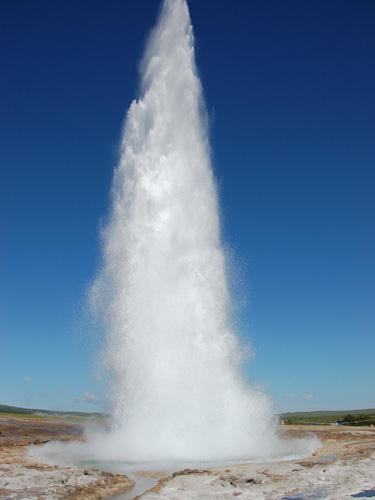
The majority of the time, geysers form in groups known as geyser fields in areas where the underground heat and volcanic rock formations produce the required conditions. There are estimated to be around 1000 geysers across the globe and Yellowstone Park contains about half of them, including Old Faithful which erupts every 90 minutes, shooting thousands of gallons of water around 185ft into the air. Yellowstone is also home to the largest geyser in the world (Steamboat - see image below) which, although rather infrequently, shoots hot water up to 400ft (120metres) into the air! Geysers can found in Chile, New Zealand, Alaska and Iceland too, amongst a few other countries. The time between eruptions varies from geyser to geyser and can be anything from a few minutes to several years.

Coastal landforms

There are many different landforms that are present along our coastline and they are all formed in slightly different ways and, as there are quite a few different ones, I am going to try and summarise the key points for each.

HEADLANDS AND BAYS:
- They form in areas of alternating resistant and less resistant rocks. The less resistant rocks, such as sand and clay, erode a lot faster than the more resistant rocks, like chalk, and  this differential erosion often results in sections of land jutting out into the sea, known as headlands. Due to refraction, the headlands recieve the highest energy waves and are most vulnerable to the forces of erosion. The shallower areas around the headland provoke the waves to start to break earlier and so, as they refract around the headland, lower energy waves are experienced in the bays which leads to the accumulation of sediment.

- Coastlines can either be described as being concordant or discordant. In concordant coastlines the alternating stratas of soft and hard rock run parallel to the coastline whereas in discordant coastlines they run perpendicular to the coastline. Where the rocks run parallel with the coast (concordant) it is possible for continued erosion to break through the more resistant rocks on the coast and begin to attack the less resistant rock strata behind. When this occurs a cave is formed which is then only enlarged by further erosion - Lulworth Cove is possibly the best local example of this.
WAVE CUT NOTCHES AND PLATFORMS:
- When high and steep waves break at the foot of a cliff they concentrate their erosive capabilities into only a smaal area of the rock face, This concentration eventually leads to the cliff being undercut, forming a wave cut notch. Contiuned activity at this point increases the stress on the cliff and after some time, it collapses. This causes the cliff to retreat and when the overhang is undercut a platform forms. The platform continues to grow and, as it does, the waves break further out to sea and have to travel across more of the platform before reaching the cliff. This leads to greater dissipatation of wave energy which reduces the rate of erosion on the headland and thereby slowing down the growth of the platform.
- Hydraulic action and abraision, accompanied by water layer weathering and some of the other weathering processes, lead to the formation of wave cut notches and platforms.

So in short......
1) Weathering weakens the top of the cliff
2)The sea attacks the base of the cliff, forming a wave cut notch
3) The notch increases in size, causing the cliff to retreat
4) The backwash carries the rubble towards the sea, forming a wave cut platform
5) The process repeats and the cliff continues to retreat

CAVES, ARCHES, STACKS,STUMPS, BLOWHOLES AND GEOS:
- If the cliff is undercut a cave can be formed, usually from a combination of marine processes including hydraulic action, abraison and solution. If erosion continues upwards, it is possible for the cave to be extended to the top of the cliff where a blowhole will form. If the cave extends backwards, to meet another, an arch will form. As the dliff retreats and a wave cut platform forms, the arch will collapse and create a stack. In time, the sea will exploit the wave cut notch at the base of the stack and cause it to collapse, forming an stump. It is important to remember that caves, arches, stacks and stumps occur in a sequence, one after another

- A geo is a narrow steep sided inlet which is created along a joint that is exposed to the sea. A combination of hydraulic action and the other marine processes widens joints to form geos.

BARRIER ISLANDS:
- Barrier islands are a series of sandy islands totally detached from, but running almost parallel to, the mainland. Between the idlands and the mainland is a tidal lagoon. Although they are relatively uncommon in the UK, they are widespread globally (lots in the USA, west of Africa, northern Netherlands and in Australia) and account for 13% of the worlds coastline. While their orgin is unknown, they do tend to develop on coasts with relatively high energy waves but a low tidal range. One theory suggests that they formed, below the low tide mark, as offshore bars of sand that have moved progressively landwards. Another thoery is that rises in post-glacial sea level have partly submerged older beach ridges.


TOMBOLO:
- A tombolo is a depositional feature that connects an island to the mainland. They are often temporary features and so should not be built on.
- waves refract around the island and as they meet, before meeting the coastline, they cancel each other out and so sediment is deposited.

SPITS:
- Spits are another depositional feature that are predominantly caused by longshore drift and they form whenever you get a change in the direction of the coastline.
The spit curves at the end (into a hook) due to winds that blow in a different direction to the prevailing wind.
- Mudflats, brackish lagoons and salt marshes form behind the spit and these areas are important for migratory birds. Spits are also important as they protect the area behind from the most powerful waves and so create the perfect conditions for the development of a port.
- The rivers flow often prevents the spit from connecting to the other side of the estuary but, if there is no significant flow from the river and it does connect to the opposite side, a bar is formed.

1) Longshore drift moves material along the coastline
2) A spit forms when material is deposited
3) Over time the spit grows and develops a hook, if the wind direction changes
4) Waves cannot get past the spit, which creates a sheltered area where silt is deposited and mud flats or salt marshes form


The last landform is a beach but, when I find the time, I am going to write a seperate post on them and try to explain in a bit of detail the beach profile as there are a few key words to learn and I sometimes seem to get a bit mixed up when trying to use them to describe the profile of a beach. Hopefully I will managed to write this in the next few days but if not definetly over half term.

Shoreline Management Plans (SMP's)

 A Shoreline Management Plan is designed to try and decide upon the most suitable scheme for each individual sediment cell. Although each sediment cell has its own SMP, often each sediment cell is split up into sub-sinks (normally beaches or other sedimentary features) which then often have a slightly altered SMP. DEFRA (Department for Environment, Food and Rural Affairs) oversee and partially fund coastal protection, amognst other things, and produce SMP's. They recognise that processes operating within the coastline occur within distinct lengths of coastline - hence why they split it up into sediment cells. They also recognise that the promotion of cooperation between all the other interested authorites is key and that they should all be involved with the development of an SMP. The development of a shoreline management plan is split into two stages.........

STAGE 1 - identify all those with an interest in the area and collate and analyse data on the key issues. Then, using this as the foundations, set management objectives and a plan for the area.
STAGE 2 - define the management units, decide on the objectives and then, before procuding the plan, consult on the preferred strategies of defence.

When considering coastal management, there are four options............
DO NOTHING - carry out no defence works except for those required for safety
HOLD THE LINE - maintain or upgrade the level of protection provided by the existing defences or build new defences along the coastline
ADVANCE THE LINE - build new defences seawards of the existing position
MANAGED RETREAT - adopt a more landward defence postion

There is one more option, that is only considered in areas where there has not been enough research and the processes at work have not yet be understood........
OBSERVE AND MONITOR - undertake a period of detailed examination of the shoreline and then decide on one of the previous options

When deciding on what option to take and what should be including on the SMP, it is often difficult to find a comprimise as, often, all the parties involved have conflicting interests. For example, property owners want protection, tourists want access and for the area to remain aesthetically pleasing, businiesses want to maintain their coastal industries whilst environmentalists want to protect rare natural habitats and environments. A lot of this often dictates whether or not hard or soft engineering is used or, in fact, a bit of both.

HARD ENGINEERING:

Groynes:
- Aim to build up sediment by preventing longshore drift from moving it along the coast. They are built at right angles to the coastline and are usually spaced between 50 - 100m apart. As they build up nice beaches they are popular with tourists and the way in which they divide the beach into sections is often welcomed by locals as well as it means that tourists can occupy one end whilst the locals the other. This is evident at Lyme Regis where the groynes seperate the shingle beach, which is quieter, from the sandy beach which is very popular with the tourists in the summer.
- They can be made from wood, concrete or blocks of stone and often need maintaince as, especially if made from wood, can be easily damaged by the marine processes
- In terms of cost they cost around £60 per metre but this can vary depending on the material used
- Although groynes help to build up the beach in the area they are implemented they can cause severe problems at stretches of the coastline downdrift (think about the impacts the groynes at Mappleton have had on Cowden and even the groynes at Lyme have impacted on Charmouth) like terminal groynes syndrome, also known as sediment starvation,  which results in increases in the rate of erosion

Sea Walls (curved):
- Aim is to reflect wave energy back out to sea and reduce the risk of flooding but, because they fail to reduce wave energy or cause waves to break early, scouring (excessive erosion causing removal of sediment at the base) often occurs. This means that, in conjunction with the construction of a sea wall, beach nourishment or, like at Lyme Regis, rip rap is placed at the base to reduce this and extend the life of the sea wall.
- This adds to the costs involved. ontop of the frequent maintainence that is required. Sea walls, alone, cost anything between £800 and £5000 per metre and are not expected to last any longer than 30 years.


Revetments:
- Aim to protect the shoreline behind them by provoking the waves to break early and so reducing the energy of the waves as they reach the beach and hit the base of the cliff.
- Like groynes, they can be made of blocks, wooden slats or concrete but ar positioned parallel to the coastline. They are often placed infront of a sea wall to increase the life of the sea wall by reducing scouring
- Average cost per metre is £1000 but constant maintainence is required
- The biggest issue is the fact that, because it reduces the erosion of the cliff, there is no fresh sediment entering the system and so it reduces the amount of sediment downdrift. This means that, in conjunction with the building of a revetment, beach nourishment is needed.


Rip Rap:
- Aim is to dissipate wave energy NOT to provide defence against coastal flooding. They are large boulders that are placed towards the back of the beach, often at the base of a sea wall. They can be made from native rocks but, in areas like Lyme Regis, this is not possible as the rocks are not resistant enough. Instead a hard crystalline, igneous rock named labradorite ( I think that is how it is spelt???) is imported from Norway
- They cost around £300 per metre but don't have a very long life span (10-15 years)
- Not ideal in honeyspot sites as they are unsightly and tourists seem to like to clamber on them, despite the number of health risks they pose
Gabions: - Aim to absorb wave energy and encourage sediment deposition by reducing the strength of the backwash.
- They are wire cages filled with stones that are either placed in front of areas prone to erosion or underneath sand dunes
- They are a cheap solution (with an average cost of £ll per metre) but they are unsightly and so are often not a popular choice in honeypot sites
Offshore Breakwaters: - Aim to reduce the power of the waves before they hit the coastline, by provoking them to break earlier, and thereby widen the beach, due to the fact it blocks longshore drift
- They are unsighly and can be obstruct as by reducing wave energy and causing them to break early it restricts what water sports, imparticular, can take place in that area
- They can be quite costly at around £1950 per metre but can cost a lot more if constructed in deep water

SOFT ENGINEERING: 
Soft engineering is a more sustainable form of engineering as it uses the natural environment and processes to protect the area. It often involves one of the following:
                       - Beach nourishment (???is neither really hard or soft engineering)
                       - Salt marsh growth
                       - Sand dune stabilization
                       - Planting of sea grass
                       - Reef building

Beach nourishment:
- This is the placing of sand, similar to that naturally found in the area, on the beach to build up the beach and protect the coastline. This is often done in conjunction with the construction of groynes or a sea wall.
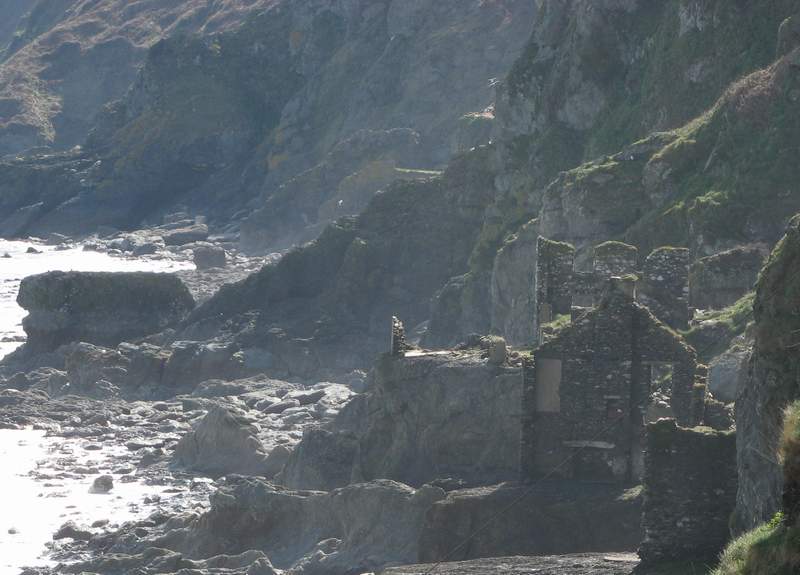
- Sourcing the sand can be an issue as it needs to be taken from a source which will not damage the coastline. Unchecked dredging has increased the erosion rates in the Bahamas and the effects that dredging has had on Hallsands has been disastrous. I don't know if any of you have visited Hallsands, but I have, and you can now only view it from a platform and the pictures really show the extent of the damage......
This is the village before the impacts of the dredging could really be seen, apart from the shrinking of the beach.
And this is what it presently looks like....... if I can find the time I will write a post about what caused this, in more detail, why dredging was taking place and how this has effected the approach to coastal manangement at Beesands, a beach just down the coast from Hallsands.

- Beach nourishment needs constant replacement if it is to have the desired effect as it only lasts from 1 - 10 years before major recharge is required. This means that it can often become costly (anything from £5000 to £200 000 per metre).

Sand Dune Stabilisation:
- Sand dunes provide a natural sea defence and so vegetation is often encouraged to grow on them to stabilise them. Marram grass is often chosen as it is long roots bind the soil and it is tolerant of the salty conditions.
- There are a few disadvantages of this method though. The sand dunes take a long time to build up and they require constant maintainence and monitoring. To tourists they provide a perfect slope to slide down but this kills the vegetation and thereby destroys the sand dunes and so keeping people off of the sand dunes is a crucial part of their management.
- On average, the vegetation costs around £2o per metre to plant but this does not include the monitoring and maintainence costs.

Managed Retreat:
- Managed retreat can involve allowing the area to turn back to salt marshes. In 2008, in the first move of its kind in the UK, the Environment Agency decided to turn the Cuckmere Valley in East Sussex into a salt marsh nature reserve rather than continually building ever bigger flood defences.
- There are not really any fixed costs with this option and the main costs are those spent on purchasing the land from residents and paying for the dismantling expenses. This means that, sometimes, this is a costly option.

As we have learnt in previous lessons, sub-aerial weathering is also a problem from coastlines, especially those consisting of unconsolidated and unresistant rocks. This means that there are some sub-defence methods that can be implemented, most of which aim to reduce the water in the cliffs to reduce teh risk of mass movement
- Drainage of the cliff
- Stabilisation through the planting of vegetation
- Run off channels
- Grouting
- Rock bolts
- Planning constraints on land use

Okay, so this is the bare bones of our lesson on shoreline management plans and so there is more detail for each point but hopefully it will be useful to some........

Sunday, 10 April 2011

Could Carbon Capture be the technology to save the planet?

Although nobody knows excatly how much carbon dioxide is too much, it is widely recognised that carbon dioxide does cause the planet to heat up.  It has been calculated that the release of  450 parts per million of carbon dioxide would provoke a 2 degrees celcuis rise in global temperatures and amognst some, of the many, consequences associated with this rise include a higher number of agricultural failures, ocean acidification and the possibilty of a higher frequency of natural disasters. Despite the fact that no one knows for certain how much carbon dioxide is too much, some scientists have been working on calculating the world's carbon budget and how much of it has already been used up. It is believed that the world is already over halfway through its carbon emissions budget and, to satisfy current demand, the trillionth tonne of carbon will be burned within the next 20 - 30 years, which suggests that by 2050, 57 gigatonnes/year will be emitted - unless something is done to reduce this!

These slightly worrying trends have called for the need for a rapid way to reduce carbon dioxide emissions and many countries, both developed and industralizing, are now starting to look at carbon capture and sequestration technology as a cost-effective way to provide 1/5 of the reductions required by 2050. There are currently three different methods to capture carbon dioxide, although some development is required to make them more energy efficient in the future - especially if they are to provide a sustainable option for allowing carbon dioxide reductions.

1) POST COMBUSTION - involves the capturing of carbon dioxide from exhaust gas and then the reaction between chemicals known as amines and the exhaust gas which is bubbled through it. The heating of the solvent releases the concentrated carbon dioxide thereby allowing the solvent to be reused. This process is presently used in the natural gas processing industry, as it can be fitted to existing power plants, and is being piloted at carbon capture plants. In the future it is likely that the amines used will be replaced by similar chemicals that require less heat to release the carbon dioxide and are more resistant to degradation by other chemicals present in the exhaust gas.
2) PRE-COMBUSTION - this method is the stripping of the carbon dioxide, from the fuel, before it is burned by a series of interlinked chemical reactions. Firstly, the fossil fuel is converted to carbon monoxide and hydrogen, which is reacted with water vapour to form hydrogen and carbon dioxide, a mixture that can be seperated with ease. The hydrogen can then be burned and used to generate energy and because of this, many of the proposed CCS projects are likely to utilise this method.
3) OXYFUEL COMBUSTION - this method comprimises of burning the fuel in pure oxygen instead of air as it means that the exhaust gas consists, mainly, of carbon dioxide and water which can be easily seperated. Currently, only a handful of pilot plants exploit this method as producing the pure oxygen required is both costly and energy-intensive.

These three methods are currently the most developed ways of capturing carbon dioxide but there are some others. Another technology that is currently being developed is the use of crystalline compounds called metal organic frameworks. Changes in pressure provoke these materials to selectively soak up carbon dioxide or release it. Due to the fact that minimal equipment is needed and energy consumption, compared to current methods, is relatively low, it is believed that this could be implemented on a industrial scale in the not too distant future. Another, very different method, is to use algae as, as they photosynthesise they take in carbon dioxide. This method would also produce biomass which could be reused as biofuel. However, a very large area would be required to make this method viable.

Although the idea of capturing carbon dioxide may sound like an attractive option to many of you, like every method of boosting environmental credientals and every step taken to a more greener sustainable lifestyle, it is not a simple as it first seems. There are huge costs involved, at present, with constructing CCS's and unless governments commit funds to the development of this technology, it is unlikely to be developed on a commercial scale. In the UK, the government has committed £1 billion to a project that aims to develop the UK's first large-scale project and, as part of the European Economic Recovery Plan, 1 billion euros has been split between six CCS projects.  It is hoped that the EU's emissions trading scheme will also help to encourage industries to develop CCS's projects. At present, Norway is the most developed country, in terms of carbon capture. In 1991 they introduced a high tax on carbon dioxide emissions which resulted in the implementation of CCS at two of the large offshore natural gas facilities (Sleipner opened in 1996 and Snohvit in 2007). To date, these projects, combined, have mananged to capture 12 million tonnes of carbon dioxide and store deep beneath the bed of the Norwegian Sea. Although Norway have managed to store the carbon they have collected, this is the problematic issue surrounding the idea of carbon capture and storage................so, where do you store it?   Well firstly the carbon dioxide has to be compressed to a supercritical state (which is neither liquid or gas but kind of a bit of both) so it can be transported, via pipes, to suitable sites for sequesteration. The transportation stage of the process is easy enough and there is already 3,900 miles of transport pipes across the USA alone. carbon dioxide can also be transported by sea in tankers and tankers continually cross the North Sea carrying carbon dioxide for fizzy drinks and cleaning and so far, there have been no major accidents. The issue is, where do you transport the carbon dioxide to. Only certain areas have the right geology to contain carbon dioxide within the rocks and Europe seems to hold many of them. and the UK accounts for 35% of the known possible sites for geological sequestration at present. Although development into building materials that are capable of stabilizing and embodying carbon dioxide is taking place, saline aquifers, at present, remain the best locations for geological sequestration. Saline aquifers in rocks are suffieciently permeable to absorb the carbon dioxide and suffieciently stable and isolated to ensure that the carbon dioxide remains within the rocks. The pores, within the rocks, inside the saline formations trap the carbon dioxide via cappilary forces. Over a long period of time the carbon dioxide dissolves into the liquids contain within the saline formations and the minerals within the rocks. Due to the fact that carbon dioxide is buoyant and naturally migrates towards the surface it has to be injected into, not only th e correct geological area, but also to a depth of atleast 1 kilometre. The pressure and heat at this depth maintains the carbon dioxides supercritical state and thus it is less likely to migrate towards the surface. The layers of impermeable rocks,normall yshale and clays or minerals and salts left behind by the evaporation of ancient waters in an earlier geological age, also prevents the migration of the sequester carbon dioxide to the surface. Finding suitable sites for storing carbon dioxide is not the only problem -  get liscensing and public support for such projects is hard due to othe risks involved. Although not linked in any way to the sequestration of carbon dioxide the Lake Nyos tradegy has made people aware of the potential risks to human health if the stored carbon dioxide managed to migrate to the surface. This tradegy occured in 1986 in Cameroon and it furthered the public's concern about the siting of CCS repositories. The sudden release of large amounts of carbon dioxide from deep beneath the bottom of the Lake Nyos killed more than 1,700 people and 3,000 cattle. The orgin of the carbon dioxide was melted magma located 50 miles beneath the bottom of the lake and as the gas made its way through the vents in the underlying rocks it saturated the water at its bottom depths. The natural movement and churning of freshwater, from top to bottom, caused a sudden explosive geyser of carbon dioxide to powerfully spout to the surface and because carbon dioxide is heavier than air, it spilled over the banks and down the hillside. People are, understandable concerned, about the possibility of this happening due to carbon dioxide being injected into the ground, the possibilty of freshwater aquifers being contaminated and, if not checked and plugged, abandoned wells serving as chimneys for the sequestered carbon dioxide.

Despite this, it does look as if there is a future for carbon capture and sequestration. Scientists and engineers are getting more and more confident that safe transport and storage is possible as natural carbon dioxide has been stored underground, for example under large swathes of central France and the south-west of America, for millions of years. It is true that further development of the current methods and technolgy is needed but it is believed that much of this can be derived from the oil and natural gas industries. Countries like China, India and Brazil, who are all rapdily industralising, are also looking to develop this technology as it seems to hold a rapid, and attractive, way of reducing carbon dioxide emissions. Do I think that this technology can save the planet? Well, on its own, no. Data suggests that it can only provide 20% of the reductions in emissions required by 2050 and although this is quite a substantial chunk, it is not enough. The idea is quite attractive and, as urgency is required, it starts to look more and more so.  However, I worry slightly that if science continues to develop technologies, like this one, people will continue to lead our current unsustainable lifestyles and that attitudes towards energy consumption will not change due to an optmisitic belief that we will solve every problem we face. I also think that strict regulations need to be implemented along with this developing industry as storing carbon dioxide in the wrong areas could have disastrous impacts. Therefore, I think that this technology could have a future and, along with a change in attitudes and a more greener approach to energy production, it would help to reduce emissions. This is just my opinion and so what do you think? Do you think that carbon capture could be the technology to save the planet or do you think that governments would be better off investing in other technologies that could boost their countries environmental credentials?

Sunday, 3 April 2011

Is there such a thing as a man-made natural disaster?

Do man-made natural disasters exist? Well I realise that this statement sounds rather contradictory but is it possible that human activity can provoke events that we class as natural disasters, such as a volcanic eruption or an earthquake, for example.

From a discussion I had with Millie, it seems that there is a rather interesting history behind the Lusi volcano in East Java and a lot of controversy surrounding what caused it to erupt and this could possibly be an example of a man-made natural disaster (if such a thing exists). Many geologists blame the unregulated and careless drilling performed by a natural gas company whilst others, the natural gas company included, believe that an earthquake provoked Lusi to start spewing large volumes of mud. Geologist Richard Davies, who was one of the head Geologists at a meeting held in South Africa to determine the cause of the eruption, strongly believes that the evidence suggests that it was the unregulated drilling of Lapindo Brantas. Before I start to try and explain why geologists believe the drilling provoked the eruption, I must point out that I don't study Geology and so I am going to apologise in advance to any Geology students out there who may read this as I am only going to explain the very basics and just hope that I don't get out of my depth - feel free to correct me! Drillers exploring for natural gas bored 1091 metres down through the stratas of sandstone and mudstone and then in an attempt to strength the hole they inserted a steel casing. However, as they continued to drill deeper, they failed to insert more steel casing, thereby weakening the hole. Water and the natural gas they were searching for started to fill the hole and build up pressure which eventually fractured the unprotected rock strata. Hot, pressurised water was then released from the Kujung limestone aquifer. The geothermal energy from the near by arc of volcanoes (the closest one, Arjuno, being 15km away) is believed to explain why the water was so hot. This hot, pressurised water, accompanied by the gas, raced upwards and mixed with the mudstone which resulted in masses of it being liquified. Davies believes that it was the penetration of the already pressurised limestone that caused the entrainment of the liquified mudstone by the hot water which then resulted in it surging through the layers of sandstone and mudstone, until it broke through the surface - and I think we all kind of know what happened next!

Overall, Davies' report concluded that the eruption was triggered by the drilling and the attempt to control a huge influx of water and natural gas that fractured several sections of the borehole. On the other hand, Lapindo Brantas and their senior drilling advisor, who used the same evidence as Davies did for his study, claims that the pressure levels in the well were within the acceptable limits. This is the total opposite to the analysis of the same data that Davies published as he said that the build up of pressure caused the formation of fractures which propagated from the borehole to the surface around 150m away, thus resulting in the eruption. A geologist for the drilling company denies that the levels of pressure in the well would have caused these fractures and instead claims that the erutpion was caused by an earthquake that occured a few days before Lusi starting spewing hot mud. Dr Mazzini claims that the fracture was triggered by an earthquake, of magnitude 6.3, that occured two days earlier and some 280km away. This was contradicted by an independent geologist from Australia, who specialises in geological pressure and rock mechanics, who said that the earthquake "was at least an order of magnitude too small" and that the force felt at the Lusi site would have been "very small and comparable to the effect of a heavy truck passing overhead". Davies also said that although seismic activity can provoke mud volcanoes, both of which are common in East Java, that he was 99% certain that Lapindo's drilling caused the mudflow.

From all of this, I think it is clear to see that the drilling company has a very different view of how the eruption was provoked to that of many of the geologists that investigated the circumstances. However, at the meeting held in South Africa, which was designed to investigate the cause and what was to blame, 42 out of the 74 independent geologists/scientists that attended were convinced that drilling triggered the eruption. In comparision, only three voted that the eruption was triggered by the earthquake. So, what has happened since this Lusi first starting erupting, way back in 2006. Well, initially, Lapindo were ordered, by the Indonesian Government, to pay $400 million worth of compensation to those displaced by this disaster. However, the money was extremely slow at getting to those affected and in September, of that year, the company was sold to Lyte Ltd. for $2! This has effectively released Lapindo Brantas from its responsibilities, both finicial and moral, connected to the disaster that has displaced over 10,000 and left much of the surrounding area inhabitable for possibly decades to come.

So, could this be classed as a man-made natural disaster? Well, the eruption of a mud volcano is classed as a natural disaster and the evidence suggests that the eruption was provoked by human activity, in the form of unregulated drilling. It also seems that it could have been avoided if the drilling company lined the entire length of the borehole with the steel casing, not just the first 1091 metres, as it would have strengthen the hole and, most probably, prevented the formation of fractures in the underlying rock. This is by no means the only example of events, that we associate with being natural disasters, being induced by human activity. Both the Vajont Dam, in Italy, and the Three Gorges Dam, in China, have led to an increase in the frequency and severity of earthquakes and landslides in the surrounding area. In 1963, a landslide occured near the dam, possibly as a direct response to the added pressure placed on the already unstable surrounding area, and not only destroyed the dam but also claimed around 2000 lives. The Three Gorges Dam has not only induced many earthquakes, during and after its construction, due to the immense additional weight that the reservior of water places on the surrounding area but also the raised water level has increased the rate of erosion and thereby the possibilty that landslides will occur. In the first four months of 2010, 97significant landslides were witnessed in the area, that were believed to be linked to the presence of the dam. This is evidence that human activities can have a negative impact on the environment and provoke disasters that can have truly disastrous and lasting impacts on the local people and surrounding area. Is it right to class such events as man-made natural disasters? Well, I think it is a tricky one as they are neither solely man-made disasters or natural disasters but can you have something that is natural yet man-made? One thing is for sure, and inparticular reference to the Indonesian mud volcano, people are not willing to accept that their activities may have induced a natural disaster and that they should take responsibility of the aftermath and so, perhaps, we are not willing to accept that man-made natural disasters actually do exist. Something that did pop into my mind when writing this is that perhaps global environmental change is the, or will be the, best example of a man-made natural disaster. The debate over whether or not it is caused by human activity or is a natural process is likely to be ongoing well into the distant future and perhaps the answer will never be known. However, is this because it is actually a bit of both? Many scientists believe that the earth warms and cools and that the climate changes naturally whilst others argue that the changes we are presently, and are likely to experience, have been induced by humans and our unsustainable lifestyles. Perhaps, in actual fact, the case is that global environmental change is a natural process that has been accelerated and its effects greatened by human activites. This is similar to the situation in East Java as, mud volcanoes are very common, due to the geology of the surrounding area, but, in the case of Lusi, it was provoked by a human activity - and who knows, perhaps Lusi would have erupted in the future, due to natural reasons like an earthquake of a high enough magnitude. I am starting to go slightly off track here and so I had better finish up before I end up going in totally the opposite direction to where I intended to go. So, do you think there is such a thing as a man-made natural disaster and if so, how would you define one and can you think of any examples of one. Or, if you don't think man-made natural disasters exist, what would you class the eruption of the Lusi mud volcano as, taking the view of the majority of geologists, that it was provoked by the unregulated and careless drilling of Lapindo Brantas?