Showing posts with label Book Review. Show all posts

Sunday, 29 April 2012

Geography related Books and Films

Teachers may disagree with this but I dont necessarily think that staring at a textbook all night every night is the only way to revise. Of course there is no substitute for hard work but sometimes (especially for development) I think that watching a relevant film can be quite good. Now for those of you who have kept up with your three hours extra reading each week since Septembet (haha!) then you may have watched/readed a few of these but seeing as a few have asked me for suggestions, I thought I would just qucikly write it all up on here! Follow the links for more detailed reviews, explanation of relevance to modules and trailers....
Development and Globalisation:
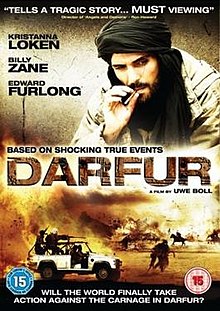
Darfur - a group of international journalists travel to a village in Darfur in search of evidence to persuade the UN that genocide has occured but are forced to live after the Janjaweed turn up and threaten to kill them. I am sure you are all aware of the Darfur Crisis and it is a case study you caould name-drop into an answer, also could be useful AS population module but be warned it is very graphic and definetly not one for the faint-hearted!

Invictus - after 27 years imprisionment, Mandela becomes South Africa's first elected president and this film follows his bid to unite the country via the rugby world cup, seeing unification as a prerequisite to development.

Goodbye Bafana - follows the unlikely friendship that forms between Mandela and his prision officer and illustrates some of the social and political impacts of colonialism in South Africa and how they continued to hinder development.

Blood Diamond - amid the explosive civil war overtaking 1999 Sierra Leone; it explores many issues including those surrounding the diamond trade, supply of arms to rebels and child soldiers. This includes links to globalisation, colonialism, the 'paradox of plenty' and simply how civil unrest prevents development.

Painted Veil -  set in China, in the 1920's, and explores the impact of a cholera outbreak on a village, including references as to how religious beliefs make containing cholera even more challenging and the impacts of an earthquake. Focuses quite a bit on the importance of a water supply to development - the link to the module is slightly more tenuous than with some of the other films and books but it is still worth a watch!
Cry Freedom - in South Africa and tells the true story of Biko and his friendship with a white liberal newspaper editor. Good film to watch for development as explores impact of apartheid on development and the importance of political stability for development to occur.

Gandhi -  a biopic about the life of Gandhi with particular reference to his prominent role in India's struggle for freedom from colonial rule.

Slumdog Millionaire - provides an insight into the life of children living in the Indian slums the problems associated here. Also illustrates how they are trying to improve education to enable development.

Erin Brockovich - a good film that presents the negative impacts of the natural gas industry and the extent to which large companies are prepared to go to, to cover this up. Not only would this be good for the AS Energy module but also globalisation with reference to the negative impact of TNCs.

The Constant Gardener - a rather sad story about how a drug company exploit the Kenyan population to allow them to test a new drug, despite the fact they know it has harmful side effects. Also explores the idea of corrupt governments and issues faced in LDCs.
The Cove - this film is very thought provoking and presented the issues surrounding the dolphin trade - before watching this I didn't know a lot about the issue, especially the scale of it in Japan, and it left me feeling very shocked that something like this still exists today in such a developed country. Issues of groupings, tied aid and trade are briefly explored also.

Blood River by Tim Butcher - tells the story of Tim Butchers quest to retrace the journey taken by H.M Stanley in the 1870s. from this you get an insight into the history of the Congo and the factors have effected its development - great book for the development and globalisation module as it provides an insight into the impact colonialism has had on Africa. Chasing the Devil: On Foot Through The Killing Fields of Africa is another Tim Butcher book, although this time based in Sierra Leona, that covers many issues intrinsic to low levels of development in Africa and the problems associated with this.

The Boy Who Harnessed The Power Of The Wind by William Kamkwamba and Bryan Mealer - tells the extraordinary true story of a Malawian teenager who overcame many obstacles to provide electricity and clean water for his village by capturing the energy in both the wind and the sun. Good for AS Energy as well as A2 development and illustrates the importance of energy supplies and appropraite technology to development. It also touches on the issues of living in areas of climatic extremes, the role of education and how corrupt governments influence aid distribution.
PeopleQuake: Mass migration, ageing nations and the coming population crash by Fred Pearce - a book about the population bomb and how demographics is driving politics. Explore how we got to this point and where we are currently heading and how it can be solved. Therefore it is a great book for AS Population (covers practically the entire module with some useful case studies and statistics!) and for A2 development and Globalisation. Human geographers will not doubt love this book but any geographer out there, like myself, who get carried away with the science and forget to mention people, this book is worth a read!
Globalization and Its Discontents by Joseph Stiglitz - as chief economist at the World Bank that author has a unique insider's view into the management of globalisation. In this book he speaks out against the IMF and WTO and the role of the West in driving global politics. This makes it a very good book for globalisation!

Plate Tectonics and Associated Hazards:
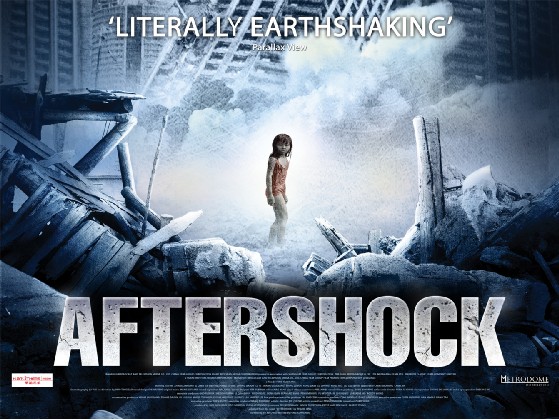
Aftershock - based around the Tangshan 1976 earthquake, which killed 242,000 people and coincided with huge political changes in China. This film cover issues including aid, politics and follows China as it changes over the time period covered. However, it is centred on one question; which 7 year twin will the mother chose to save? Bewarned it is a very said film, Millie was not overexaggerating when she said it was!

Dantes Peak - we watched this one in class, the worksheet we used in lessons is on Millie's blog so this could be a useful thing to watch and complete again as part of your revision. Covers preparation, evacuation and monitoring techniques as well as a few inaccuracies that you should be able to point out!
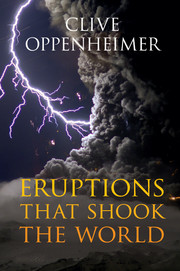
Eruptions That Shook The World by Clive Oppenheimer - I havent quite finished this book yet but I thought I should mention it as I am finding it quite useful for finding the odd statistic or two! Bascially this book covers everything we need to know about volcanoes and a bit more! Geologists, this is probably a really good book for you to read, but for Geographers it does link all the volcano stuff back to its impacts on people.

Weather, Climate and Associated Hazards:

The Day After Tomorrow - the Larsen B ice shelf collapses, the thermohaline circulation shutdowns, provoking glacial inception in the northern hemisphere, with other appending impacts - a good film to watch and then point out the geographical/scientific mistakes to test how much you have understood about the influence of ocean circulation on global climate and how a freshwater input could affect it!
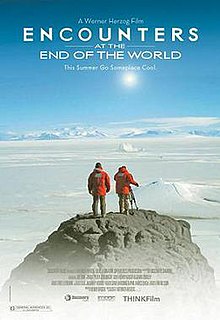
Encounters at the End of the World - a great documentary with some simply stunning footage and interesting interviews that collectively provide an insight into life in Antarctica and the important research that is taking place
The Age of Stupid - great film to watch for the energy module as it talks about climate change, energy consumption and production via some interesting case studies so also good for the A2 climate module
Gaia by James Lovelock - presents the Gaia hypothesis which is the idea that the Earth functions as a living organism and so self-regulates to adapt to changing conditions. This book puts forward some very interesting ideas, linked very closely to climate change both naturally and anthropogenically forced, making for an interesting read!

 The Revenge of Gaia by James Lovelock - applies the Gaia hypothesis to global climate change - again an intriguing read which presents some interesting ideas and solutions to problems we are likely to face with population expansion and coming global climate change
An Inconvenient Truth by Al Gore - I am guessing most will have heard of this one! It presents the issue of climate change and discusses how it has been caused and the impacts it is likely to have - well worth a read but if you prefer there is also a film version.

Our Choice by Al Gore - this book follows on from An Inconvenient Truth by offering the solutions Al Gore thinks are required to solve the issue of global climate change
Here on Earth by Tim Flannery - This is essentially a "revolutionary dual biography of the planet and our species." It covers the history of the earth from its earliest origins to the world we currently live in. it offers answers to a long list of questions - How did life first emerge? What forces have shaped it? Why did humans come to dominate? And when didiwe start to have an impact? How has this changed use as a species? It is probably wise to have a bit of knowledge of the Gaia hypothesis before reading this as it does mention this a bit. It is a very interesting book and one that leaves you questioning why on earth we did some of the things we have and continue to do - essentially a great book for all Earth Scientists!
Climate Wars: The Fight For Survival As The World Overheats by Gwynne Dyer - "An increase of 2C in average lobal temperature - which is almost inevitable - will hear global politics to boiling point." Bringing together extensive interviews and latest research this book revela the realities of a planet facing scarce food, water and land. Can out technology save us, or is it too late? It is written in an interesting way as takes the science, makes it understandable before focusing on what excatly this means for society now and in the future. Any geographers out there, like myself, who get too carried away with the science of climate change, without consideration of what that means for people, this book is definently worth a read!!!
Storms of My Grandchildren: The truth about the coming climate change and our last chance to save humanity by James Hansen - covers global climate change, with both causes and consequences and the more contemporary role of politics, especially in the USA, in climate research - an interesting read but in places the level of science goes beyond the A-level syllabus.

Well, there are plenty more but this is probably enough to keep you busy for a while! There are also all the relevant documentaries, parts of which we have watched in lessons, like How Earth Made Us, for example, and I think quite a few of them are in the LRC. Unfortunately not many Geography related things are that happy so perhaps don't watch/read them all at the same time! I am still on the hunt for a 'happy' geography film or book! If you have any suggestions for others, or any comments on the above, let me know!


Wednesday, 16 November 2011

The Revenge of Gaia - A student's book review

I really need to get into the habitat of reading a book and then writing the book review, not waiting a few months before I do so - however, seeing as I read this book in the summer holidays, it will be a good test of how much I can remember!

This book is another one of James Lovelock's and you really need to have read the first one, if you are to make any sense of this book. The first book 'Gaia' explains the idea of the Gaia theory and how it was created. So, just for a quick reminder, the Gaia theory, in its simplest form, suggests that the physical and chemical conditions of the surface of the Earth, of the atmosphere, and of the oceans has been and is actively made fit and comfortable by the presence of life itself; whilst also encompassing the belief that life does not regulate or make the Earth comfortable for itself. Instead, regulation, at a state fit for life, is a property of the whole evolving system of life, air, ocean, and rocks and with a mathematical basis in the model Daisyworld which generates testable predictions. Basically, the Earth is kind of alive as one big organism and self-regulates - I will warn you again, read these books with quite an open mind and when you have the time to really think about and process the ideas the author is trying to present; it was a totally new, but intriguing, idea for me and I think I am still trying to totally get me head around it! Perhaps its no suprise that when this theory was first published it was viewed with great suspiscion and skepitism, but it seems to be becoming  more widely accepted within the scientific community.

This time, instead of presenting and trying to prove the Gaia hypothesis, Lovelock applies it to global climate change, although he seems to prefer the use of global heating, which he thinks to some extent is unavoidable as a consequence of current levels of anthropogenic forcing and will abruptly occur. Throughout the book it is incredibly clear that he feels anthropogenic forcing is solely responsible for current and impending climatic alterations and that our actions have and prevail to destabilise the Earth and, as the title implies, in revenege Earth is readjusting and consequently generating less habitable conditions for us. Lovelock is definetly not afraid of presenting his ideas and views (for example, he clearly states his view that global climate change is irreversible, something which was not necessarily recieved so well by those trying to persuade people to lead more 'green' lifestyles!) in an attempt to alter the way we think and whilst I find it hard to accept everything he says, it is, again, an incredibly thought provoking book.

There are a couple ideas/views that Lovelock mentioned which have really stuck in my mind. As also touched upon in his first book, within The Revenge of Gaia he clearly emphasises his support for nuclear power, viewing it as an efficient and less environmentally damaging energy resource than those currently exploited (i.e oil and coal!). Nuclear power is always going to be a controversial issue, perhaps more so after events in Japan earlier this year, and so I wonder if Lovelock's view of nuclear power has changed in anyway since he wrote this book. It is a resource that could be exploited, but like all sources of energy it has its disadvantages and risks which cannot be ignored and also, it cannot solve the issue of removing the global dependency on oil. Many of his ideas almost seem to go against the more conventional way of thinking, i.e we should use appropriate technology (normally very low-tech) to enable sustainable development so that society can not only reduce anthropogenic forcing and sustain existance but also adapt to coming changes. Lovelock seems to feel that we need a more high-tech approach but not in an attempt to solve the coming 'climate crisis', as he feels we have already lost the oppurtunity to implement sustainable development, instead to enable mankind to perform a sustainable retreat from our current level of control and detrimental influence we have over Earth. This high-tech approach is the only way he feels that we can feed the world's population which is probably true. I fail to see how organic farming can remain an efficient and viable option in the future and with issues with energy supplies and future climatic alterations, traditional agricultural practices are going to become increasingly challenging to entertain. Feeding the global population is a common worry shared by many, including Lovelock, who suggested that Britain could be one of a very few countries (so long as we implemented tight rules on immigration) who could revert back to being self-sufficient and sustain its population in the future without import reliance. However, Lovelock's suggestion of who we could achieve this is interesting to say the least.............. he suggested that we took Scotland, England and Wales and reserved one for living space, one for food and left the remainder of the Britain as a Gaia friendly region. If this was every suggested in parliament I would be intrigued to see how they would decided which areas to have as which of these three key regions - could be an interested discussion! Would it work? Well, I cannot see any such decision being recieved well enough for such a scheme to work unless it was absolutely necessary so lets just hope it doesn't come to this! So what does he feel is the root cause of this environmental problem? Well, you can probably guess and most of you will agree - population growth. He thinks its quite simple, there are too many of us who live unsustainable lifestyles. If there was only about 1 billion of us on the planet then we could probably live whatever way we wanted to and have no lasting impact but there are 7 billion of us and so we simply cannot. Again, his answer is a 'sustainable retreat' from the detrimental control and influence we excercise over Gaia and if we fail to do so he warns we will experience "a global decline into a chaotic world ruled by brutal warlords on a devastated Earth" and practically on this note the book ends; unfortunately the idea of a 'chaotic world ruled by brutal warlords on a devasted Earth' could become a reality in the future as, currently we are prepared to fight over unessential resources i.e oil, so what will we be prepared to dp when we are fighting over items needed for survival, principally water and food? If you ask me, that is a slightly worrying thought and I don't feel very optimistic about the answer.......

Like my conclusion for the review of Gaia, its really hard to know what to say about this book but if you have the time, I would try and read it. For many of you, as with me, it will be a totally new way of thinking and perspective on life, consequently making it a very thought provoking book. I do wonder how Lovelock comes up with such ideas. I cannot deny that it does intrigue me and is a very different way of thinking, consequently I feel there is only so much my brain can cope with reading about it at one time. I quite like the way he links feedbacks together to try and prove his point but I think perhaps some of it has been slightly over thought and, perhaps because I am personally better at dealing with the tangible, I kind of feel like there is an element of reluctancy to test his theory - although I am not 100% sure how you could test this hypothesis! You cannot deny that many things are interlinked but the idea that Earth is sort of like an omniscient, omnipotent superorganism that self-regulates in an almost indentical way to the bodies process of homeostatis, and then in an act of revenge against anthropogenic activity, readjusts to make life difficult for humanity, is a leap am I struggling to make and accept in my mind.

Anyway, if you get around to reading it, let me know what you think! The ideas are hard to process and I found the easiest way to do so was to discuss it......

Thursday, 14 July 2011

Gaia, by James Lovelock - A student's book review

I read this book over a week ago now but have been putting off writing a review as I was not, and still am not, 100% sure what excatly to say - but I am going to give it go!
This book puts forward the idea that the Earth functions as if it was a living organism and is entirely based on the Gaia hypothesis. The Gaia hypothesis suggests that the physical and chemical condition of the surface of the Earth, of the atmosphere, and of the oceans has been and is actively made fit and comfortable by the presence of life itself. This is in contrast to the conventional wisdom which held that life adapted to the planetary conditions as it and they evolved their seperate ways - this describes the original Gaia hypothesis which is now acknowledged to have been wrong. It also includes the belief that life does not regulate or make the Earth comfortable for itself. Lovelock believes that regulation, at a state fit for life, is a property of the whole evolving system of life, air, ocean, and rocks and that, since it has a mathematical basis in the model Daisyworld and makes testable predictions, can be known as the Gaian Theory. The Gaia theory is not contrary to Darwin's discovery of evolution by the process of natural selection but instead is a development of it and this book is, essentially, the account of a journey through space and time in search of evidence to support Lovelock's interesting view - one that I have to admit have never given much thought to - of our planet and all the organisms that inhabit it.

The book is constantly asking questions - all of which are extremely thought provoking - but one of the first is what is life? When I first read it, I thought what an odd question to ask, but try defining it......... I spent ages trying to do so but got absolutely no where!

To put you out of your misery, the definition given in the book is "A common state of matter found at the Earth's surface and throughout its oceans. It is composed of intricate combinations of the common elements hydrogen, carbon, oxygen, nitrogen, sulphur and phosphorous with  many other elements in trace quantities. Most forms of life can instantly be recognized without prior experience and are frequently edible. The state of life, however, has so far resisted all attempts at a formal physical definition. " So, did you get anywhere close to that? 

Anyway, the book investigates knowledge of various feedback systems to try and prove that the Earth, as a living organism, responds to changes in conditions - some of which are as a result of our existance like pollution - to maintain a state of constancy. There are numerous examples of this and, of course, a few links to the future and climate change.  

Overall, I would suggest that any Geography student reads this book. I must mention though that is was written a while ago and so there are some scientific mistakes which, in the new added preface the author does address and explains why he chose not to correct them. Despite it being intended for the non-scientists it does include quite a bit of science (although, on reflection, not in much challenging detail) - especially Chemistry. It covers a wide range of topics related to Geography but be warned, you need to read this with an open mind and it will make you think an awful lot!

I am sorry that this is such a bad book review but this book presented so many new and intriguing ideas that I am still trying to process. So, all I can really say is read it and then let me know what you think!!!

Sunday, 12 June 2011

Blood River

This is one of the books included on Millie's list of recommended reads and I was slightly apprehensive about reading it as it is classed as travel writing and I don't think I have ever read anything in this genre before as it has never really grabbed my attention ............. BUT I am so glad that I decided to try it as I thoroughly enjoyed it (so much that I have to admit that I read it twice, in succession, before writing this!) and learnt so much about the history of this country!

Butcher, a Daily Telegraph corrsepondent became (ever so slightly!) obsessed with the Congo River after he was posted to Africa and he, soon, developed a desire to follow the route of H.M.Stanley's famous expedition (taken during the 1870s) which, funded by the Daily Telegraphy, altered the course of African history for ever. This book provides a detailed account of Butchers experience as he tried to follow in  the footsteps of Stanley. On his journey, Butcher meets some incredible people who have, equally, incredible stories to tell of the days when the DR of Congo was under Belgium colonial rule, of the wars that have spilled over into the country and the problems faced after independance was granted in 1960. Whilst under colonial rule the Congo had well maintained and frequently used railway networks, riverboat services and around 111,971km of roads. The cities were alive with numerous shops and restaurants whilst industry was also looking good. Since independance was gained war has torn this country to shreds and left behind poverty, disease, civil unrest, disintergrated infrastructure, deteriorated buildings and under 1000km of road.

It is only once you have read the book, I feel that you can fully apprecaited the meaning of the subtitle ' A Journey to Africa's Broken Heart'. Butcher uncovered a country that was not so different to the one Stanley witnessed. Butcher frequently uses phrases like "I was travelling through a country with more past than future, a place where the hands of the clock spin not forwards, but backwards" to describe the fact that this is a nation that is not underdeveloped but underdeveloping. A country where the older generations have had more exposure to the modern world than the younger generations for whom the site of Butcher on a motorbike, the main mode of transport used due to the terrain and scarity of fuel, was the first vehicle they had ever seen in the remote locations many chose to reside. The Congo seems to be a truly broken nation, whose scars run deep into the past and, unfortunately, look likely to be ever present in the  near future.

This is a really really good book and has many links to Geography. It frequently refers back to the Rwandian Genocide and the problems that this caused in the Congo itself. Development is the crucial theme that runs throughout and the impacts that colonialism have had on it. I would definetly recommend that anyone who does Geography or has an interest in, not only Geography but, African history reads this as it is written in such a way that allows it to be remarkably informative and  it grips your attention from beginning to end. The only problem is that, despite the constant references throughout to the forever present dangers that exist in the modern day Congo, I quite fancy visiting some of the places mentioned for myself and witness not only the problems being experienced, but also the efforts of those trying to heal the wounds inflicted by the Congo's messy past - but for now, for safety reasons, I think I might stick to reading about it in books!!!

One thing that both this book and the two films I watched, that were based in India, have made me think about is the impact that colonialism has on sustainable development; something I think I will investigate further before writing a post on it.......

Tuesday, 31 May 2011

Our Choice

Our Choice is the second book by Al Gore, which follows on from An Inconvient Truth. As explained in my book review of An Inconvient Truth, his first book identifies the problem and provides some of the evidence used by scientists to prove that global climate change is happening. The purpose of his second book is to offer the solutions and actions he thinks are needed to solve this global problem.
From the very beginning of the book Gore presents his view that "It is now abundantly clear that we have at our fingertips all of the tools we need to solve the climate crisis. The only missing ingredient is collective will." and, if I am being honest, I don't know if I totally agree with this. Although, I think we have many of the tools and much of the knowlegde needed to start to try and solve the issue of global climate change, I am not 100% sure we know enough about past climates or have the technology and knowledge of resources to continue to lead our current lifestyles, without harming the environment any further. For example, the use of oil for energy could start to be replaced with wind and solar energy and a new technology being developed which uses photosynthetic cyanobacteria that secrete alkanes ( a post on this will appear soon!) but, oil has many uses and, at present, I don't feel confident that we can replace all of its uses with renewable and sustainable resources. However, I greatly agree with his comment about the need for collective will, if we are going to take steps towards solving this problem. Global Climate Change, as quite clearly reflected in its name, is a global issue and so it has to be solved by a global community, who can see the need to do so and want to make a difference, if attempts to remedy the situation are to have the desired effect.

As a whole, the book provides a very detailed anaylisis of several of the alternative energy generation/sourcing methods including solar energy, wind energy, geothermal energy and biofuels amongst others. The idea of the use of carbon capture and sequestration is also put forward which is something that I knew little about before reading this. The extensive descriptions of the oppurtunties to incoroparate  renewables in the world's energy mix is aided by, like the rest of the book, thought provoking images, illustrations that guide you to understanding and graphs which help to present the key statistics in a reader friendly format. One of the things that I liked most about the book was that, due to chapters on topics like, forests, soil, population, the media and lots more, Gore was able put forth the links between every aspect of our life (and practically the entire AS syllabus plus much more!) to our energy consumption and, ultimately, global climate change and how changes to society, economy and politics needs to occur if we are to lead a sustainable lifestyle.

Politics is, more so than in his first book, mentioned throughout but I personally think that, to an extent, it improves the book and the readers general understanding of this complex issue. Whether we like it or not, politics does and will continue to play a crucial, and perhaps even dictatorial, role in energy usage and consumption across the globe. Does this, therefore, mean that we need politicians to take the first step towards going 'green' before the rest of us will follow? Well, I think that to a certain extent, yes. I believe that an united effort is required if we are to make a difference and the easiest way to provoke this would be through the introduction of policies, incentives to go green and changes to the sources of energy we produce and consume. However, it is one thing changing our lifestyles but sustaining a new 'greener' one is something totally different and for us to do so, I think that we have to want to change and not do so just because we are made to.

One factor that Al Gore seems to greatly believe influences people and their attitude to Global Climate Change is the media and I personally have never really thought of their role much before in relation to this topic. There are some rather interesting ads included in the book which were published by an environmental group, called ICE, which were created by the fossil fuel industry and they all refer back to the idea of the planet warming up. On reflection, I think that this is part of the problem. Many seem to take the term global warming on face value only thus believing that it means that the area where they live will warm up. This is not always the case because the term was designed to represent the fact that the average global temperature is warming. This mis-interpretation has led to many believing that it isn't happening and thereby made it possible for the media to further fuel this belief - which is possibly responsible for a lack of change to our lifestyles. 

So, finally, what excatly did Al Gore think needs to be done to solve the problem of Global Climate Change - a problem that he believes is the cause of much misery and suffering and has been long neglected. In the last chapter of the book, Gore presents two scenairos, in the form of questions, of which one he believes will occur in the future. In the first scenairo, he believes that the new generation will look back on the past and ask what were we thinking? Didn't we hear the warnings from scientists and did we just not care? Or, on the other hand, he believes they will ask how we found the courage to rise up and solve a crisis so many said was impossible to solve? He has picked the two extremes here and clearly it is the second scenairo he hopes occurs. He admits to reach this, though, it will be hard and many things will need to occur for it to happen. Firstly he thinks that governments need shift their priorities to creating the foundations of a new low-carbon economy and the public need to gain a better understanding of the problems we could face if we continued our current lifestyles. Secondly he believes that the support of corporations is crucial, along with the establishment of an effective global carbon cap and trade scheme and a price on pollution which would help make renewables a more finanically viable option. Gore seems to be very anti-nuclear (this book was written a few years ago and so this opinion was not influenced by recent events) and instead suggests an increase in the use of renewables, especially geothermal in the areas that are capable of doing so, across the globe, accompanied by new transmission methods so that this renewable energy can be transported to other countries. Painting all roofs white, to increase albedo, and changing road systems with a reduction in traffic lights, to reduce exhaust emissions, were two other ideas he puts forward in his book. He also believes that changes to farming patterns, energy usage in the developing world and development of infrastructure need to change. He has many, many more ideas, all of which he thinks have to occur global scale and be initiated by our generation. I would be interested to know how much you would be willing to change your lifestyles to make them more environmentally friendly and to reduce your carbon footprint. I would also quite like to know what excatly Al Gore, himself, does to make his life as environmentally friendly as possible and whether or not his chosen methods of doing so are applicable for the general public as it is so easy to say what needs to be done much actually doing it is not as easy as it seems. 2009 was the year he stated that the turning point, which would lead to the above starting to occur, would fall in. It is now 2011 and so I wonder what he thinks about what the global community has, or hasn't, achieved and whether or not his solutions to Global Climate Change has changed..........

Overall, the book, which I must warn you is quite wordy compared to the first one, is well worth reading if you can find the time. It is full of statistics, interesting facts, good case studies and a wide range of topics and, like the first one, is very thought provoking. I learnt quite a bit from reading this book as it mentions things that I either didn't know a lot about or hadn't really thought about in relation to Global Climate Change.

Thursday, 3 March 2011

The Boy Who Harnessed The Wind

The Boy Who Harnessed The Wind is an extraordinary true story of a Malawian teenager who managed to build windmills that eventually provided both electricty and water for the local community and ultimately transformed people's lives forever.......


 The book tells the story of William Kamkwamba, a Malawian inventor, who as a child over came many struggles to enable him to apply both his natural curosity for science and his courage to build a windmill in his village. After his parents could no longer afford the school fees (£50 a school year), at the age of 14, he was forced to drop out of school and return to working on the small plot of land, growing maize and tobacco, that his family owned. Despite this though and the fact that whilst magic ruled this region science only existed as a mystery, he never gave up on his dream to become a scientist. However, soon after this, a famine hit Malawi and claimed the lives of thousands and left William's family on the brink of starvation. With little money and the prices of seeds soaring daily, his family had little to plant, let alone eat, and so in the hope that someday he maybe able to reuturn to school William spent most of his time in the local library to try and keep ontop of his studies. He quickly became fascinated by electricty and other forms of energy but it was the picture of a windmill in an old textbook that truly changed his life, and that of those around him, forever.

With no money, William had to scanvege in the local landfill site for the material he needed to build a windmill like the ones he had been reading about. All the locals thought he was mad and even his parents questionned what he was doing. However, he was determined to succeed and eventually managed to build his turbine by using bicycle parts and scrap metal. Once he had built the turbine he was able to light his house and then he added further wiring to provide electricty for charging mobiles and using radios and then went on to develop a system that enabled he to store the excess energy for a day when the wind did not blow. After his success with the first turbine, he has since gone on to build another two turbines and a solar powered water pump that, for the first time, has provided his village with clean water. The impacts his windmills and water pump have had on his village are unimaginable and he managed to create this things from practically nothing and with no education.


So, is this a good geography book............ I personally really enjoyed this book as, although at first I was only reading it because of the obvious link to our current module, it touches on many other geography issues too. The impacts of excessive fuelwood gathering are discussed as everyone in Malawi relied on fuelwood as an energy source but the deforestation that this then created made life for Malawians even harder as without the trees the heavy rain turns to floods and this washes away the soils and its minerals which made growing crops even harder. The problem of deforestation was then only made worse by the fact that big tobacco estates that set up had to clear the land in order to allow tobacco plants to be grown. Also, the Malawian government failed to acknowledge the famine and the suffering that was spreading throughout the country. The situation was created in the first place because the floods and droughts in the previous year had created a food deficit. In addition, the international community pressurised the new government to pay off some of their debts by selling surplus maize, however, the government failed to keep some back for emergencies whilst corrupt officals hoarded the rest of it until it eventually spoiled and other traders, who had managed to buy the maize cheaply via corrupt officals, kept it until the dire situation created the desperation that allowed them to drastically rise the prices. The farmers in neighbouring countries, also did a similar thing and almost doubled food prices. There is also a  mention of the Rwandan genocide and other conflict in neighbouring countries and the control excercised by the dictator President Banda over the Malawian people before, in the first election ever held in Malawi, he was voted out. Overall, it is a rather inspirational story which made me really think about the fact that; if a teenager who lacks both the education, technolgy, stability and money that exists in this country, can manage to build turbines and develop solar energy why doesn't renewable energy have a bigger share in our energy mix. We have the technology required to exploit wind energy and yet we chose not to because of the costs and the aesthetical sacrifices we would have to make. If William can overcome droughts and famines and, without any money, equipment, technology or education, still manage to provide electricty for his village by exploiting wind energy what is our excuse for a lack of development in our ability to capture wind energy?

Friday, 11 February 2011

An Inconvenient Truth

I watched the film version of 'An Inconvenient Truth' whilst studying Geography at GCSE and I was planning on watching it again seeing as it is relevant to what we are studying at present and to compare it to 'The Age of Stupid' which I watched a couple of weeks ago. However I found the book version of 'An Inconvient Truth' and, as I am a bit of a bookworm, I decided I would read the book instead......

I have literally just finished reading it and my head is buzzing with so many questions - most of which revolve around the idea that if we realise that we are harming the environment and that climate change is actually happening why don't we all do something about it? As I am sure you are all aware, the book/film is all about the Former Vice President, Al Gore, sharing his concerns on the pressing issue of climate change in the hope that it will provoke people to alter their lifestyles to reduce the negative impact that they currently have on the environment. The book is very thought provoking and whilst presenting some interesting ideas, makes you question your own lifestyles and the impacts that they have on the environment. After reading the book and looking at all of the graphs and statistics it contains I find to hard to believe that some people still don't accept that climate change is happening. I realise that it is quite a controversial issue and is often the topic of heated debates (I should probably apologise to my family for bombarding them with facts and statistics this evening and for possibly getting a bit too involved in a discussion over who's responsibilty dealing with climate change is and the sustainability of our current lifesyles - although, on reflection, I think they may have been trying to wind me up!) but how much more evidence to people need to persuade them that changes to our environment are happening and that these changes have been caused, or atleast accelerated, by human activity. I really enjoyed the book (and found it very hard to put down!) and I would even say that I enjoyed it more than the film. The book contained lots of images and graphs which made comparisions very easy to make and, the fact that I had it right infront of me, meant that I found it easier to make sense of and analysis what is was the graphs and images were trying to demonstrate. There is a slight political slant to the book (more so present in the film) but this, combined with the geopolitics stuff we have been learning about recently, made me realise that, whether we like it or not, politics plays a huge role in the energy we consume and the impacts our lifestyles have on the environment. There was one image, imparticular, in the book that really made me think about this.......
This picture shows the border between Haiti and the Dominican Republic and it is very clear to see the difference between the two regions. Deforestation is a huge problem as developing countries, who's populations are growing rapidily, rely on wood as an energy source. Almost 30% of the carbon dioxide released into the atmosphere each year is as a result of the burning of brushland for subsistence agriculture and wood fires used for cooking. It is evident that these two countries have different approaches to the way in which they treat the forest. The foundations of these approaches will be based on politics. Climate change is a global issue and so any efforts to solve this problem need to be universal ones if they are to have a substantial impact. The Kyoto Treaty was ratified by 132 nations but the USA, who are the biggest consumer of energy in the world, and Australia refused to sign it. Also many developed countries, due to the fact that most of the oil used is used for transportation, have implemented requirements on how many miles per gallon cars should do as a minimum. However America, who are well known for driving very large cars, have not followed the other developed countries. Surely, if we are to start to remedy this situation, politician's across the world need to stop focusing on where they are going to source their next barrels of oil and instead invest more time and money in deciding on an action plan, that can be implemented on a global scale, to reduce the impacts our current lifestyles are having on the environment.

So, is this book/film worth reading/watching................well my answer has to be yes. If you are unclear on the evidence for climate change that is avaliable or the impacts that rises in sea levels and changes in temperatures are likely to have on the world then this is ideal for you. In terms of the book vs film, I personally prefered the book as, like I said earlier, you can then really take your time when looking at the images and interpretting the graphs but, from what I can remember, the film has a similar impact and presents the same information. I would definitely suggest that you try and watch either (or both) 'An Inconvenient Truth' or 'The Age of Stupid' sometime over the next few weeks - 'The Age of Stupid' is in the library but I am not 100% sure if 'An Inconvenient Truth' is in there.

Next up on my list of books to read is another Al Gore book, 'Our Choice', which he wrote a couple of years after 'An Inconvenient Truth' to offer the solutions to the problems that were identified in 'An Inconvenient Truth'. I must admit that I am very interested to see what Al Gore believes are the actions that need to be taken to effectively address the issue of climate change and I will right a response to the book after I have read it to explain what his views are and whether or not I agree with him.