Showing posts with label Energy. Show all posts

Wednesday, 19 October 2011

What should be the top environmental priority for the next 40 years?

Last week, in London, some of the world's experts in environmental change and challenges gathered, as part of Earthwatch, to discuss what aspect of environmental change should be our priority for the next 40 years. So, what factors came up during the discussion...........

Education and Population:
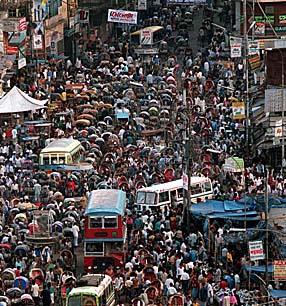
Since the beginning of the industrial revolution some 250 years ago, we have changed the character of the Earth;  hence the increasing use among geologists of the term Anthropocene to follow the Holocene epoch. Although a complex mix of factors are responsible for such changes, population growth is without a doubt the most dominant - and continues to be. The human population rose from around one million 12,000 years ago to around one billion 250 years ago. Since then there has been an extraordinary acceleration from 2 billion in 1930 to 6 billion at the end of the century and now approaching 7 billion this month, with projections suggesting a further rise (albeit at a slower rate) to 9 billion by 2045 - scary thought if ask me!!! As hopefully you have gathered from the AS Population module and our current Development A2 module, education is critical if we hope to solve the issue of population growth and thereby dilute the effect of the appending impacts - especially education of women ( = the Girl Effect) as where emancipation of women is achieved, CBR drastically drops, as seen in most industralised countries where the fertility rate is below replacement level fertility. However, in reflection, this does causes problems in its own right - think ageing populations - but, with regards to the environment, is no where near as detrimentally damaging. There are also many other issues such as increasing population density and rapid urbanisation, especially in the developing world, which are all causing global societal problems with secondary economic, political and environmental impacts.  To think that global education could attenuated many of these demographic issues is incredibe - if education is the answer, something which is perhaps possible to start to globally implement on the mentioned timescale, should it be our priority for the next 40 years?

Oceans:

I will try and keep this one short and simple as in truth I could probably write a few essays for you on this one! Approximately 70% of the globe is ocean and we are incredibly connected and consequently reliant on it in a multitude of ways. The oceans (although specifically the ocean circulation)  are a critical mechanizism in the Earth's heat transfer system, feeds over 25% of our population and, as a result of its close coupling with the atmosphere, absorbs the heat generated by our unhealthy addiction to burning fossil fuels. Although the oceans may look very stable and unchanged over recent decades, they are not, and are increasingly vulnerable to anthropogenic forcing. With more photosynthesis occuring on the sea surface than anywhere else, many consider that the oceans breathe for the planet, with the oceans also being the largest carbon sink. This is all set to change, if our unsustainable environmental usage and consequentially accentuated global climate change continues to happen and once a significant change happens within the oceans (as is already happening with depletion of the oceans fisheries, toxic contamination of the sea by industrial runoff and plastic pollution and acidification etc.) it will pose a great threat to the health of the world's population.

Water:

Water is a resource that many take for granted but it is a resource that we simply cannot survive without. Whilst we cannot live without it, when we are forced to drink that which is not clean it becomes lethal with diarrhoea the biggest killer of children in sub-Saharan Africa - preventable diarrhoea associated with dirty water and poor sanitation kills more children than Aids, malaria and TB combined.Water provokes other societal issues, especially for women and girls who bear the burden in developing countries of walking for miles in search of water whilst dirty water, poor sanitation and hygiene undermines maternal and child health and nutrition. This has knock on impacts on education, with 443 million schools lost due to water-related diseases, as girls, especially, are needed to find water thus cannot attend school. The World Health Organisation estimates that every $1 invested in water generates $8 in wider economic benefits. All of the above, are linked to water as a drinking resource, but it has wider uses to, in industry and agriculture. Agriculture is reliant on water supplies, with 70% of the globally available freshwater used for agriculture, making livelihoods even more reliant on water what with droughts and famines going hand in hand. It is a critical ingredient for industry - almost every manufacturing process needs water - whilst,  it's intertwined with energy and not just through hydropower but thermal power stations need water for cooling and for the steam needed to turn turbines.

Energy:

I am guessing that this one is quite obvious - we humans are different to other species on Earth as not only do we gain energy from the things we eat but also from things that we don't eat. Our energy usage throughout our history has changed, as both a consequence of our development and as a factor allowing for our development. Currently, the issue of generating energy sustainably is a huge issue for the global community, with climate change accelerated by our insatiable hunger for burning fossil fuels, a desire that is only likely to increase as the global population continues to grow and countries continue to reach higher levels of development.

Food security:

With water security and supplies under threat, whilst the population continues to expand, the challenge of feeding the world is a huge! This challenge is not going to be easy with our oil-reliant food system, our environment under stress from global climate change, distruption to water supplies and soil degradation/loss, weakening overturning in oceans, biodiversity loss, land use competition with people and animals needing space to live, space needed to grow food and people starting to utilise fertile land for energy production. Perhaps one of the greatest challenges is changing our attiutde towards food and waste as if every country fed its population to the extent that we do in the UK or the USA, we would need several planets just to grow food, with estimates that 40% of what is fit to eat we waste. If we have to feed 9 billion people by 2045 we cannot continue in the way that we are - especially if you factor in the likely future changes to agriculture patterns and productivity as a result of global climate change.


What do I think? Well, I think that just the above mentioned are cause for concern and there are other factors that I am shocked did not get on the list. We place a lot of focus on how oil fuels fighting and whilst it cannot be argued that it doesn't, I think greater focus should be placed on possible/likely future fighting over resources that are essential to our survival - primarily water and food. If we are prepared to start wars over oil what would countries be prepared to do when the resource we are all after is one intrinsic our survival. This is worthy of a few blog posts on its own but I am reading a really interesting, if not slightly worrying, book at the moment called Climate Wars which covers this - a book review will be on its ways shortly, once I have finished reading it, but it is definetly worth a read for any Geographer! Anyway, back to the question,  to be honest, I feel that all these factors (and many many more) are so closely interlinked that we cannot hope to untangle them and thus it is crucial that instead of trying to prioritise them we spend the time discussing how to prevent worse case scenairo's from occuring by developing mitigation techniques whilst also ways in which society can adapt to the inevitable consequences of the damage already caused by humankind. So, I suppose what I am trying to say is that I believe we need a more holistic approach to environmental change rather than trying to prioritise different aspects.

Anyway, the afore mentioned are the factors covered during Earthwatch, followed by my view for the need for a holistic approach but what do you think should be the top environmental priority for the next 40 years? Would you choose one of the above or do you think something is missing from the list? Let me know what you think!

I am a bit reluctant to tell you which of the above factors was voted to be the greatest environmental challenge and thus should be our priority over the next 40 years but I am guessing I probably should tell you and anyway, hopefully, by now you will have formed your own opinion. The chosen factor was Population and Education with the agruement for the desperate requirement to address expotential population growth and providing education for all, viewed as the most compelling. The speech given by Sir Crispin Tickell, on this topic, can be replayed here - do you agree with the factor chosen?

Thursday, 2 June 2011

Geography Picture Of The Day (sort of) - Could ancient bacteria power the world?

The words oil and renewable are not something I think I have ever used in conjunction but this could all change in the near future.....

Oil is used relentlessly across the globe, despite the apparent detrimental environmental impacts, and for many years now the thought of renewable oil has been too idealistic for many to even dare to consider. However, this once idealistic idea, is now getting serious consideration from many scientists.

The above picture just looks like a few tanks filled with a rather vibrant green liquid but this is in fact the ancient bacteria that has got many scientists very excited. Cyanobacteria have already played a huge role in the history of the Earth as, around 2.4 billion years ago, they were the first microorganisms to start to oxygenate the Earth's atmosphere. Now, scientists hope that, after a bit of persuasion from a tad of genetic engineering, they could possiby help us out in the future by utilising our waste carbon dioxide (something that we seem to have an abudance of after the announcement made by the IEA which suggested that last years energy - related carbon emissions reached an all time high) and a little sunshine to secrete alkanes - the crucial ingredient of diesel. This would offer a very 'green' fuel, that could be considered to be solar-powered oil, as, primarily, the microbes could be fed with the carbon dioxide emmited form industry and, this form of biofuel, would not require vast expanses of fertile farm land to be used to grow crops like sugar cane as, due to the need for sunshine, the most commercially viable location for these photobioreactors would be in deserts.

This third generation of biofuels is, with good reason, attracting millions of pounds of investment - especially in America. This latest technology is far from being capable of producing a commericailly viable fuel but, this third generation biofuel is only in its infancy and so there is still hope for the production of a renewable oil and so no longer is the idea of making oil from sunshine one only found in the dreams of many energy producers.

Tuesday, 31 May 2011

Are current farming practices sustainable?

Farming is something that affects everyone in some way or another and living in Somerset means that, for some of you, farming is part of your daily lives. My stepdad is a farmer and so farming has been a part of my life since I can remember  and we own sheep and chickens and we grow vegetables for either our consumption or the sheeps. Over the last few months I have read numerous articles about the problems that are going to arise, in terms of food supplies, as the global population continues to grow. I have also been reading (yes I know, I read rather a lot!) the weekly articles, which is part of a year long investigation that have been published in the Farmer's Weekly which discuss farm energy and the ways in farms could exploit renewable energy. All of this, accompanied with some of the things that Al Gore has mentioned in his second book Our Choice and my personal experience of farming, has made me really question whether or not our current farming practices are sustainable and how they are going to have to change in the future.

It is a well known fact that the global population is expected to rise to 9 billion by 2050 and, as many people starve everyday in the world at present, many are worried that we will struggle to feed 9 billion mouths if we continue to farm the land in the same way that we do at present. Also rising sea levels threaten to claim the world's most fertile farm land which would put even more pressure on farmers to efficiently grow crops as it takes roughly 3000 years for a metre of workable soil to form. On the other hand, some people take a more optimistic view, and believe that we already produce enough food to feed 9 billion people (one article I read even went as far to say that we currently produce enough food to feed 15 billion!) and that we just need to reduce the amount that we waste. It is estimated that in developing countries 30% of their harvest is eaten by rats or insects or rots in grain silos and in developed countries we throw away 25% of our food, uneaten and that each 'rich' person waste 800 calories of food each day (for more on reducing waste see previous blog post on 'can the world cope with the growing population'). If we could reduce this waste then perhaps not as many people would go hungry each day. To reduce wastage in developing countries it is going to come down to improving their farming methods but in developed countries I think a change in attitudes is required. I was discussing this whole issue with my family a few weeks ago and in relation to reducing waste, we all agreed that the power that supermarkets have needs to be reduced and we all need to care less about aesthetics. Next time you go to a supermarket, look at the fruit and veg and see if you can notice how it is all practically the same size and shape and colour. How much fresh food do you think is wasted because it either fails to meet the aesthetical requirements of supermarkets or it is not brought before it reaches its shelf life? I am guessing that it is possibly quite a lot and this does not just occur in supermarkets as I am sure that many of us are guilty of throwing out untouched food if, even if it is fine, but has just passed its best before date. Reducing waste could be one way of ensuring we can feed the growing population but, in the future, other factors are likely to provoke farming patterns to change.......

As we  worked our way through the energy module, it became increasingly apparent that life as we know it cannot exist without the use of fossil fuels and, as oil reserves in particular continue to dwindle, farmers are going to have to change the ways in which they use the land. All pesticides, fertilizers and herbicides are produced from oil and since the mechanisation of farming, large machinery has played a large part in food production. The use of all of the above is going to have to be reduced as oil reserves run out. An increase in organic farming, at first glance, may seem like an attractive alternative as fertilizers, herbicides and pesticides are not used on the crops. However, due to the fact that you are not permitted to use such things, tractor hours are drastically increased which makes it debatable whether or not increasing organic farming would actually consume less fossil fuels. So, how are we going to manage to increase productivity without the use of fertilizers and pesticides or large machinery. Is hydroponics going to have a play a bigger role in food production or is the way we utilise land going to have to change?

Energy plays a crucial part in farming as we know it, especially fossil fuels, but farms do have huge potentails in terms of renewables. I feel I need to mention the fact that biomass and biofuels are becoming increasingly popular in the UK but, as expressed previously (see 3 quick questions I have been meaning to put forward in relation to the energy module.......Can biofuels offer a sustainable alternative to fossil fuels? Do developed countries have the right to limit the amount of fossil fuels industralising countries use? And finally Does oil fuel aggression?) I question whether or not biofuels are a sustainable option for the future. Biogas is becoming increasingly popular amongst farmers, especially in Germany who now have 6000 fully functioning plants. This popularity has been provoked by the government's feed-in tarrif scheme which gives finicial support to those considering developing a biogas plant on their farm.  In the UK, wind turbines are slightly more popular at present, as they can be constructed on grazing land as they do not pose any potentail threat to lifestock. Farms, due to the UK's FiT scheme, are starting to exploit wind energy by constructing a few small 10-15kW turbines on their land to help generate some of the energy that they consume for lighting and heating etc. Solar energy, especially in the south east, is also proving to be increasingly popular with farmers.

At present farmers, within the EU, are paid subsidies to manage conservation and preserve the surrounding environment and, due to the costs involved with farming, the vast majority of farmers comply with these requirements to ensure they get the subsidies. These requirements often affect the size of land available for arable farming as, for example, farmers qualify for differing levels of subsidies depending on whether or not they leave a 6ft or 12ft margin around the field for conservation. The issue of whether or not we will be able to continue to preserve and protect the environment in this way when we have 9 billion people to feed featured greatly in the discussion I had in my family and my stepdad, who recognises the importance of preserving the environment for future generations, questions whether or not we will be able to continue to protect the environment in this way in the future without comprimising our ability to feed the people that live in it. Perhaps this is going to come down to deciding which  areas to extensively farm and which areas to conserve. For example, a recent government-backed report suggested that Wales should convert at least 20% of its farmland back to forestry because its agriculture is so unprofitable. So, what if we reduce our use of land and turn to hydroponics instead? Many Japanese farmers, due to a lack of flat fertile land, have tried this method of farming to increase yield and so is this the way for the future?

Another influential factor, that needs to be considered when discussing the future of farming is changes to climate. Currently arable farming in the UK is centred in the south east whereas pastoral farming occurs elsewhere where the climate is not as hot. However, with the predicted rises in temperatures experienced in the UK over the next 20 - 30 years, Scotland and Northern England are likely to experience the higher temperatures that are required to switch from livestock to higher value arable crops. Therefore, it will not only be a lack of fossil fuels that will provoke changes to farming but also changes to the climate which ultimately dictate what and when crops are grown.

From this, I think it is clear to see that our current farming practices, for various reasons, will not be able to be continued in the future and we have to change in response to a lack of resources, growing global population and an ever changing environment. Despite it being easy to say that they will have to change; it is harder to predict what exactly they will change to. Are we likely to turn to hydroponics, or is this unlikely as freshwater becomes scarce? Is organic farming the future of farming in the UK? Or are we going to have to revert back to subsistence farming to reduce the transportation of food and the need for large machinery?

Monday, 2 May 2011

Wind farms paid to switch off.....

6 wind farm operators in Scotland were paid nearly £900,000 (in total) to halt their wind turbines for several hours between the 5th and 6th of April because too much energy was being produced and the National Grid couldn't cope. The night in question was a very wet and blustery one and so the turbines were producing a lot of energy, as were the hydro-electric power plants but demand for the electricty they were generating was very low. Storage space for this excess electricty was extremely limited and the power could not be transported to England as the transmission cables lacked the capacity to carry it south. The nuclear power plants in Scotland continued to run as per normal whilst England met its energy needs purely by using fossil fuels.

At present, wind turbines contribute less than 5% of the UK's energy needs and if situations like this occur again then it will become increasingly unlikely that the UK will meet its target of producing 20% of its power from renewable sources by 2020. I think that not only does this paid switch off demonstrate that renewables can generate a lot of energy but that, perhaps, due to a lack of transmission cables and storage space, the percentage that they can contribute to the UK's energy mix is being restricted. Therefore, if we are to meet the targets, more investment needs to be placed in developing transmission networks and storage space. Storage space is crucial and its development needs to occur along side that of the turbines themselves due to the lack of consistency in the amount of power they produce. I think that this also highlighted the flaws in the subsidy scheme as the average turbine generates power worth around £150,000 but attracts subsidies of £250,000 which only increases consumer bills. Also, in some cases, the compensation offered to cover the switch off was 20 times the value of the power the wind farms would have generated which, to me any, seems a ridiculous - why should wind farms earn more money for switching off the turbines than keeping them on?

Possible new alternative for storing nuclear waste........

The issue that surrounds the storing and disposal of nuclear waste is, perhaps, the most problematic of the disadvantages of expanding the world's nuclear power generation capability. Ideas for disposing of this waste, which stays radioactive and thereby poses a risk to human life for a number of years, vary imensely from storing it in concrete containers in specially designated areas or even the possibilty of sending it to space. All the the ideas have their own problems, clearly some more than others, but does a, more recent idea in America, provide more of a sustainable option or not???

Burying the radio active waste is not a new idea, as such, but due to the ongoing situation in Japan at the Fukushima Daiichi power plant,  it is now being considered. Beds of salt, left behind millions of years ago by evaporationg seas, up to 1 kilometre thick lie around 2km deep. Salt is flows slowly and so, unlike deposits of shale and granite which fracture under stress, seal any fissures themselves, preventing the radioactive waste from seeping into groundwater stores. The idea would involve, excavating a chamber in the salt in which the radioactive waste, in its transportation canister, could be lowered. It is believed that once the hole is sealed with salt, concrete and clay, the pressure from the surrounding rock would cause the salt layers to creep inwards and encapsulate the waste. The biggest worry is the impact that the heat from the radioactive waste would have on the salt as the effects of this are yet known. Also levels of tectonic activity and volume of groundwater would play a role in dictating possible sites.

So, is this a possible option for the future? Well, it seems clear that further research needs to be conducted before this idea can be developed further. For the US, who have quite a few underground salt deposits, it could be an option to replace the reprocessing of spent fuel that occurs in some other countries but, due to the concerns surround its possible use in nuclear weapons, does not happen in the USA.

The problems experienced, and still being experienced, in Japan has clearly forced the risks and disadvantages associated with generating nuclear power right into the front of the general public's minds.The above is just on example of  the thoughts that have been provoked by this disaster. One such response that did catch my eye is that a few people in India have stated that they would rather die than allow the events in Fukushima to repeat themselves in the future in Jaitapur. The article on this story is well worth reading and suggests that some have not learnt from what Japan is still experiencing.

Sunday, 10 April 2011

Could Carbon Capture be the technology to save the planet?

Although nobody knows excatly how much carbon dioxide is too much, it is widely recognised that carbon dioxide does cause the planet to heat up.  It has been calculated that the release of  450 parts per million of carbon dioxide would provoke a 2 degrees celcuis rise in global temperatures and amognst some, of the many, consequences associated with this rise include a higher number of agricultural failures, ocean acidification and the possibilty of a higher frequency of natural disasters. Despite the fact that no one knows for certain how much carbon dioxide is too much, some scientists have been working on calculating the world's carbon budget and how much of it has already been used up. It is believed that the world is already over halfway through its carbon emissions budget and, to satisfy current demand, the trillionth tonne of carbon will be burned within the next 20 - 30 years, which suggests that by 2050, 57 gigatonnes/year will be emitted - unless something is done to reduce this!

These slightly worrying trends have called for the need for a rapid way to reduce carbon dioxide emissions and many countries, both developed and industralizing, are now starting to look at carbon capture and sequestration technology as a cost-effective way to provide 1/5 of the reductions required by 2050. There are currently three different methods to capture carbon dioxide, although some development is required to make them more energy efficient in the future - especially if they are to provide a sustainable option for allowing carbon dioxide reductions.

1) POST COMBUSTION - involves the capturing of carbon dioxide from exhaust gas and then the reaction between chemicals known as amines and the exhaust gas which is bubbled through it. The heating of the solvent releases the concentrated carbon dioxide thereby allowing the solvent to be reused. This process is presently used in the natural gas processing industry, as it can be fitted to existing power plants, and is being piloted at carbon capture plants. In the future it is likely that the amines used will be replaced by similar chemicals that require less heat to release the carbon dioxide and are more resistant to degradation by other chemicals present in the exhaust gas.
2) PRE-COMBUSTION - this method is the stripping of the carbon dioxide, from the fuel, before it is burned by a series of interlinked chemical reactions. Firstly, the fossil fuel is converted to carbon monoxide and hydrogen, which is reacted with water vapour to form hydrogen and carbon dioxide, a mixture that can be seperated with ease. The hydrogen can then be burned and used to generate energy and because of this, many of the proposed CCS projects are likely to utilise this method.
3) OXYFUEL COMBUSTION - this method comprimises of burning the fuel in pure oxygen instead of air as it means that the exhaust gas consists, mainly, of carbon dioxide and water which can be easily seperated. Currently, only a handful of pilot plants exploit this method as producing the pure oxygen required is both costly and energy-intensive.

These three methods are currently the most developed ways of capturing carbon dioxide but there are some others. Another technology that is currently being developed is the use of crystalline compounds called metal organic frameworks. Changes in pressure provoke these materials to selectively soak up carbon dioxide or release it. Due to the fact that minimal equipment is needed and energy consumption, compared to current methods, is relatively low, it is believed that this could be implemented on a industrial scale in the not too distant future. Another, very different method, is to use algae as, as they photosynthesise they take in carbon dioxide. This method would also produce biomass which could be reused as biofuel. However, a very large area would be required to make this method viable.

Although the idea of capturing carbon dioxide may sound like an attractive option to many of you, like every method of boosting environmental credientals and every step taken to a more greener sustainable lifestyle, it is not a simple as it first seems. There are huge costs involved, at present, with constructing CCS's and unless governments commit funds to the development of this technology, it is unlikely to be developed on a commercial scale. In the UK, the government has committed £1 billion to a project that aims to develop the UK's first large-scale project and, as part of the European Economic Recovery Plan, 1 billion euros has been split between six CCS projects.  It is hoped that the EU's emissions trading scheme will also help to encourage industries to develop CCS's projects. At present, Norway is the most developed country, in terms of carbon capture. In 1991 they introduced a high tax on carbon dioxide emissions which resulted in the implementation of CCS at two of the large offshore natural gas facilities (Sleipner opened in 1996 and Snohvit in 2007). To date, these projects, combined, have mananged to capture 12 million tonnes of carbon dioxide and store deep beneath the bed of the Norwegian Sea. Although Norway have managed to store the carbon they have collected, this is the problematic issue surrounding the idea of carbon capture and storage................so, where do you store it?   Well firstly the carbon dioxide has to be compressed to a supercritical state (which is neither liquid or gas but kind of a bit of both) so it can be transported, via pipes, to suitable sites for sequesteration. The transportation stage of the process is easy enough and there is already 3,900 miles of transport pipes across the USA alone. carbon dioxide can also be transported by sea in tankers and tankers continually cross the North Sea carrying carbon dioxide for fizzy drinks and cleaning and so far, there have been no major accidents. The issue is, where do you transport the carbon dioxide to. Only certain areas have the right geology to contain carbon dioxide within the rocks and Europe seems to hold many of them. and the UK accounts for 35% of the known possible sites for geological sequestration at present. Although development into building materials that are capable of stabilizing and embodying carbon dioxide is taking place, saline aquifers, at present, remain the best locations for geological sequestration. Saline aquifers in rocks are suffieciently permeable to absorb the carbon dioxide and suffieciently stable and isolated to ensure that the carbon dioxide remains within the rocks. The pores, within the rocks, inside the saline formations trap the carbon dioxide via cappilary forces. Over a long period of time the carbon dioxide dissolves into the liquids contain within the saline formations and the minerals within the rocks. Due to the fact that carbon dioxide is buoyant and naturally migrates towards the surface it has to be injected into, not only th e correct geological area, but also to a depth of atleast 1 kilometre. The pressure and heat at this depth maintains the carbon dioxides supercritical state and thus it is less likely to migrate towards the surface. The layers of impermeable rocks,normall yshale and clays or minerals and salts left behind by the evaporation of ancient waters in an earlier geological age, also prevents the migration of the sequester carbon dioxide to the surface. Finding suitable sites for storing carbon dioxide is not the only problem -  get liscensing and public support for such projects is hard due to othe risks involved. Although not linked in any way to the sequestration of carbon dioxide the Lake Nyos tradegy has made people aware of the potential risks to human health if the stored carbon dioxide managed to migrate to the surface. This tradegy occured in 1986 in Cameroon and it furthered the public's concern about the siting of CCS repositories. The sudden release of large amounts of carbon dioxide from deep beneath the bottom of the Lake Nyos killed more than 1,700 people and 3,000 cattle. The orgin of the carbon dioxide was melted magma located 50 miles beneath the bottom of the lake and as the gas made its way through the vents in the underlying rocks it saturated the water at its bottom depths. The natural movement and churning of freshwater, from top to bottom, caused a sudden explosive geyser of carbon dioxide to powerfully spout to the surface and because carbon dioxide is heavier than air, it spilled over the banks and down the hillside. People are, understandable concerned, about the possibility of this happening due to carbon dioxide being injected into the ground, the possibilty of freshwater aquifers being contaminated and, if not checked and plugged, abandoned wells serving as chimneys for the sequestered carbon dioxide.

Despite this, it does look as if there is a future for carbon capture and sequestration. Scientists and engineers are getting more and more confident that safe transport and storage is possible as natural carbon dioxide has been stored underground, for example under large swathes of central France and the south-west of America, for millions of years. It is true that further development of the current methods and technolgy is needed but it is believed that much of this can be derived from the oil and natural gas industries. Countries like China, India and Brazil, who are all rapdily industralising, are also looking to develop this technology as it seems to hold a rapid, and attractive, way of reducing carbon dioxide emissions. Do I think that this technology can save the planet? Well, on its own, no. Data suggests that it can only provide 20% of the reductions in emissions required by 2050 and although this is quite a substantial chunk, it is not enough. The idea is quite attractive and, as urgency is required, it starts to look more and more so.  However, I worry slightly that if science continues to develop technologies, like this one, people will continue to lead our current unsustainable lifestyles and that attitudes towards energy consumption will not change due to an optmisitic belief that we will solve every problem we face. I also think that strict regulations need to be implemented along with this developing industry as storing carbon dioxide in the wrong areas could have disastrous impacts. Therefore, I think that this technology could have a future and, along with a change in attitudes and a more greener approach to energy production, it would help to reduce emissions. This is just my opinion and so what do you think? Do you think that carbon capture could be the technology to save the planet or do you think that governments would be better off investing in other technologies that could boost their countries environmental credentials?

Tuesday, 29 March 2011

A glance at some of the Geography news of the week

I thought I would post some links to some Geography related stories that have been in the news over the past fews days, that may have been overlooked due to frequent reports of the ever changing situation in Japan and the Middle East. Unfortunatley, due to  a mountain of other work to tackle, I don't have time to write about them but they are definetly worth reading if you can find a spare 5 minutes.

China tops global clean energy table. After a recent study compiled by the US Pew Environmental Group, China has remained the worlds leading investor in low carbon energy technology with an investment of £34.1bn in 2010. China is also the world's largest producer of wind and solar power units. Argentina topped the list, in terms of year-on-year growth, as it saw its investment grow by 568% since 2009. The USA, even though their investment increased by 51% slipped behind Germany, to 3rd place. The UK's investment dropped by 70% which means they are now ranked outside the top 10. The drastic drop in the UK's investment has been partly blamed on the uncertainity that was created by the formation of the coalition government. The report concluded that long term certainity, created by national policies and government commitment, was most attractive to investors and therefore countries who offered this, like China, India and Germany, have been most successful in securing and utilising investment for the development of low carbon technology. The low carbon energy sector does not include nuclear power and so statistics surrounding this were not included. Nuclear power attracted $243bn in 2010 which was an increase of 30% since 2009 and an huge increase of 630% from 2004 - it will be interesting though to see if and how investment figures will be influenced by the events in Japan........

UN report: Cities ignore Climate Change at their peril - This article is defintely worth reading as it links energy intensity and climate change to development and the population trends created by development. It also discusses not only the changes, the report concludes, that these trends will have on the environment and the climate but the impacts it will have on water supplies, energy provision, infrastructure, industrial production and public services.

Green Machine: Emissions cuts could save 280,000 lives. Another article that manages to link the energy module to population and it provides some very interesting statistics which am I am sure would be great to include in some essays relevant to the topic. It dicusses the other advantages, apart from the obvious environmental ones, that reductions in carbon dioxide emissions would have - many of which I must admit that I hadn't thought of.

These articles are very helpful if you are wanting to improve the links you can make between the population and energy module - especially the last two - and they all provide little bits of information and data that I am sure would look really good if you could sneak them into longer answer questions.

Sunday, 27 March 2011

60 minutes without electricty....

Like I mentioned on my last post, yesterday evening, between 8:30pm and 9:30pm, was Earth Hour and it has been estimated that 130 countries took part worldwide. As part of this global climate change campaign, in Scotland, more than 100 landmarks and iconic structures were plunged into darkness. Scotland was only one of many other countries that took part though........


For more pictures of this event taking place around the world see the link to the National Geographic report on it Earth Hour Pictures: Before and After - across the world

I thought it would be quite interesting to see if my family could survive just 1 hour without electricity. So, how did we get on........

Well firstly, I didn't manage to persuade my brother to participate as, for him, the thought of spending an entire 60 minutes without his xbox was unbearable. Instead he decided to part take in the Human Achievement Hour (I am not making this up - it does exist and occurs at the same time as Earth Hour) which encourages people to " Leave your lights on to express your appreciation for the inventions and innovations that make today the best time to be alive and the recognition that future solutions require individual freedom not government coercion".  The rest of my family decided to humour me in this challenge, even though they felt it was rather futile as they questionned the impact it would actually have on the global energy consumption (this is true but it kind wasn't the point). So, all the lights and appliances in my house went off, apart from the room my brother occupied, and the first thing I noticed, apart from the darkness, was how quiet everything was (a word of warning, if any of you decide to try this sometime, make sure you light candles before you turn the lights off, as trying to find them, along with matches, and then light them in the pitch black is interesting to say the least!). Unfortunately this peace and quiet didn't last long as my stepdad felt the need to moan about not being able to make a cup of tea literally every 5 minutes. My  mum was  rather more tolerant than I thought she would be, apart from complaining about the smell of the candles and frequently having to shout at the cat to prevent her from chasing the flickering light of the candles - honestly she was so close to setting herself a light on numerous occasions! I didn't find it too bad but this is partly because I don't really use many appliances and I often get bored of watching TV after 10  minutes. The only thing I hated (and I really did hate this) was the fact that with no lights I was enable to read - reading with a candle it particularly tricky. We therefore sat and had a few lively debates - all revolving around geographical topics and the environment - which I thought was great (although I don't think next time I will be allowed to choose the topics) and they become so lively that our hour was extended to a few as we just lost track of time. However, this was brought to an abrupt end, after my stepdad (gasping with thirst!) may a dash for the kettle - turning on all the lights on the way.

Overall, I didn't find it too bad and I think that I could have gone on longer than 1 hour. I missed the lights the most and I started to realise how restricted people who live without lighting must be - especially those who live near the equator and so experience a very quick transition from daylight to darkness. Did I learn anything from the experience? Well, yes I did. Apart from the fact that animals and candles possibly don't mix, I realised how much technology has killed conversation. It also made me think about the people who complete 8766 Earth Hours a year, as many in the world do not have access to electricity at all. I asked my mum what she thought and she said that she could not believe how much we were reliant on lights and how, despite having candles, we were very restricted to what we could do. Therefore, when I asked her if she would do it again, she said she would like more warning (to be fair I did announce my plans to my family at like 8:25pm) so that she could go out a buy a lot more candles! If anybody reading this, tried to last 60 minutes without electricity, it would be interesting to know how you got on

Friday, 25 March 2011

Earth Hour 2011

A few weeks ago, we had a discussion in class about how different our lifes would be without fossil fuels and I think that we pretty much came to the conclusion that they would  be almost unrecognisable compared to the lifestyles that we all currently lead. It is extremely hard to think how, life as we know it, would function without the use of fossil fuels and the transition to this way of life, which is perhaps inevitable, is likely to be a gradual one - well as slow as  man kind can force it to be! A life without fossil fuels, at present, maybe practically impossible but do you think you could survive without electricity for just 1 hour of the 8766 that make up a year?

Earth Hour, which is now into its fifth year, has previously involved 128 countries, 89 capitals and 9 out of the world's 10 biggest cities turning off all lights and non-essential appliances for 60 minutes. Earth Hour takes place tomorrow evening between 8:30pm - 9:30pm (local time) across the globe and, although this will not have a significant impact on actual energy consumption or greenhouse gas emissions, it is hoped that it will raise awareness of the many issues surrounding our current energy supply and consumption patterns, whilst being a symbolic show of support against climate change and energy conservation. Here are some pictures, from around the world, of previous Earth Hours...........

This is a picture of the illuminated sky scrapers that stretch up high into the skies around Hong Kong but during Earth Hour (2009) the scene looks rather different.............
In Hong Kong, during the 2009 Earth Hour, over 1700 buildings switched off all lighting and essential appliances


Like demonstrated in this photo, Malaysia's iconic Petronas Towers, can normally be seen for miles and miles......
.... but after switching off all non-essential appliances during an Earth Hour, in a statement against global warming, the towers start to blend into the surroundings.

So, do you think you can survive without electricity for 60 minutes? If I remember and can persuade my family to participate (that should be interesting!) I will try to do it. My intial thoughts are that it can't be that hard but I will just have to wait and see. Afterwards I will write a post about how I got on and if I think I could go for longer without using electricity. If any of you try it, let me know how you  get on............... surely if we can't last 60 minutes without electricity we have no hope for sustaining a life without fossil fuels.

Tuesday, 22 March 2011

Essays

During last Thursday's lesson we got our essays back that formed part of our half term assignment and, like many of you, I didn't do too badly in the essays. Millie seems to think that it would benefit you, my fellow students, if I posted my essays on my blog so that you can read them. I must admit that at first I was a little hesitant at doing so but on reflection I think that, as well as hopefully helping some of you, it will help me to improve my essay writing as it will enable me to look back on my essays and make a list of things that I need to do to improve them. I must make this point very clear that these essays are not perfect but I did score quite highly in some of them so I must have done something right! I was planning on rewriting parts of them to make improvements (this desire to do so was only furthered after reading the essay that Millie wrote last night which not only dwarfs mine but, to an untrained eye, seems to be extremely good and much better written than mine) but due to a lack of time I haven't been able to do so, so instead I am going to write below each essay the tips for improvements that Millie left (the pink bits) and  also my comments on what I would do differently and what I think I did well (the purple bits).

I have written each one in a different post so that you can direct your attention to, perhaps, the area that you didn't score so highly in and so that you don't have to read them all at once. If you have any tips about ways in which you think I could improve my essays they would be much appreciated!


Essay writing, and just English in general, has never been my strongest subject and so I have had to work quite hard, and still am at present, to try and improve my writing technique- especially under pressure and time limits.So, I thought I would share with you some of the tips I have picked up from both workshops and lots of practice.

1. How do I approach the question I face? The first thing I normally do, if I am writing on paper, is to scribble all over the question itself and underline the key points like the command words and what the question actually wants for you. For example, in the first essay in the assignment 'Describe and comment upon the effects and solutions to the Acid rain problem' I would have underlined  describe, comment, effects and solutions. The way in which I then appraoched the essay was to describe the effects and then comment on them and then to move on to describing the solutions and commenting on them.

2. Whenever writing essays I try to maintain a similar and simple structure which ensures I do everything that the examiner wishes me to do. I try to include a brief introduction, that presents the issue I am going to discuss, followed by a few paragraphs before finishing off with a conclusion that readdresses the key points I previously mentioned.

3. MENTION CASE STUDIES, even if the question doesn't directly ask you to. According to Nikki, mark schemes often hold back a few marks for the use of case studies as the use of them shows that students really understand the topic and have a wide geographical knowledge.

4. Always try to give both the postive and negative impacts or side effects from the issue/factor metioned, however small and uninfluential they maybe, just remember to weigh up their importance- this is something that I have been trying to include in my essays where possible after I came to the conclusion that geographers seem to concentrate most greatly on one side of the arguement (normally the negatives) without given the other side (normally the positives) a thought. I also think that it can demonstrate that you have really knowledge of the area and have considered the issue from every angle possible. I tried to do this in my acid rain essay and I also did it in an essay I wrote a couple of weeks ago, as part of my revision, on the implications an ageing population has on a countries economy as, although overall the implications are mainly negative, some sectors of the economy may benefit from an ageing population

5. Mention current issues that are in the news. This point is most relevant to the energy essays as the situation is constantly changing and  including up to date information surrounding current issues is a great way to show to the examiner that you are a well informed geographer who keeps track of current issues and who also has the ability to link this to the modules despite the fact that the syllabus and exam is written well in advance.

I can also add to these, many of the general things Millie said about my essays which include writing in third person and, without a doubt the most crucial point, writing succintly! Another thing that I haven't mentioned above is how it is sometimes good to try and link your writing to the other modules we have studied as they all interlink in one way or another e.g when writing about energy patterns mentioned development and some of the population stuff is vital in explaining key differences in energy consumption patterns and sources, a long with predicting future energy mixes.

Describe and comment upon the effects and solutions to the Acid Rain problem [15 marks]

The negative impacts that acid rain has on the environment are numerous and this is why many countries have been prompted to adopt policies that reduce the amount of sulphur dioxide, one of the main pollutants that creates acid rain, that they emit in the hope that it will help to reduce the global impacts acid rain has.
Buildings are always going to be effected by weathering but this natural process is accelerated by acid rain. Buildings, especially those constructed from limestone, sandstone or marble, are greatly affected by wet deposition as, for example, limestone dissolves easily in acid rain and a calcium sulphate layer upon the stone is often formed. This layer is easily removed by weathering and leaves even more stone exposed to acid rain. Dry deposition also contributes to the corrosion of materials used in infrastructure. This has an economic impact as it is very costly to maintain ancient monuments as they are very susceptible to damage by acid rain. In the UK, it has been estimated that over the next 30 years savings of up to £9.6 billion could be made if we reduced our sulphur dioxide emissions by 30%. In the future this is not going to be such a big problem as modern infrastructure does not use materials, like sandstone and carbonate rocks, which are particularly vulnerable to acid deposition.
Acid rain has many ecological impacts and perhaps the most significant of these impacts is to aquatic environments. In areas that experience heavy rainfall, the dry deposits are captured in the surface runoff and increase the acidity of the water. Also aluminium is drawn out of the soil and when this combines with the acid it creates a highly toxic environment for the majority of aquatic animals. This combination often results in an increase in fish mortality, a decrease in both fish growth and reproduction and declines in amphibian populations. The effects of this are often felt further up the food chain too as, although birds and mammals are not directly affected by water acidification, changes to the quantity and quality of their food sources greatly affect them.
Vegetation, especially trees, is also affected by acid rain and in a similar way. The aluminium  that is drawn from the soil makes it very hard for trees to take up water and the acidic rain itself dissolves the nutrients in the soil and then washes them away before the trees have time to take them in and utilise them. Acid rain damages the leaves and needles on a tree which reduces a trees ability to photosynthesise.
It is clear to see that acid rain has had many negative impacts on the environment but some scientists believe that acid rain has a, small, positive impact in relation to climate change. The bacteria, which lives in wetlands and produces a lot of methane, are very vulnerable to changes in the acidity of water whereas other bacteria, that thrive on the sulphurous conditions, compete with methane producing bacteria. It is believed that this has significantly reduced the amount of methane emitted from wetlands. However, in comparison to the negative impacts acid rain has, this benefit is minimal and, as acid rain is a global problem, many countries have implemented measures to reduce the amount of sulphur dioxide they release into the atmosphere.
By reducing the amount of sulphur dioxide countries emit it has enabled them to reduce the acid rain problem. In 1979 a protocol was introduced which stated that sulphur dioxide emissions had to be reduced by 30% by 1997 and this target was met and furthered as in Europe in the 1990’s emissions were cut by 90%. As well as this, sulphur scrubbers were added to every power station chimney in the UK. In the USA most coal-fired power stations have switched to using low-sulphur coal which can be sourced from areas like Australia and they also have installed sulphur scrubbers to the chimneys. They have also implemented a cap and trade scheme and the combination of these measures have cut America’s sulphur dioxide emissions by over 40% since 1980. The amount of nitrous oxides emitted has not been reduced though and instead have been increased due to an increase in the number of vehicles driven globally and the use of fertilisers. Despite this, at present, the acid rain problem is not as prominent as it was 30-40 years ago due to the success in reducing sulphur emissions. However, unless industrialising countries like China and India are given a cheaper and more available option than coal, the acid rain problem is likely to become a big issue again in the near future. 67% of China’s primary energy consumption comes from coal and coal is responsible for 94% of their sulphur emissions. Acid deposition is already an issue in China with 30% of the country experiencing acid rain provoked problems. As they continue to industrialise, and therefore increase their coal consumption, these figures are likely to rise.
Acid rain has many negative impacts on the environment and attempts to control this problem by reducing the amount of sulphur dioxide developed countries emit has worked to a certain extent. However, these reductions have not managed to solve this issue as it has just moved to different areas of the world that are currently industrializing. If help is not given to developing countries to introduce policies to manage their sulphur dioxide emissions or to find other, greener, cheap and available alternatives to coal then the problems that occurred in the 1970’s due to acid rain are likely to resurface in the near future and on a more destructive scale.
Millie's comments on this essay: She suggested that in my second paragraph I could possibly mention how that although modern buildings, because of the materials used, are less susceptible to damage by acid rain compared to ancient monuments and older buildings which are built from limestone, sandstone, marble and other carbonate rocks; that the manufacturing of more modern building materials is likely to increase industrial emissions and therefore the amount of sulphur dioxide and nitrous oxides released into the atmosphere.

Perhaps her most important response to my essay was to suggest that my writing needs to be more succint - unfortunately there is a lot of truth in this. Her concerns surrounding my ability to produce this volume of work in 15 minutes in an exam are also well placed as I realise that there is no way I could ever hope to write this much in an exam. I must admit that it is worrying that I am still struggling, especially as the exam is looming, to write a half decent essay in 15 mintues - tips for writing a minimal amount whilst still managing to get both the depth and breadth required to score highly are desperately needed!

My comments: I don't think that I wrote too badly in the essay and I think that the main issue with it, is that it is not lacking in information and detail but the exact opposite. Although the point that Millie made, in reference to how the manufacturing of modern building materials is going to increase emissions, will be noted I don't think I would necessarily add it to this essay but instead concentrate on cutting out the less important bits and writing more succintly.

 There are clearly some improvements that can be made but what do I think I did quite well? Firstly, I think that my structure was better than it has been in previous essays I have written in class as my introduction was short (an achievement for me!) and served its purpose, I described and commented on both the effects and solutions to the acid rain problem whilst managing to make reference to a few case studies and my conclusion was suffient and readdressed the key points I had previously made in the essay.

If you have any tips, points for improvements or good case studies/statistics that I didn't include but perhaps should of then please comment..........

With reference to case studies outline ways in which the fuelwood supply could be managed more sustainably [15 marks]

Theoretically, fuelwood is a sustainable source of energy as trees can be replanted to replace those that are cut down. Reforestation and afforestation schemes are often successful in the countries that implement them but such schemes are often costly and so are only implemented in more developed countries. This means that, globally, the fuelwood supply could be managed more sustainably as it is often the developing countries that rely on fuelwood as a source of energy which often leads to deforestation.
In Nepal, 87% of their primary energy is sourced from fuelwood and the ever increasing demand has led to the destruction of 71% of their forest coverage. This has resulted in the risk of flooding and landslides in both Nepal and neighbouring Bangladesh being greatly increased as the absence of trees increases surface runoff by reducing the interception store and it means that there is a lack of roots to bind the soil. One way to manage the fuelwood supply is to reduce people’s dependency on it by offering other alternatives. In Nepal, to reduce people’s dependency on fuelwood, appropriate technology has been used to give people an alternative to fuelwood. Biogas stoves have been installed in rural areas which run on the methane that is produced when livestock manure decomposes. Not only has this reduced the number of trees that have been cut down but it has health benefits as well as respiratory problems are associated with the smoke produced when fuelwood is burned. The Sahel is another area that has suffered environmental damage due to the unsustainable way in which fuelwood has been gathered. Excessive fuelwood gathering has led to desertification and salinisation and, in an attempt to remedy the problems provoked by deforestation; other alternatives are being introduced to reduce people’s reliance on fuelwood as a source of energy. In the Sahel, solar cookers have been introduced which means that people do not have to rely on fuelwood at all to provide the heat required for cooking. Both of these examples of appropriate technology have reduced the number of trees that are cut down. In developing countries, like Nepal and the African nations, forms of appropriate technology, like solar stoves, are possibly a better and more sustainable way of managing the fuelwood supply than implementing afforestation and reforestation schemes as, by offering an alternative source of energy, people are less reliant on fuelwood. Also many forms of appropriate technology don’t rely on fossil fuels as energy sources which are why they are often very environmentally sustainable.
Another method that could be used to manage fuelwood supplies is to implement afforestation and reforestation schemes. In Europe farmers are given grants, by the European Union, to turn farmland back to forests. However, a similar scheme could only be set up in countries that can afford to offer attractive incentives. A similar method of managing the fuelwood supply has been introduced in Nepal and also involves encouraging the local people to get involved. The aim of the project is to promote the regeneration of the fuelwood supply by encouraging locals to help with the planting of trees which are grown in local nurseries. Such schemes are often very successful as not only do they help to regenerate the forests but also provide locals with the skills required to continue with the replanting of trees in the future. Other countries have also initiated schemes that involve replanting trees and China is an example.  China, due to their large population, cut down many of their trees and this has led to the expansion of the Gobi Desert.  To prevent further expansion, in 1981, China introduced a law that said that every citizen over the age of 11 has to plant at least one tree every year. As a result of this law, China has the highest afforestation rate in the world and in 2008, 47,000 square kilometres worth of trees were planted. This has helped to solve the deforestation problem but, at present, fuelwood is no longer a major source of energy for China. As China tries to industrialise they have started to use other, more commercial, sources of energy like coal. This shows how finding other alternatives to fuelwood is one approach to managing fuelwood supplies and, in developing countries, this is where forms of appropriate  technology that can be used to supply energy are very beneficial for both the local people and the environment.
As fuelwood is, theoretically, a sustainable energy source the easiest way to manage the supply would be to ensure that trees are replanted to replace those that are cut down. In developed countries, that can afford to employ afforestation and reforestation schemes, this has been a successful method however this can work in developing countries too. For example, the replanting tree project in Nepal is a more sustainable way of managing the fuelwood supply as not only does it help to regenerate the forests but it also provides the locals with the skills required to continue this scheme in the future. Another way that the fuelwood supply could be managed more sustainably is by offering some alternatives, like solar cookers, so that people are not totally dependent on fuelwood. Reducing people’s reliance on fuelwood is an important way of managing and preserving the fuelwood supply, as when fuelwood is not the only option the forests are not exploited to the extent that the gathering of fuelwood has a negative and lasting impact on the environment. If measures like these are implemented then fuelwood can be a sustainable energy source for future generations and not have as many negative impacts on the environment compared to those that are created by the current, unsustainable, way of gathering fuelwood.
Millie's comments: Millie felt that I needed to address the issue of the start up costs of implementing afforestation and reforestation schemes in more detail and talk about why this is important, in relation to managing fuelwood supplies.  Her biggest criticism of this essay was that it lacked the addressing of how development plays a huge role in determining the management of fuelwood supplies. I failed to mention how,although schemes are great and important, they are not widely implemented due to a lack of both education and funds to kick start them. The fact that developing countries have other priorities, such as securing food, clean water and developing a health and education system, which therefore attract the most funding should also have been mentioned.
A note for Millie incase she reads this: - I found out about the replanting tree scheme, in China, in the second Al Gore book, Our Choice and I can remember that when I first read it, it shocked me slightly and definetly stuck in my mind. This is the extract from the book if you are interested "China stopped deforestation more than 10 years ago, and in 1981, the National People's Congress declared that all citizens of China above the age of 11 (and until age 60) have a duty to plant at least three trees each year. The planting usually takes place in March and April, during spring for most of China. The Chinese tree-planting program is driven by the central government in Beijing, with cooperation from regional leaders. The Chinese people planted 11.7 million acres of forest in 2008 alone - a 22% increase over 2007, according to the statistics released by the Chinese National Greening Committee. Chinese schools require each student to plant at least one tree before graduating, and most schools set aside time for a 'green education, program. The nation announced last year that it will spend almost $9 billion on its tree planting program for the year and set a goal of covering 20% of the nation in forests by next year. The president of China, Hu Jintao, has personally taken part in the tree planting to underscore its importance as a national priority". Apart from this, I am ensure of any other details - especially how a scheme like this is enforced - but I still think it is quite interesting and the statistics released, although I don't know any more recent ones, suggest that it is working.
My comments: This was my lowest scoring essay and I am very tempted, as part of my revision to redo it, especially as I found it the most challenging of the three to start writing about, and include the bits I missed - especially as, on reflection, they are rather crucial points. Levels of development are crucial to consider in practically any essay in relation to the energy module as differences in energy sourcing and consumption patterns ultimately come down to different levels of development and therefore, in this essay, I really should have considered it.
The essay below it just the one we did on the environmental impacts of fuelwood gathering and it was only a 10 mark essay but I thought I would include it anyway as, by realising the impacts of fuelwood gathering, it helpe me to evaluate the steps taken by countries to manage their supplies and the effectiveness of such steps.....
What are the environmental impacts of fuelwood gathering? (10)
Fuelwood is an important source of energy and is heavily utilised in developing countries and even though it is, theoretically, a sustainable source of energy, there are many negative impacts that fuelwood gathering has on the environment – especially if it is not managed. For small, isolated communities fuelwood is normally the most appropriate energy source to utilise and they do not use enough to cause lasting damage to the surrounding environment. However, as the population increases at a rapid rate the number of trees cut down to feed the increasing demand can cause substantial damage to the environment.
 87% of Nepal’s domestic energy is sourced from fuelwood and around 71% of the forest coverage has been cut down and this has had many negative impacts on the local environment. In wet climates deforestation reduces the interception store and thereby increases surface runoff which increases the risk of flooding. Deforestation in Nepal, which is situated in the foothills of the Himalayas and so experiences heavy precipitation, has increased the risk of flooding and landslides in neighbouring Bangladesh. The risk of landslides is increased as the absence of trees means that there are no roots to bind the soil. Also the removal of trees means that, during times of flood, there is no large vegetation to prevent the movement of sediment and this increases the impacts flooding has on the local area. Another environmental impact of excessive fuelwood gathering is that it has led to the destruction of animal’s habitats. The forests of Nepal are home to thousands of animals, many of which are endangered or endemic and deforestation, caused by both over-grazing of cattle and the cutting down of trees for fuelwood, has meant that many of these animals have been forced to move or have died.
In regions that have dry climates, like the Sahel, deforestation leads to desertification as a lack of trees means that transpiration doesn’t occur as much and so rainfall happens less frequently. Also there are no roots to bind the soil and, as the soil is more exposed to the elements, it becomes more susceptible to soil erosion. Salinisation often occurs in unison with desertification as the antecedent moisture in the exposed soil is easily evaporated and when this happens the salts in the soil, which are highly toxic to the majority of vegetation, are drawn from the soil and this means that the land becomes even more unproductive than it already was. The combination of both desertification and salinisation has led to prolonged droughts and famines in the Sahel which have been experienced annually since the 1970’s.
Despite the impacts that excessive fuelwood gathering can have on the environment, when it is managed properly and the demand for wood doesn’t exceed the amount of trees that are being replanted, it does have some benefits for the environment. The burning of fuelwood produces a lower quantity of atmospheric pollutants than the combustion of coal and the other fossil fuels. Also the carbon dioxide that it released from the burning of fuelwood is offset by the uptake of carbon dioxide that would have occurred during the trees growth. For people in remote locations, it allows them to have an energy source that they would otherwise be without as they are not connected to a national grid and so can’t access electricity, which they probably wouldn’t be able to afford anyway even if they were connected a national grid. Also, as they can source this energy locally, the pollutants emitted from vehicles, that would have to be used to transport other energy sources like oil or coal, are not emitted.
It is clear that, if the use of fuelwood is not controlled and policies to replace the trees that are cut down are not implemented, the environmental impacts of excessively gathering fuelwood can be disastrous. However, for many developing countries, fuelwood is the only accessible and available energy source for isolated communities and at present, is possibly one of the best alternatives for them to coal, which is the energy source that industrialising countries often turn to next.

“Nuclear energy presents nothing more than a short term fix to the UK’s energy mix problems and the impacts of reaching peak oil” To what extent do you agree with this statement? [15 marks]

More and more money is being invested into nuclear energy and with 10 new nuclear reactors being commisioned, in the UK, in the near future nuclear energy is going to provide an increasing proportion of the energy we both produce and consume.
Personally, I think that; although nuclear energy is a much greener option than using some of the other fossil fuels, it can hold no more than a short term fix to the UK’s energy mix problems as the uranium used is also a finite resource. This means that in the future we are going to have to look for other, more renewable, alternatives to nuclear energy for the generation of electricity as someday the reserves of uranium will also run out. This is one of the main reasons as to why I agree with the above statement as, how can something that is not going to last forever provide a long term fix to problems provoked by our reliance on a dwindling energy source.
Another reason as to why I agree with the statement is that nuclear energy will not be able to remedy all of the problems that will be exposed when we reach peak oil and beyond. Although, using nuclear energy will mean that our electricity generation will be much greener, you cannot simply replace oil with uranium because of the wide range of uses oil has. Oil is used in so many of our everyday items from clothing to modes of transport and plays an important role in food production as it is not only used to power machinery but to make fertilisers, herbicides and pesticides as well.  So uranium alone will not be able to fill the gap that will be left when the global oil reserves run out. This is why I think it is important that people recognise that nuclear energy simply cannot be a long term answer to the problems we are going to face and that, although in the short term nuclear energy maybe the best way to go, is it really wise to totally scrap ideas, like the Severn Barrage, to instead give support to projects that aim to develop an energy source that, unlike tidal energy, is not going to exist for ever.
However, in the near future, I think that nuclear energy is going to play a very important role in electricity generation worldwide – especially in the developed countries. The production of nuclear energy has a very low output of greenhouse gases and so, in the short term, is a good alternative for the use of fossil fuels and can be used to reduce our global dependency on oil and coal. Many developed countries, in an attempt to boost their environmental credentials, are likely to turn to nuclear energy as the reserves of fossil fuels run out and more pressure it put on countries to become greener. Also, the supply of uranium is more reliable than the supply of oil as Australia holds the largest proportion (31%) of uranium reserves in the world. Australia is, by far, a much more politically and socially stable country than those in the Middle East who own a large percentage of the world’s oil reserves. Despite how attractive nuclear energy may look to some, I think that we need to remember what is one of the prime causes of the situation we are going to face in the near future and to learn from the mistakes, in terms of our exploitation of energy sources, that have been made. Globally, we are too dependent on oil and so the rate at which reserves are depleting has been accelerated and our reluctancy to invest in alternatives has been escalated. Nuclear energy is becoming an increasingly favourable alternative for many developed countries but it is important that countries to do not become too reliant on nuclear energy as a method of generating electricity as one day uranium reserves will run out.
Overall, I agree with what the statement is saying as how can nuclear energy offer a long term fix to our energy mix problems when, in the future, reserves of uranium will run out. Also, uranium alone, due to the numerous uses of oil, cannot fill the gap that will be left when oil reserves run out. Although I don’t believe that nuclear energy can offer a long term solution to the problems we will face; I think that it will play an important role in electricity generation in the near future. However, I believe it is important that we don’t let history repeat itself and become too dependent on nuclear energy and so I think that, in conjunction with the development of nuclear energy, we should develop our renewable energy sources so that we will not face similar problems in the distant future and so that nuclear energy can be a contributor to the UK’s energy mix in the long term.
Millie's comments: In my second paragraph (why does it seem that I always need to improve my second paragraph?), she said that I needed to define what peak oil is, which seems like an obvious thing to do seeing as the questions refers to it (why can't I do the simple things right!), and also to mention the issue with transport as, in developing countries, oil is primarily used in transport and nuclear power cannot meet this demand. Millie also commented that I need to refrain from posing further questions and, in response, I am going to blame this bad habitat that I have acquired on the writing of this blog as I have got in to the habitat of presented questions when I shouln't - a bit of a bad excuse, I know.
Another point, that will be relevant to any question that asks you to what extent do you agree with this statement, is that I should write in 3rd person but I don't know about any of you, but I find it extremely hard to to say 'I think that.......' or 'I agree.......' in essays like this one. However, this is clearly something that I need to work on.
In the penultimate paragraph, Millie felt that I needed to include the fact that the carbon involved in th construction of nuclear power plants, despite the fact that they have a very low output of greenhouse gases, means that they can never be carbon neutral.
My comments: There are clearly lots of things that could be done to improve this essay but, fortunatley, most of these are things that can easily be included in my future work. I must admit, whilst looking back at this essay, I was impressed at how sort, in comparision to some of the others I have written, it is. However, I still have a long way to go before my work is suffiently succint.


Monday, 21 March 2011

Reassessing the global future of nuclear power

Although my blogging standards have never been that high, they have slipped recently (which is bad I know considering all of the geography related issues that have been in the news) and so I thought I had better start producing some half decent posts over the next few weeks. I haven't had a lot of time tonight and so the three posts I have posted are only brief ones but I am working on some better ones which include questionning whether or not we can go 100% renewable, discussing whether or not current farming practices are renewable and how they are going to have to change in the future, is there such a thing as a man-made natural disaster and some of the controversy surrounding the Lusi mud volcano, amongst others......

Millie seems to have all the news that is going on in Japan pretty well covered and so I thought I would try and take a different approach to the situation and present how the future of nuclear power across the world is currently being reassessed. As the situation involving the nuclear reactors in Japan has continued to escalate the future of nuclear power has become uncertain as the safety of such plants has come under scrutiny and overall, much of the general public are now viewing nuclear power with more hesitance and uncertainity. This reaction was, perhaps, inevitable especailly since many are calling this the worst nuclear accident since the Chernobyl meltdown of 1986 but individual countries have taken a differing approach to the future of nuclear power.

The German Chancellor, Merkel, announced last week that Germany is going to shut down all seven of its nuclear power plants (which produce 23% of the nations energy) that were constructed before 1980 for at least the next three months whilst investigations can be held into their safety. This greatly contradicts what was announced last year in relation to keeping them open into the mid 2030's. Switzerland have suspended all of its nuclear plans pending safety reviews and have also joined an EU initative to stress test all nuclear reactors to determine whether or not they can withstand earthquakes, amognst other emmergencies, with the view that all of those that fail must be permanently closed down. China has also joined Switzerland in suspending its plans for further development of nuclear power until safety reviews have been completed.

Although many other world leaders have called for caution and analysis, many have be much slower at suspending their own nuclear plans. President Putin, of Russia, has said that he will not back away from nuclear power but that “analysis of the current condition of the atomic sector and an analysis of the plans for future development” will occur in the near future. France, who source the majority of their energy from their 58 nuclear reactors, have said, in response to the question presented at the EU's emmergency meeting last week which asked whether or not, in the future, Europe can meet energy needs without nuclear power, that "to say to the French that we are going to give up nuclear power would be lying". India have also refused to rethink their plans to quadruple their nuclear capability by 2020 and claim that the istuation in Japan has only made them, like many other countries it seems, consider "attitional safeguards".

The intentions of increasing the UK's nuclear power generation capability have been made very clear ever since 10 new reactors were commissioned and the situation in Japan has not seemed to greatly affect these intentions as EDF announced yesterday that UK nuclear plants must go ahead. Although many are calling for the government to suspend the approval process for new nuclear sites until the report, commissioned by the government, into the lessons of the Japanese disaster has been published; the boss of EDF has claimed that his company have already reviewed the back-up systems and emmergency plans at all of EDF's existing nuclear plants in the UK. He has also insisted that, although lessons learnt form Japan will be implemented, that the future of nuclear power in the two countries should be considered seperately as the two countries face very different circumstances.

I must admit that I believe that, whether or not you are pro or anti-nuclear, this is the best way to view the situation. I think that lessons can be learnt from Japan, in terms of ensuring that good emmergency plans are put in place, that safety remains of up most importance and that the age of the nuclear reactors is monitered. However, whilst these stress tests are carried out I think that people need to remember that not every country lies  in such a tectonically active region as Japan and that the earthquake experienced was extremely large, even for Japanese standards. It is going to be interesting to see just how this industry has been affected after the situation has calmed down a bit and more control over it has been gained. Previous to the nuclear 'crisis' in Japan, I believed that nuclear power would be the energy source exploited by developing countries as they endeavour to boost their environmental credientials and reduce their dependency on oil and coal but this situation has seemed to really shake up the nuclear power industry and put questions on its future. Even the EU has asked whether or not Europe can meet their energy demands without utilising nuclear power or not; although I think that, perhaps, it is rather idealistic to think that Europe can continue to improve its environmental credentials in the near future without using some nuclear power.

There is a really good picture article on National Geographic which individually discusses the problems, if any, that the top 10 nuclear power producers in the world may face due to tectonic activity and how recent events in Japan are likely to change the way they approach nuclear power in the near future. Click on the link below to view it  Top Ten Nuclear Nations' Quake Hazard

If any more news, in relation to how the global views and approach to nuclear power  have been changed, is announced I will try and update my blog with it as not only is this interesting but it is also very relevant to the energy module we have done and so perhaps could be useful to mention in essays related to the topic.